As the coronavirus disease (Covid-19) spread across the world, India decided to opt for a complete nationwide lockdown. It indeed helped control the infection, but has, predictably, invited great economic cost too. The crisis in China was equally monumental. Can it teach us how to tackle the crisis?
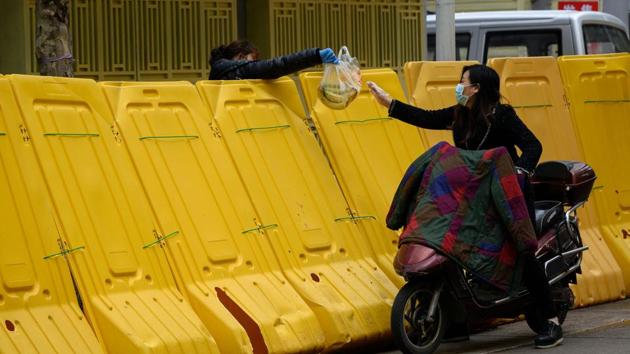
China opted for a collaborative, data-based approach, with tech companies such as Alibaba, Tencent, Baidu, Huawei, and Meituan helping the government take timely action to prevent the spread of the virus and, at the same time, keep the economy running.
But the equally important fact is that China didn’t opt for a nationwide lockdown as stringent as India did. It did completely lock Wuhan, the worst-affected city in the country, but it let the less-affected regions partially open. It allowed the availability of e-commerce for all items throughout. Ride-hailing services continued to operate. Grocery stores and restaurants, too, remained open throughout the lockdown, even though transactions mostly took place online.
Tencent and Alibaba launched an app that alerted users if they were in the vicinity of an infected person. Alibaba Health launched a health care service with Tmall that delivered medicines to chronic patients within 30 minutes in 10 cities. It also collaborated with more than 50 top domestic and overseas pharmaceutical companies for the purpose. In merely a day, the number of chronic patients looking for medicines went up by 200%.
Big brands could survive, but the long period of lockdown threatened the existence of small businesses. Hyper-local delivery services such as Meituan, Koubei and Ele.me (similar to Dunzo and Swiggy Go) leveraged their online platforms to link consumers with offline services and on-demand delivery. By the end of February, 50,000 offline shops had migrated online, partly because the platforms reduced or waived-off fees. By mid-March, between 500,000 and one million merchants benefited from the commission reduction/waiver scheme from Meituan, Koubei, and Ele.me.
{{/usCountry}}Big brands could survive, but the long period of lockdown threatened the existence of small businesses. Hyper-local delivery services such as Meituan, Koubei and Ele.me (similar to Dunzo and Swiggy Go) leveraged their online platforms to link consumers with offline services and on-demand delivery. By the end of February, 50,000 offline shops had migrated online, partly because the platforms reduced or waived-off fees. By mid-March, between 500,000 and one million merchants benefited from the commission reduction/waiver scheme from Meituan, Koubei, and Ele.me.
{{/usCountry}}The Chinese government-endorsed digital migration and digital sales channels, which gave confidence to consumers and small and medium-sized enterprises to move online. As a result, categories such as health and wellness and digital accessories saw an upswing in sales during the lockdown. Home appliances such as rice cookers, sandwich makers, and juice makers saw a spike as more people cooked at home. Compared to their 2019 sales, Nike’s and Uniqlo’s sales went up by more than 25% between February 12 and March 12.
The surge in online sales allowed many companies to create temporary employment schemes, absorbing self-employed daily wage earners affected due to the lockdown.
But as new cases plateaued, companies resumed offline work gradually. Corporates, educational institutions, and other organisations were given customised mandates and processes on ways to minimise the risk as they opened up. Temperature checks and disinfectant stations were installed at all main entry-exit points in public places, offices, and mall entrances.
Workplaces instituted daily online health check-ups for their employees even on weekends. People using public transportation for intercity travel were expected to quarantine for seven-14 days, depending on the severity of the infection in their city of origin. Employees commuting between cities for work were mandated to use private transportations only.
Local services provided contactless meal delivery to employees and health care workers. Best practices around the resumption of work were communicated via live streaming, also leveraged by small offline stores to offset losses due to the shutdown. Flexible job openings helped small businesses resume work.
By now, China may have seen its worst off. But India is yet to touch its peak. To minimise the economic disruption, it must find ways to strategically open up the economy in a way that doesn’t add up to infections. E-commerce, which the safest way to keep the economy running while ensuring social distancing, must be opened fully, in red, orange, and green zones. As of now, India allows only essential items over e-commerce platforms. But defining the essentiality of a commodity is a difficult exercise. Are online classes essential? Are the computers used to do so essentials? Is a malfunctioning phone charger essential, or are the prescription eyeglasses? The interconnectedness of the economy allows the sale of non-essential items produced by an economically weak person, with the profit nudging him to buy essentials, and thus, helping him contribute taxes.
Like China, can the Indian government work with tech-based retail firms such as Flipkart, Amazon, Swiggy, Dunzo, PayTM to keep the economy running? Opening up the economy is a slow process – and, if not planned well, involves risks. Keeping the economic activities suppressed for long, however, can have far greater consequences.
Divya Joseph is an MBA graduate of the China Europe International Business School (CEIBS) and works for Alibaba’s Tmall Global Operations Team in Hangzhou, China. S Ramakrishna Velamuri is the Chengwei Ventures Professor of Entrepreneurship at CEIBS
The views expressed are personal