After the Swachh Bharat Abhiyan, Make in India and Digital India campaigns, Prime Minister Narendra Modi’s government is launching the Skill India Campaign on Wednesday.He will formally launch the National Skill Development Mission with the new National Policy for Skill Development and Entrepreneurship 2015, the Pradhan Mantri Kaushal Vikas Yojana and a Skill Loan Scheme.This is not exactly a farm fresh campaign, but a refurbished one that comes at a very crucial time for India (more of this later). In 2009, the UPA launched the National Skills Policy and its aim was to skill 500 million people by 2022. The NDA has scaled it down to 402 million by 2022.“This is a great initiative. I hope that the scheme being launched today will create an enabling environment and policy framework suitable to the dynamic nature of skill development while ensuring flexibility for state's interventions,” said B Purusharth, Punjab’s director of technical education and industrial training.
The lack of a national framework, proper coordination and availability of funds are the main reasons for not getting optimal results till date, he said.
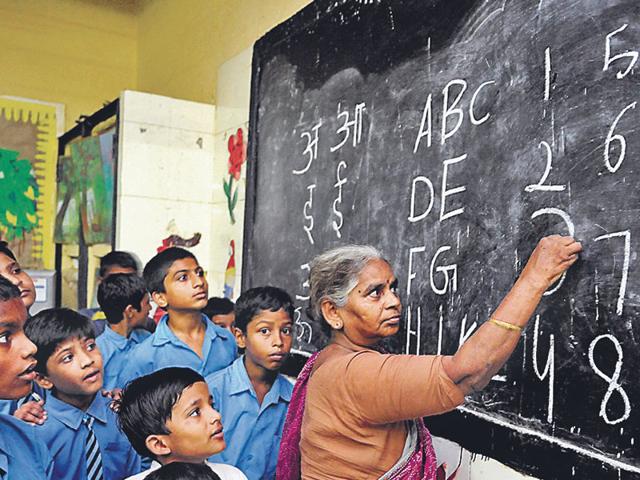
Because of its dynamic nature and changing requirements, running a skill training course is different from running a regular school course. "It requires more capital and operational expenditure at regular intervals for keeping itself industry and market relevant," Purusharth explained.Kumar Vivek, who worked extensively with the Office of the Advisor to the Prime Minister and the World Bank on solving skill challenges in India, said the earlier policy was not effective thanks to significant execution challenges, and this time around the focus should be quality and not on chasing physical targets.Quality can be measured, he said, if the government can enable the ecosystem with robust assessment and certification systems. Vivek felt only scientific data-driven programme designs can help create an industry-relevant workforce; a comprehensive agile labour market information system is required coupled with a responsive and flexible government system.That India desperately needs a proper skill development plan is a no brainer. With more than 300 million young people gearing up to join the workforce over the next two decades, the challenge is mammoth: Economists say India won’t get the “growth kick” because the bulk of these youths are going to be involved in services that are low-skill, low value and low return.Reports suggest that of the 12.8 million joining the workforce every year, only 8% to 9% have any skills, while there are many who barely read. This lack of skilled labour affects industries too.The main reason behind this skill deficit, as Lavesh Bhandari told Financial Times, is something deeper: “It lies in the weakness of the basic education system. If you have good primary education, skilling is a three-to-six month affair for most jobs.”Reports after reports have suggested that India’s children are enrolling in schools but not learning anything.Most industrialised nations have been running skill development programmes for years. Britain, for example, has state-run technical colleges that provide job seekers with skills, but many are closing down due to shortage of funds.“Shortage of skills in any country will halt its economic growth. Closing down of many colleges (in Britain) where young people could get skills training has not helped. India should adopt the policy of apprenticeship and other skills where Indian youth can participate in the world labour market. Only higher qualifications/education alone doesn’t help society,” Virender Sharma, a British MP, Britain, told me when I met him in 2013.
Skill development can take sting out of Maoist challengeInterestingly, the Chhattisgarh government is using skill development initiatives not only to ensure employment for poor youngsters but to wean away the young from Maoist rebels.“In 2013, we started the Livelihood College in Sukma. The idea is not only to teach the tribals some employable skills but also give them exposure to the world that lies outside Sukma so that they don’t join the Maoists,” Niraj Kumar Bansod, collector, said.“We not only impart technical skills but also soft skills that make them ready for the labour market.”Livelihood Colleges are residential training facilities for underprivileged youngsters.Since the final aim of any training programme is employment, Bansod said he focusses on the needs of the local job market and dovetailing the courses into government programmes. For example, women who learn stitching will be drafted to make school uniforms for children who go to state-run primary schools.Then certain needs are unique to Sukma.“(Because of) Maoists, BSNL’s (the only service provider) cables are often damaged. There is an acute crisis of technicians who can repair quickl...so there is a huge opportunity for skilled youth to be employed in this activity.”Skill development/vocational training: Will it deliver?Even as I write this, the United Nations is negotiating one of the world’s potentially most powerful policy documents that will replace the Millennium Development Goals: The Sustainable Development Goals (SDG).One of the main development targets that many think will uplift people out of poverty is vocational or skill training. But an assessment of the social, economic and environmental benefit of every dollar spent on the SDG targets, done by Nobel laureates with the Copenhagen Consensus Centre shows that when it comes to vocational training or skill development, the outcome is “uncertain”.“It is always difficult to match the skill to a person’s interest/ability. While this is a global study, I don’t think that it will be very different in India...the better deal is to strengthen and invest in primary and secondary education,” Copenhagen Consensus Centre’s director Bjorn Lomborg told me during a recent seminar on what could be the world’s smartest targets in the years to come. More details on the smart targets are available here.While I do think skill development will help many to get jobs, there is no substitute for a good, strong primary education; along with skills training, a good strong education will help the youth to maximise their potential in the long run.(The views expressed the writer are personal. She tweets as @kumkumdasgupta)
{{/usCountry}}Skill development can take sting out of Maoist challengeInterestingly, the Chhattisgarh government is using skill development initiatives not only to ensure employment for poor youngsters but to wean away the young from Maoist rebels.“In 2013, we started the Livelihood College in Sukma. The idea is not only to teach the tribals some employable skills but also give them exposure to the world that lies outside Sukma so that they don’t join the Maoists,” Niraj Kumar Bansod, collector, said.“We not only impart technical skills but also soft skills that make them ready for the labour market.”Livelihood Colleges are residential training facilities for underprivileged youngsters.Since the final aim of any training programme is employment, Bansod said he focusses on the needs of the local job market and dovetailing the courses into government programmes. For example, women who learn stitching will be drafted to make school uniforms for children who go to state-run primary schools.Then certain needs are unique to Sukma.“(Because of) Maoists, BSNL’s (the only service provider) cables are often damaged. There is an acute crisis of technicians who can repair quickl...so there is a huge opportunity for skilled youth to be employed in this activity.”Skill development/vocational training: Will it deliver?Even as I write this, the United Nations is negotiating one of the world’s potentially most powerful policy documents that will replace the Millennium Development Goals: The Sustainable Development Goals (SDG).One of the main development targets that many think will uplift people out of poverty is vocational or skill training. But an assessment of the social, economic and environmental benefit of every dollar spent on the SDG targets, done by Nobel laureates with the Copenhagen Consensus Centre shows that when it comes to vocational training or skill development, the outcome is “uncertain”.“It is always difficult to match the skill to a person’s interest/ability. While this is a global study, I don’t think that it will be very different in India...the better deal is to strengthen and invest in primary and secondary education,” Copenhagen Consensus Centre’s director Bjorn Lomborg told me during a recent seminar on what could be the world’s smartest targets in the years to come. More details on the smart targets are available here.While I do think skill development will help many to get jobs, there is no substitute for a good, strong primary education; along with skills training, a good strong education will help the youth to maximise their potential in the long run.(The views expressed the writer are personal. She tweets as @kumkumdasgupta)
{{/usCountry}}