Politics and religion often make an explosive mix in Punjab. That’s precisely what the dramatic decision last week by the Sikh clergy to pardon Dera Sacha Sauda head Gurmeet Ram Rahim Singh has underscored.
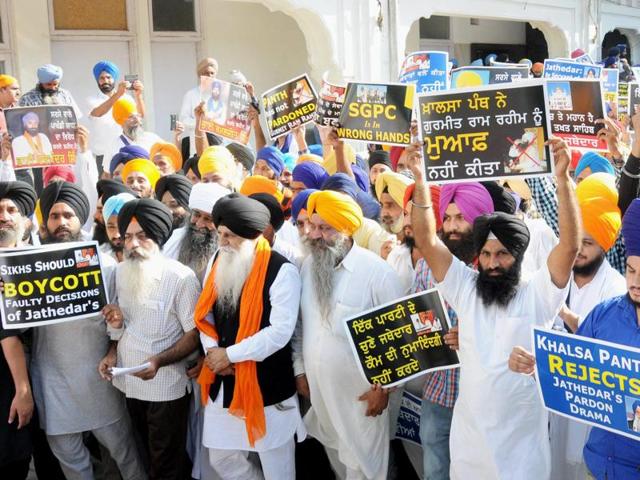
The move has kicked off a high-voltage row, with Sikh radicals crying foul over what they call “a politically-managed edict” that has also revoked the head priests’ eight-year-old religious decree boycotting followers of the Sirsa-based sect.
The colourful Dera chief had been in the crosshairs of a blasphemy row since 2007 when he allegedly imitated the tenth Sikh guru, Guru Gobind Singh. That earned him the ire of the Akal Takht, the highest temporal seat of Sikhism, and also of hot-headed fundamentalists. It also sowed the seeds of a Dera-Sikh confrontation that has led to violent clashes over the past few years, costing at least three Sikhs their lives. Radicals tried, unsuccessfully, to assassinate Singh, who now has Z-security cover.
Singh is also the lead star in stunt-packed flick MSG-2 that hit theatres on September 18. But the action outside the theatres is outpacing what’s happening inside, and threatens to wreck law and order in Punjab. Enraged Dera followers caused large-scale disruption in rail traffic across the border state recently, angered that religious radicals had prevented cinema houses from showing the movie.
{{/usCountry}}Singh is also the lead star in stunt-packed flick MSG-2 that hit theatres on September 18. But the action outside the theatres is outpacing what’s happening inside, and threatens to wreck law and order in Punjab. Enraged Dera followers caused large-scale disruption in rail traffic across the border state recently, angered that religious radicals had prevented cinema houses from showing the movie.
{{/usCountry}}The Sikh priests’ unexpected reprieve has angered radicals also because it broke with tradition by giving the go-by to the Panthic practice of an offender appearing in person before the Akal Takht to seek pardon.
Undeniably, the conciliatory gesture from the Akal Takht has political overtones. The ruling Shiromani Akali Dal is making a calculated attempt to mend fences with the estranged Dera with an electoral harvest in mind. In power since 2007 in alliance with the BJP, the Akalis are facing perceptible anti-incumbency ahead of the assembly polls due in early 2017. The Dera has a sizable following in the politically-crucial Malwa region that also includes the ruling Badal family’s home turf.
The Dera had accorded open support to the Congress in the 2007 Punjab Assembly elections, resulting in the Akalis’ defeat in Malwa, which over the years has become the epicentre of the Dera-Sikh strife.
The clergy’s latest move calling a truce with the Dera has not just become a cause célèbre for rag-tag radicals. Worryingly for the government, it has also galvanised an array of Sikh bodies notably Sant Samaj and the Damdami Taksal, once headed by militant preacher Jarnail Singh Bhindrawale, to protest what they call “a politically-managed” pardon at the bidding of the ruling Badals.
Chief Minister and Akali patriarch Parkash Singh Badal, an ardent pacifist, has endorsed the high priests’ gesture. The Shiromani Gurdwara Parbandhak Committee ( SGPC), the apex Sikh religious body, too has lent its weight to the edict, saying the clergy’s decision is an article of faith for the Sikhs and cannot be challenged.
The Dera, on its part, has hailed the clergy’s gesture. Extending an olive branch to radicals, it has even directed its followers to withdraw their the court cases filed against the “ Sikh brothers”. That, however, hasn’t stemmed the anti-edict chorus that is growing shriller by the day and has virtually divided the Sikh community.
A sizeable section of the Sikhs do view the clergy’s pardon as a pragmatic step towards closure in a long-festering conflict that had an eerie echo of the Sikh-Nirankari clashes of the ‘80s that had spiralled into a firestorm of extremism and violence.
But the radicals and Sikh bodies are in an agitation mood. They want the clergy to either roll back its verdict or resign from their religious seats. Clearly, Badal’s political gambit on religious turf will face a severe test in the coming days.