When it happens once, it may be an accident, but when same incident is repeated, that becomes symptomatic of a pattern. When the Gurdaspur incident happened, both the Centre and state governments took that as an isolated case of terror, but after Pathankot, I fear the emergence of Punjab as a second front of terror, after Kashmir. I am yet to recover from the trauma of the loss of so many lives but at the same time I am concerned about the challenges the terrorists have thrown to us and wondering whether we could have prevented such attacks in the past and most importantly, what should be our action plan for the future.
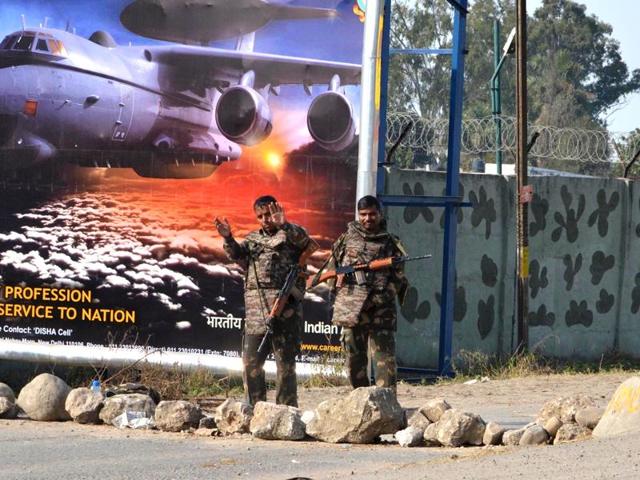
Can India afford to continue talks with Pakistan after the Pathakot incident? What should be our response? Will India send its foreign secretary to Pakistan and if so, what message will this send to the people of our country, to our armed forces and to the global community at large?
If India continues its talks normally with Pakistan, it will only establish India as a soft State against terrorism. There is no doubt that peace between India and Pakistan is in the interest of both the countries and the whole of South Asia and there is also no doubt that channels of communication are essential for restoring peace, but at the same time, we cannot afford to talk to Pakistan when our sovereignty is being challenged on our own soil. Our Prime Minister is crying from the roof tops about the need for defining terrorism by the United Nations and to deal with it in a coordinated manner. Now, the time has come for India to clear the haze and prepare its own comprehensive plan against terrorism. The government should rethink its policy towards Pakistan; pragmatism and not jingoism should be the basis of our foreign policy. On the level of implementation, barricading the roads after each terror attack is not sufficient. Terrorists are now equipped with modern communication and surveillance technology, therefore, our police forces should also be equipped and trained accordingly. Police modernisation, particularly in sensitive states like Punjab cannot wait any longer. The change has to happen with utmost urgency and seriousness. Another important area is strengthening both the external and internal intelligence, operational convergence between the two and establishing channels for flow of intelligence from source to the executing agency.
Coming back to the incident, it is a matter of concern that Punjab is once again emerging as a hotbed of terror. Terrorists entering India through Punjab is alarming, India shares 460 kilometres of border with Pakistan and this is not the porous kind of border, but is virtually unassailable because of the barbed wires and flood lights. Despite that two high-intensity terrorist attacks — first Gurdaspur, and now Pathankot — have taken place within a span of six months and this should be a matter of serious concern for both the Government of India and the state of Punjab. Ironically, there are similarities between the Gurdaspur, Mumbai 26/11 and the Pathankot attacks. And, like Mumbai attacks, the terrorists were constantly in touch with the handlers across the border while executing their plans. All this is pointing towards a systemic failure at a certain level which needs immediate rectification. The central as well as state government should think about the ways and means to save Punjab from another phase of destruction.
{{/usCountry}}Coming back to the incident, it is a matter of concern that Punjab is once again emerging as a hotbed of terror. Terrorists entering India through Punjab is alarming, India shares 460 kilometres of border with Pakistan and this is not the porous kind of border, but is virtually unassailable because of the barbed wires and flood lights. Despite that two high-intensity terrorist attacks — first Gurdaspur, and now Pathankot — have taken place within a span of six months and this should be a matter of serious concern for both the Government of India and the state of Punjab. Ironically, there are similarities between the Gurdaspur, Mumbai 26/11 and the Pathankot attacks. And, like Mumbai attacks, the terrorists were constantly in touch with the handlers across the border while executing their plans. All this is pointing towards a systemic failure at a certain level which needs immediate rectification. The central as well as state government should think about the ways and means to save Punjab from another phase of destruction.
{{/usCountry}}Jaiveer Shergill is a Supreme Court lawyer and national media panellist, INC. The views expressed are personal.