External affairs minister Subrahmanyam Jaishankar on Friday told his US counterpart Mike Pompeo in unequivocal terms on the sidelines of Asean (Association of Southeast Asian Nations) summit in Bangkok that from India’s perspective, “any discussion on Kashmir, if at all warranted, will only be with Pakistan and only bilaterally.”
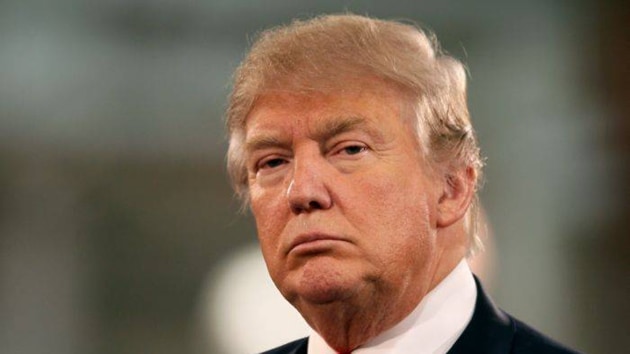
Jaishankar’s statement came after US President Donald Trump repeated, for the second time, his offer to mediate between India and Pakistan on Kashmir. The President indicated that it was up to Prime Minister Narendra Modi to take up his mediation offer.
While Pakistan Prime Minister Imran Khan may be delighted at the reiteration, there is a sense of déjà vu on Raisina Hill as such an offer has overtly or covertly made by US Presidents for the past two decades – and consistently refused. On July 4, 1999, then US President Bill Clinton wanted then PM Atal Behari Vajpayee to be present at Blair House in Washington with his Pakistani counterpart Nawaz Sharif when he ordered Rawalpindi GHQ to vacate the Kargil heights and end the war in Kashmir. Vajpayee refused to attend the meeting. On March 22, 2000, President Clinton preached dialogue with Pakistan to the Indian Parliament but made it clear that he did not want to mediate in Kashmir.
US President George Bush Jr also pushed his Kashmir agenda when he worked the telephone lines to ensure that India did not launch an attack across the Radcliffe Line after the May 14, 2002 Kaluchak terror attack in Jammu. The Pakistani Lashkare-Taiba (LeT) terrorists massacred 18 family members of army personnel and 31 overall . The Pakistani jihadists brutally killed 10 children in this carnage.
{{/usCountry}}US President George Bush Jr also pushed his Kashmir agenda when he worked the telephone lines to ensure that India did not launch an attack across the Radcliffe Line after the May 14, 2002 Kaluchak terror attack in Jammu. The Pakistani Lashkare-Taiba (LeT) terrorists massacred 18 family members of army personnel and 31 overall . The Pakistani jihadists brutally killed 10 children in this carnage.
{{/usCountry}}At the time, the US wanted India to forget about the Kaluchak attack as it needed Pakistan for its “hammer and anvil” strategy deployed under Operation Enduring Freedom in Afghanistan. While India called off the June 6, 2002 air strike against Pakistan, its diplomats made it clear to their US counterparts that by adopting such a strategy the US would neither achieve any results in Afghanistan nor improve its warming relationship with India. The same holds true today as the US wants to leave Afghanistan in the hands of the Pakistan-supported Taliban, the same Taliban it bombed to smithereens 18 years ago.
Before he took over as US President in 2009, Senator Barack Obama in an interview (October 23, 2008) to Time Magazine said that the US was “working with Pakistan and India to try to resolve the Kashmir crisis in a serious way” as he indicated that the Afghanistan would only stablilise if there was peace between India and Pakistan over Kashmir.
While Kashmir was not even discussed in the meeting between Trump and Modi on the sidelines of Osaka G-20 summit last month, the US President provided a much-needed lifeline to beleaguered Pakistan premier Imran Khan by announcing the Kashmir offer. The reiteration raises, albeit artificially, the stock of the Pakistan Army and its protégé Imran Khan.
Although PM Modi is still to directly respond to the mediation offer—there is no change in India’s position, though, as has been clearly articulated – it does seem like he has taken the Trump statement in his stride. For him , the only thing that needs to be discussed with Pakistan on Jammu and Kashmir is cross-border terrorism. Pakistan believes that Kashmir Valley is an unfinished part of its partition agenda dating back to 1947. India is legally on strong ground over accession of the state and is ready for a dialogue with Pakistan on Occupied Kashmir and Northern Areas.
The Modi government has decided that it will cut out all the noise and focus on cementing bilateral relationship with US even as it engages China and old friend Russia for mutual gains on mutually beneficial terms. While Pakistan has been successful in instilling fears of nuclear Armageddon over Kashmir through think-tanks and strategists, PM Modi by successfully conducting the Balakot strike in February 2019 has openly called the bluff and made it clear that India is too big a country to ask for help. The message that India will not back down was also given to China during the 2017 Doklam crisis.
Just as President Trump wants to disrupt the bilateral stalemate between India and Pakistan by offering mediation, the time has come from PM Modi to change the facts on ground in Jammu and Kashmir through deft political manoeuvres with new leaders coming out in the electoral fray. To break the gridlock in the state, the Modi government has to bring economic development to the state, particularly the Valley, while keeping up the fight against jihadists of all shades sent by the Pakistan Army. Status quo is no longer an option in Jammu and Kashmir.