On April 5, Chinese spokesperson Mao Ning said that Indian Arunachal Pradesh (Zangnan in Han Chinese) was part of China’s territory and names of some parts of this region had been standardized by Beijing as part of its sovereign rights. Since 2017, China has renamed 32 geographical locations in Arunachal Pradesh as part of its strategy to claim over what it claims as South Tibet (Xizang in Chinese).
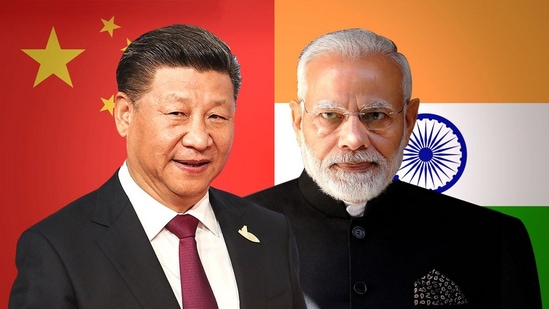
Amidst claims and counter-claims on the 3488 km long Line of Actual Control (LAC) with China, the bilateral position is that Beijing (as per 1987 Vice Minister’s dialogue) has staked a claim on both the western and eastern sectors after in 1960 (Chou En-Lai) and in 1984 (Deng Xiaoping) proposed that China was willing to give up its claims on the eastern sector if India accepts claims of the middle-kingdom in the western sector.
While the Chinese position on the land border resolution has changed as per its convenience and its global clout, the Indian position is consistent since the occupation of Tibet by Communist China forces in 1950. India claims the entire Aksai China (as per 1865 Johnson Line) and Arunachal Pradesh as its own territory.
Given that China is cementing its claim in East Ladakh by the first May 2020 transgression apart from not allowing Indian Army to patrol within its defined limits, and by renaming geographical locations in Arunachal Pradesh since 2017, should India not also call the “Sinicized” names of geographical locations within Occupied Aksai Chin by its past Ladakhi names. After all, the Tibetan language is a derivative of Sanskrit and not Mandarin Chinese language and there are Sanskrit names of places like Hotan, Kashgar, and Tashikurgan as well as East Turkestan (called Sinkiang in Tibetan and Xinjiang in Chinese).
{{/usCountry}}Given that China is cementing its claim in East Ladakh by the first May 2020 transgression apart from not allowing Indian Army to patrol within its defined limits, and by renaming geographical locations in Arunachal Pradesh since 2017, should India not also call the “Sinicized” names of geographical locations within Occupied Aksai Chin by its past Ladakhi names. After all, the Tibetan language is a derivative of Sanskrit and not Mandarin Chinese language and there are Sanskrit names of places like Hotan, Kashgar, and Tashikurgan as well as East Turkestan (called Sinkiang in Tibetan and Xinjiang in Chinese).
{{/usCountry}}While India has published a map claiming both Aksai Chin on the east and Occupied Kashmir as well as Northern Areas in the west, it has not published a map naming towns and geographical locations within Aksai Chin since 1954. The highway road linking Lhasa in occupied Tibet to Kashgar or Kashgiri in East Turkestan was built in 1957. The PLA physically occupied Aksai Chin in the 1962 war and since then China has been trying to impose the 1959 line (defined by Chou En-Lai) on East Ladakh.
Intriguingly, the Chinese cartographical aggression is coming at a time when the Opposition parties in India, mainly the Congress are asking the Narendra Modi government to retaliate at Beijing for the May 2020 transgression as well as Yangtze clash in Arunachal Pradesh. Fact is that the entire territory in Aksai Chin and even parts of Arunachal Pradesh was lost when Congress was the party in power.
Although the Indian spokesperson has dismissed the April 2 Chinese renaming exercise by reiterating that Arunachal Pradesh was integral part of India, Beijing is not only indulging in psychological warfare against India but also telling its domestic audience that President Xi Jinping will use the mighty PLA to restore China’s geographical claims both on Arunachal Pradesh and Taiwan.
Even though China has really upgraded military infrastructure along the LAC and made Tibet into a fortress, it cannot afford to make unilateral aggression on India to claim Arunachal Pradesh or impose the 1959 line. It is a recipe for mutually assured destruction.