The Supreme Court of India will be celebrating its 70th anniversary in 2020. It is a good time for our judiciary to seriously consider diversifying the institution. While there has been a well argued case for a stronger representation of women in the higher judiciary, there have been fewer arguments made in relation to the inclusion of academics in the higher judiciary.
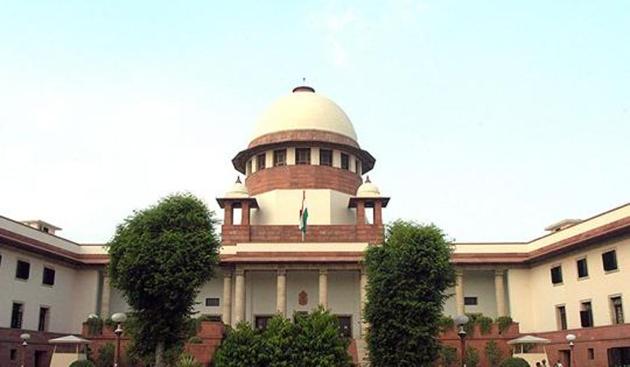
There are four reasons that justify the appointment of outstanding academic scholars as judges of high courts and the Supreme Court of India. These are: promoting institutional diversity; developing theoretical foundations of law; comparative judicial practices; and interdisciplinary approaches in law and justice. The case for the appointment of outstanding scholars to become judges has never been strongly made in India. Even the constitutional provision that provides the constitutional basis for appointing a law professor as a judge of the Supreme Court uses a vague phrase: “a distinguished jurist”. India must contemplate a constitutional amendment to expand the pool of potential candidates that the collegium comprising three senior most Supreme Court justices may examine for elevation to high courts.
Law professors have been routinely appointed to the higher judiciary in foreign countries. During the drafting of our Constitution, it was stressed by the Constituent Assembly member, HV Kamath, that there was no point restricting the pool of candidates to judges and lawyers. Kamath wanted to “widen the field of choice” to include law professors to be considered for appointment to the Supreme Court. His amendment was adopted and the phrase “distinguished jurist” was included in article 124(3). But how many law professors have been appointed under the “distinguished jurist” clause? None.
What is the potential pool of candidates from which the Supreme Court collegium considers for elevation as justices of high courts and the Supreme Court? For high courts, article 217(2) of our Constitution provides two categories: those who have held “judicial office” in India for at least 10 years, and those who have been an “advocate of a high court” or two or more high courts for at least 10 years. For the Supreme Court, article 124(3) provides three categories: those who have been a judge of one or more than one high court for at least five years; those who have been an advocate of one or more than one high court for at least 10 years; and those who are in the opinion of the President a “distinguished jurist”. Theoretically, a law professor can be appointed to the Supreme Court under the “distinguished jurist” clause. But why should appointment of a law professor be restricted to the Supreme Court only? Can they be considered for elevation to the high courts in the present legal framework? No.
{{/usCountry}}What is the potential pool of candidates from which the Supreme Court collegium considers for elevation as justices of high courts and the Supreme Court? For high courts, article 217(2) of our Constitution provides two categories: those who have held “judicial office” in India for at least 10 years, and those who have been an “advocate of a high court” or two or more high courts for at least 10 years. For the Supreme Court, article 124(3) provides three categories: those who have been a judge of one or more than one high court for at least five years; those who have been an advocate of one or more than one high court for at least 10 years; and those who are in the opinion of the President a “distinguished jurist”. Theoretically, a law professor can be appointed to the Supreme Court under the “distinguished jurist” clause. But why should appointment of a law professor be restricted to the Supreme Court only? Can they be considered for elevation to the high courts in the present legal framework? No.
{{/usCountry}}The Article 217(2) itself makes it impossible for a law professor to even be considered for elevation to the high court. The professor must give up her academic work and join the Bar and practise law for several years before she can be considered. Anyone who has seriously pursued the academic legal profession knows that this is an impossibility. For a dedicated academic, that is a very difficult position to be in. But the law professor is also not alien to the task of being a judge. She is routinely engaged in researching in law, interpreting statutes and analysing law and judgments, judging moot courts where she has to assess the quality of the written arguments, legal research, and oral arguments of law students.
The rigours of the academic legal profession are very different from that of the practice. Like all legal professionals, law professors have to read a lot. These include court decisions (theirs and foreign), critical legal commentary (law reviews and books), reports of all kinds and varieties. But a law professor’s approach is more theoretically consistent as compared to a practitioner’s. Senior law professors also write legal treaties and commentaries on their areas of expertise. And now, more than ever, law professors are taking an interdisciplinary approach to law. Hard sciences, sociology, economics, history, anthropology, and all kinds of other disciplines are being brought to bear in legal analysis.
A law professor is always just as, if not more, busy and engaged as a high court advocate or a district court judge — the other two pools of candidates in Article 217(2). Why should a law professor therefore not be considered for elevation to a high court?
We need a constitutional amendment in Article 217(2). Though more than a constitutional amendment, we need a paradigm shift in the approach and mindset of the Supreme Court collegium. There is a grave need for attracting outstanding minds into the judiciary, many of whom can be from the legal academia.
C Raj Kumar is the founding vice chancellor, OP Jindal Global University and dean, Jindal Global Law School . The article is co-authored by Khagesh Gautam, associate professor, Jindal Global Law School
The views expressed are personal