India’s performance in the recently released Global Hunger Index (GHI) report is tragic. The country which is one of the largest producers of cereals, vegetables and fruits in the world, ranks 97 among 118 countries and is home to over 184 million undernourished people. India also pays a very heavy price for vitamin and mineral deficiencies, often called “hidden hunger”, as it loses $12 billion in gross domestic product across the world each year as per the World Bank estimates. This calls for a shift in focus from approaches for tackling hunger towards improving quality of diets to promote health. India has 70% anaemic pre-school children, 59% anaemic pregnant women, and 24% anaemic men. Iron deficiency anaemia results in an eight point lower intelligent quotient (IQ) in children.
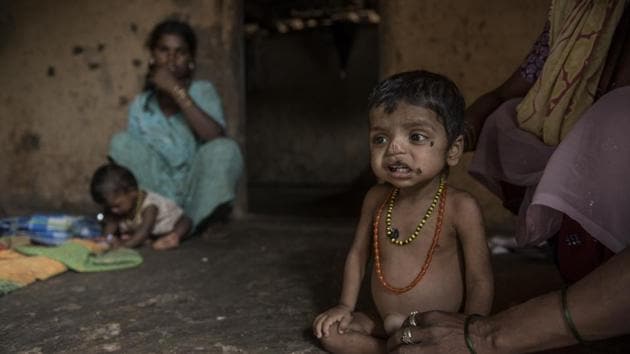
Alongside, deficiencies of B group vitamins, zinc, and vitamin D are also widely prevalent. All these deficiencies have a devastating impact on the population in the form of impaired cognitive and motor development among children, growth retardation, reduced immune response, less capacity to do physical work, and increased mortality and morbidity among mothers and newborns.
Despite four decades of a national supplementation programme, little progress has been made to reduce critical nutrient deficiencies in India. Recent national data reveals that annual declines in anaemia prevalence among women and children have been dismal, from 1% to 1.5% only.
In this context, food fortification as a complementary strategy presents a good opportunity to address vitamin and mineral deficiencies on a mass scale. Food fortification involves addition of minute quantities of missing vitamins and minerals in our diet to commonly consumed food such as rice, wheat flour, salt, and milk. It improves the nutritional value of such staples and enhances intakes at a population level.
India has also experienced the power of food fortification with the successful salt iodisation programme started in 1962 by the National Goitre Control Programme (NGCP). Today, over 90% of the country’s population consumes iodised salt. Fortification can be highly effective, if implemented through the government’s safety net programmes like the Public Distribution System (PDS), Mid-Day Meal Scheme (MDM), and Integrated Child Development Services (ICDS). Several states have run pilots that supply fortified meals/ staples in schools through the MDM and PDS and have garnered positive results. In 2016 there was a major landmark development in the field of fortification as the Food Safety and Standards Authority of India (FSSAI) launched fortification standards for five staples (rice, wheat flour, oil, milk, and salt) and a logo for consumers to make an informed choice. It is an important step as the government has created an enabling environment for all key stakeholders to adopt fortification. The need is now to fortify awareness: for industry to ensure supply side readiness, a regulatory mechanism to ensure enforcement and among consumers to create demand. Businesses are brilliant shapers of demand, often for unhealthy foods, it is time now to bend demand towards health.
{{/usCountry}}India has also experienced the power of food fortification with the successful salt iodisation programme started in 1962 by the National Goitre Control Programme (NGCP). Today, over 90% of the country’s population consumes iodised salt. Fortification can be highly effective, if implemented through the government’s safety net programmes like the Public Distribution System (PDS), Mid-Day Meal Scheme (MDM), and Integrated Child Development Services (ICDS). Several states have run pilots that supply fortified meals/ staples in schools through the MDM and PDS and have garnered positive results. In 2016 there was a major landmark development in the field of fortification as the Food Safety and Standards Authority of India (FSSAI) launched fortification standards for five staples (rice, wheat flour, oil, milk, and salt) and a logo for consumers to make an informed choice. It is an important step as the government has created an enabling environment for all key stakeholders to adopt fortification. The need is now to fortify awareness: for industry to ensure supply side readiness, a regulatory mechanism to ensure enforcement and among consumers to create demand. Businesses are brilliant shapers of demand, often for unhealthy foods, it is time now to bend demand towards health.
{{/usCountry}}Ruchika Chugh Sachdeva is Team Leader, Nutrition at PATH India.
The views expressed are personal