On Friday, Iran’s notable military figure, Major General Qasem Soleimani of the state’s powerful Islamic Revolutionary Guard Corps (IRGC), which operates under the direct auspices of the Ayatollah, was killed along with another senior commander in a United States air strike at Iraq’s Baghdad airport. This marks one of the most significant moments in the region’s fragile geopolitical environment in recent years. Soleimani led the Quds Force, IRGC’s foreign operations wing, and was the architect of Iran’s expansions into the Syrian civil war and beyond. As the Donald Trump administration hailed the strike, Iran vowed revenge, setting off alarms of another impending war in the region.
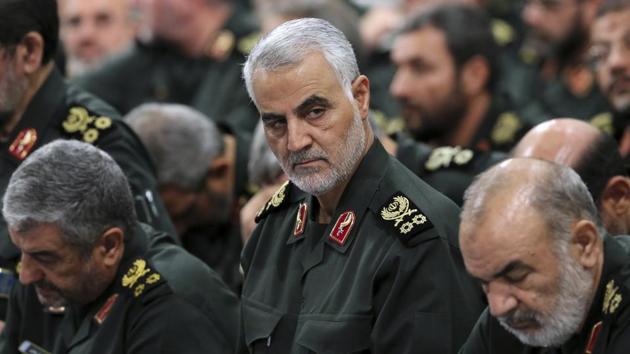
This dramatic escalation occurred days after supporters of Iran-backed militias breached the US embassy in Baghdad, with reports suggesting that Iraqi troops tasked with protecting the diplomatic mission did not do so beyond a point. A week earlier, on December 27, Iran-backed militias had targeted a US base in Kirkuk in northern Iraq, wounding US troops and killing an American contractor.
The death of Soleimani comes at a time of heightened tensions between the US and Iran, with Trump, who has now entered an election year, having worked to isolate Iran both economically and politically by making major decisions such as exiting from the Iran nuclear deal. Moreover, Trump, as exhibited by comments around the killing of ISIS chief Abu Bakr al-Baghdadi in October in Syria at the hands of the US Army, has shown that he prefers to go after high-profile names, rather than middle-rung or deputies of leaders of terror groups or militias, for a more marketable national security posture, distinguishing himself from his predecessors at the White House.
However, with the killing of Soleimani, the US has entered an area of unknowns in its dealings with Tehran. Soleimani was not just a leader of the IRGC, but over the past few years had become a revered and extremely powerful figure in Iranian polity and society. In 2013, a profile of him in The New Yorker, titled “The Shadow Commander”, highlighted Soleimani’s role as a powerful behind-the-scenes figure. He was the Shiite power’s chief conductor in the Syrian civil war, designing a policy of fighting ISIS while simultaneously expanding the reach of Iran in the political and geographical vacuums left behind. This architecture saw Iran prop up the embattled government of Syria’s Bashar al-Assad, and develop an all-encompassing reach around Iraq’s politics (Soleimani even reportedly held meetings in Baghdad with Iraqi officials in place of the country’s prime minister), bringing Tehran’s influence to the doorstep of its enemies such as Saudi Arabia and Israel. Since then, Soleimani had operated with much gusto. His travels to the frontlines in Syria were documented in photos and videos, and circulated widely on social media as he developed a strong support base back home. While gaining popularity and support in Iran, specifically among the conservatives, his actions also caused the loss of innumerable lives in the region.
{{/usCountry}}However, with the killing of Soleimani, the US has entered an area of unknowns in its dealings with Tehran. Soleimani was not just a leader of the IRGC, but over the past few years had become a revered and extremely powerful figure in Iranian polity and society. In 2013, a profile of him in The New Yorker, titled “The Shadow Commander”, highlighted Soleimani’s role as a powerful behind-the-scenes figure. He was the Shiite power’s chief conductor in the Syrian civil war, designing a policy of fighting ISIS while simultaneously expanding the reach of Iran in the political and geographical vacuums left behind. This architecture saw Iran prop up the embattled government of Syria’s Bashar al-Assad, and develop an all-encompassing reach around Iraq’s politics (Soleimani even reportedly held meetings in Baghdad with Iraqi officials in place of the country’s prime minister), bringing Tehran’s influence to the doorstep of its enemies such as Saudi Arabia and Israel. Since then, Soleimani had operated with much gusto. His travels to the frontlines in Syria were documented in photos and videos, and circulated widely on social media as he developed a strong support base back home. While gaining popularity and support in Iran, specifically among the conservatives, his actions also caused the loss of innumerable lives in the region.
{{/usCountry}}Amid all this, the killing of Soleimani pushes the likeliness of a direct armed escalation in the region between America, its interests and Tehran more than ever before. The assassination may end up uniting divisions within Iranian politics, with both the moderates and conservatives converging in condemning the US strike. The agenda led by Soleimani of spreading Iranian power through the region may, in fact, get strengthened further. He may become the martyr of the Iranian cause, backed up by the existential threat faced by the seat of Shiite Islam from the poles of power in both Riyadh and Jerusalem. The fact that Saudi Arabia and Israel, despite being adversaries, find the push against Iran to be a point of convergence emboldens Tehran’s publicly aired resolve to retaliate against the general’s death. For Iran, this may well become a direct American declaration of war, whether Washington meant it or not.
For the US, the Trump administration, facing heat on an impeachment orchestrated by the Democrats and other domestic political upheavals, national security successes such as Baghdadi, and now Soleimani, may grant the presidency greater leverage in the impending elections later this year. Comparisons, such as an attack on the Baghdad embassy being unlike the one in Benghazi in Libya under the Obama administration in 2012 where the US ambassador died, may well be the posturing Trump was looking for, and now has successfully designed. Nonetheless, the optics are different. Iran, despite perceptions to the contrary, is a State with built-up resilience, proven survival instincts despite isolation, and a competent military. A war will by no means, be a walkover.
Any major escalation as a fallout of Soleimani’s killing will have global repercussions, with crude oil prices and major oil and trade routes in the Persian Gulf at stake, coupled with regional and global security and economic concerns.