Statistics from the International Labour Organisation (ILO) and the World Bank reveal that India scores very badly when it comes to participation of women in the workforce. In its India Development Report released in March, the World Bank ranked the country 120th among 131 countries, only above Saudi Arabia and Pakistan. While overall job creation has been limited, the report said, most of the new ones have been taken by men given the social norms. Even within South Asia, which regionally is below other developing countries, India has a lesser percentage of women in the workforce than Nepal, Sri Lanka and Bangladesh.
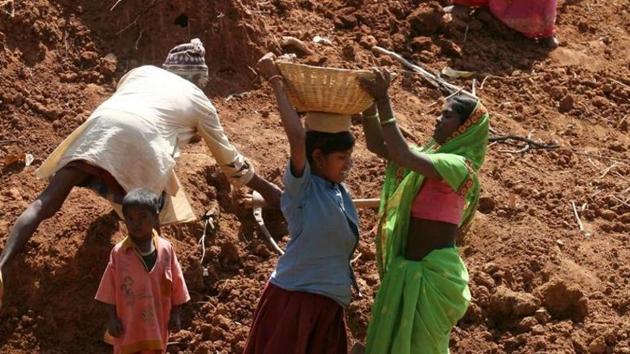
So what stops women from getting employment, and what do these numbers indicate?
The issue of the number of women in the labour force is determined by class and gender. In the rural and informal sectors, which employ the largest number of people, men dominate paid labour because women slave away in households. A woman’s domestic labour is of great importance for the household, but is not valued enough. Even in the private sector, women are losing out to men since big companies are downsizing and paying less for longer hours of work. Feminist economists argue that domestic labour should have economic value but little has happened on this front.
The World Bank’s explanation is that in India the drop in women in the labour force in recent years is a combination of a lack of job opportunities, decrease in child labour, more girls joining schools, rise in household and agricultural incomes and measurement methodologies. But this is half the story.
Economist Jayati Ghosh argues in her work ‘Never Done and Poorly Paid’ that the issue of exclusion of women is historical and structural. Historically, women have been secluded to private spaces and public spaces are hostile to them. Whether it is lack of women’s toilets or the acceptance of sexual harassment as normal, male privilege is structural and institutional. The resistance to gender sensitisation committees in universities and the attempt to control them by tweaking them administratively is one obvious recent structural and institutional indication of retaining male privilege.
{{/usCountry}}Economist Jayati Ghosh argues in her work ‘Never Done and Poorly Paid’ that the issue of exclusion of women is historical and structural. Historically, women have been secluded to private spaces and public spaces are hostile to them. Whether it is lack of women’s toilets or the acceptance of sexual harassment as normal, male privilege is structural and institutional. The resistance to gender sensitisation committees in universities and the attempt to control them by tweaking them administratively is one obvious recent structural and institutional indication of retaining male privilege.
{{/usCountry}}This exclusion of women has been reinforced by neo-liberal economic policies that led to an increase in inequality. In structural inequality, the already weak and excluded sections are impacted unequally. So as jobs decrease, women who are already paid less than men will be the first to lose jobs.
As subsidies are cut , child care facilities for women who wish to work have also decreased. For example, wages for anganwadi workers are so low that many feel they can save more by doing either household work or ‘piece work’ at home.
Moreover, we have not been able to address their distress due to the dual burden of labour outside and inside the house. Though household staff for the middle class is a common phenomenon here, working women are still solely responsible for running the household while men can concentrate solely on their professional responsibilities.
The ILO argues that to increase the number of women in the workforce, comprehensive approaches such as improving access to education, skill and training programmes, access to child care, safe transportation, rules against sexual harassment, and a pattern of development that is inclusive and autonomous of political party intervention need to be put in place.
India has reams of report that will show that sustainable development can only come with a gender and caste inclusive policy. But the political class has not followed up on their provisions. Each government that comes tries to re-invent the wheel. Competing and rewriting the past as opposed to learning from it. This is one of the main reasons why women’s participation in the workplace is declining.
Anuradha Chenoy is professor, School of International Studies, JNU
The views expressed are personal