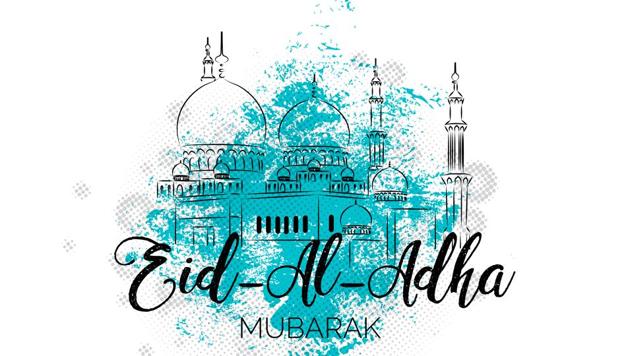
Eid-al-Adha, also known as the ‘festival of sacrifice’, is the second most significant festival in the Islamic calendar. On Eid-al-Adha, a sheep or goat is sacrificed to commemorate Prophet Ibrahim (Abraham’s) willingness to sacrifice his son according to God’s command.
Muslims buy new clothes and go to pray in mosques, where they thank Allah for all His blessings.
Usually, a goat or sheep is sacrificed after the namaz. The meat is divided into three parts and is distributed amongst family members, relatives and friends and the poor. Presents are also exchanged among family and friends on this occasion.
The Haj, in which Muslims go to Mecca in Saudi Arabia on pilgrimage, culminates with Eid-al-Adha. It is believed that Eid is a day of victory and the one who is successful in his spiritual growth receives Eid with a victorious spirit. He, who observes all his duties faithfully, which are associated with Eid, is triumphant. It proves that he has control over his desires and leads a disciplined life.
Haj is one of the five pillars of Islam. A Muslim who is physically and financially able is expected to perform Haj. The pilgrims who go to Mecca are known as Hajjis. Pilgrims wear simple clothes called Ihram to signify that in the eyes of Allah, everyone is equal.
{{/usCountry}}Haj is one of the five pillars of Islam. A Muslim who is physically and financially able is expected to perform Haj. The pilgrims who go to Mecca are known as Hajjis. Pilgrims wear simple clothes called Ihram to signify that in the eyes of Allah, everyone is equal.
{{/usCountry}}Follow @htlifeandstyle for more