Menstruating is still a taboo in the tribal pockets of Madhya Pradesh.
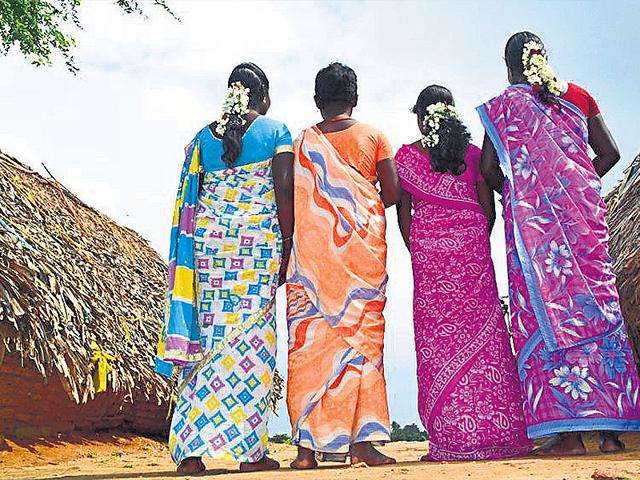
In several tribal communities, women still lock themselves for five days, shun food and all comfort during the cycle due to several prejudices surrounding the topic.
“In Kalhar block of Sheopur, women belonging to the Seharia tribe lock themselves in rooms having kaccha floors. They remain inside for five days and also refrain from taking a shower. They don’t even change their clothes,” a district community mobiliser (DCM) from Sheopur, Shabnam Afghani, says.
The prejudices have a direct impact on the school dropout rate.
“Girls dropout of schools soon after attaining puberty in the area due to the prejudices attached with menstruation,” Afghani says.
“While working in the area, we have come to know that neither school teachers nor anganwadi or Asha workers tried to convince the women that periodic blood flows from the uterus was not a sin or bad,” she adds.
The sanitation concerns were voiced by Afghani and other district community mobilisers from across the state at a state-wide workshop organised on the occasion of Menstrual Hygiene Day in Bhopal on Thursday.
The workshop was organised by WaterAid India in coordination with National Health Mission (NHM), UNFPA and UNICEF.
{{/usCountry}}The workshop was organised by WaterAid India in coordination with National Health Mission (NHM), UNFPA and UNICEF.
{{/usCountry}}“Among Baiga tribe there is a practice to make menstruating women sleep on the floor. They are treated like patients, as if they are suffering from some communicable disease. Whenever, we hold training programmes on women hygiene, parents feel shy to send their girls or even to discuss things related to it,” Amit Singh, a DCM from Mandla district, shares.
The tribes nestled in Jhabua district also feel that menstruation is a disease and not a normal biological process.
“Here too women were forbidden from sleeping on the bed, entering kitchens or religious places. So much so they are not even allowed to touch any male members or eat spicy food during their periods. Sometimes, it’s hard for us to explain that hygiene was more important for menstruating women,” DCM from Jhabua Ankita Mavi shares.
The DCMs face severe challenges in introducing sanitary napkins as the women here mostly use old rags, she adds.
According to WaterAid India’s Binu Arickal, there are four lakh adolescents in MP and about 70% of them feel that menstruation is a taboo.
Break the silence
There is a need of break the taboo and silence around menstruation and its management with the help of NGOs and government departments, district community mobilisers say.
“The state-wide workshop focused on the need of collective action by different stakeholders to bring about a healthy discourse around the issue of menstruation and its management,” Binu Arickal of WaterAid India said.
A set of seven posters, busting the common myths around menstruation, were also released during the event.