...
...
Next Story

Anne Carson and the art of being wrong

The work of the winner of the 2026 Nobel Prize in Literature repeatedly returns to uncertainty, sometimes with great seriousness, and at times with humour

Published on: Oct 9, 2026, 23:26:05 IST
Advertisement

When Anne Carson was informed that she had won the 2026 Nobel Prize in Literature, she was sitting in her kitchen in Reykjavík, eating crackers, drinking tea and reading the London Review of Books. She had noticed that the floor needed sweeping and had got up to do it. Meanwhile, her phone kept ringing, which she repeatedly switched off. Her husband and longtime collaborator, Robert Currie, eventually persuaded her to return the call.
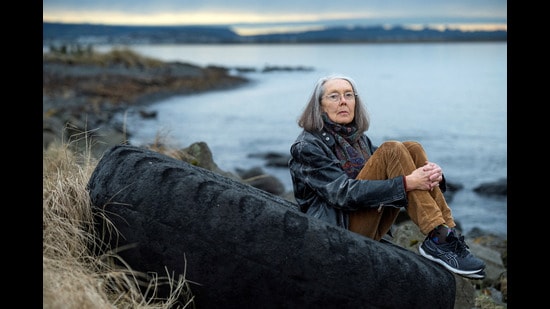
PREMIUMAnne Carson, winner of the Nobel Prize for Literature in 2026 outside her home in Reykjavik, Iceland. (REUTERS)
Anne Carson, winner of the Nobel Prize for Literature in 2026 outside her home in Reykjavik, Iceland. (REUTERS)

“It’s pretty crazy,” she told the

Her most widely read book, Autobiography of Red , shows how freely she handles the classical tradition

Her interest in ancient Greek began at school, when a Latin teacher agreed to teach her the language during lunch breaks. She later studied Classics at the University of Toronto, and went on to teach at institutions like McGill, the University of Michigan and Princeton. Homer has remained a lifelong companion.

Carson approaches ancient literature with an intimacy that makes centuries seem almost incidental. Greek myth enters contemporary life with all its absurdities and cruelties intact.

Her first book, Eros the Bittersweet (1986), established some of these preoccupations. Here, Carson considers desire as an experience shaped by distance and even absence. The book moves between classical scholarship, literary criticism and the essay, treating the act of reading as closely related to the act of longing.

The unusual pleasure of Carson’s work often comes from watching an argument. She can begin with an apparently scholarly question, introduce a strange detail, digress into another century and arrive at a thought that makes the original question look different. The knowledge she possesses can be formidable, but there is humour in the way she handles it. She seems particularly amused by the possibility of being wrong.

In a conversation with the Norwegian writer Linn Ullmann, she recalled being asked at American cocktail parties about the difference between her native Canada and the United States. She began telling people that Americans ruled the world while Canadians were always polite but wrong.

Her collection Wrong Norma brings together writings about Joseph Conrad, Flaubert, snow, poverty, her father, Guantánamo and Saturday night. The pieces have no necessary relationship to one another, and Carson seems pleased by their refusal to form a coherent whole.

“I thought, well, instead of that I could just tell people what they’re getting into when they read the book,” she explained, discussing the usual expectation that an author should advertise a book’s significance.

Float consists of separate pamphlets that can be read in different orders.

The pleasure of being wrong also appears in her willingness to leave things unresolved. Carson is drawn to hesitation and the spaces where language is not able to reach its subject. In the same conversation with Ullmann, she discussed Descartes and the neglected place of doubt in the philosophical tradition. “Everything starts in doubt,” she observed, suggesting that hesitation might be another way of understanding it.

Her writing repeatedly returns to this uncertainty, sometimes with great intellectual seriousness, and sometimes humorously with a joke at its own expense.

A sarcophagus showing the Labours of Heracles (Shutterstock)

Her most widely read book, Autobiography of Red, shows how freely she handles the classical tradition. Taking the Greek myth of Geryon, the red-winged monster killed by Herakles, she turns him into a sensitive, awkward boy who falls in love with Herakles as a teenager. The violence of the original myth transforms into an emotional injury. Herakles breaks Geryon’s heart and leaves him to make sense of desire, rejection and his own strange body. Subtitled A Novel in Verse, the book is full of lavish imagery and strange observations. Geryon hears colours and roses seem to roar across a garden, and the light of stars makes a noise against his window. Carson allows the physical world to acquire the intensity of Geryon’s feelings. Even ordinary things seem to participate in his emotional life.

The book also raises the old question about where does poetry end and prose begin in her writing. Some critics admired its sustained lyricism, while others questioned whether its lines were essentially prose arranged on the page. Carson has never appeared especially troubled by such distinctions. The Beauty of the Husband (2001), which won the TS Eliot Prize, calls itself A Fictional Essay in 29 Tangos. It follows a marriage damaged by infidelity, using the movements of the tango to consider desire, betrayal and the strange persistence of attraction after trust has disappeared.

Anne Carson’s translations of Sappho show a respect for what has disappeared.

In Glass, Irony and God (1992), particularly The Glass Essay, Carson’s writing is more intimate and severe. Emily Brontë, an unhappy love affair and the difficult companionship of a mother and daughter occupy the same emotional territory. Domestic details carry much of the feeling. Carson has spoken of being interested in how a mother sits at breakfast, what she does while preparing food, the habits that become almost invisible through familiarity.

She once admitted that she dislikes autobiographical writing, although it keeps entering her work. “You have no other story to tell,” she told Ullmann, because the only understanding of reality available to a writer comes from what has been lived. She also confessed that she has little talent for inventing stories. An ordinary accident, such as stubbing her toe on the way to the bathroom, is more likely to give her something to write about.

In Autobiography of Red , Carson takes the Greek myth of Geryon, the red-winged monster killed by Herakles, and turns him into a sensitive, awkward boy who falls in love with Herakles as a teenager. Pictured above, a wood engraving by Gustave Doré of Geryon for Dante’s Inferno. (National Library of Poland)

This attention to small things becomes especially affecting in ‘Red Doc>’, the sequel to Autobiography of Red. Geryon returns, older and still troubled, and the book moves toward the illness and death of his mother. Carson has spoken about the difficulty of writing this scene, recalling her own mother’s anxiety about her eyebrows while she was in hospital. She had always plucked them carefully and worried about looking terrible when she could no longer do so herself. Carson tried to help, although she found the task nearly impossible.

It is a characteristic Carson detail: the peculiar persistence of vanity, habit and personality in the presence of death. The daughter understands that the eyebrows hardly matter. The mother continues to care about them. Neither can quite enter the other’s understanding.

Death and the difficulty of understanding it occupy Nox (2010), an elegy for Carson’s brother, who died after years of separation from his family. The book unfolds as a long accordion of reproduced photographs, letters, fragments and translations. At its centre is Carson’s attempt to translate a poem by Catullus mourning his own brother. The physical form allows the reader to handle the scattered evidence of a life that cannot be reconstructed completely.

Her translations of Sappho, collected in If Not, Winter (2002), show a similar respect for what has disappeared. Much of Sappho’s poetry survives only in fragments, and Carson preserves the gaps and brackets rather than supplying words to make the poems whole. She has explained that the spaces represent the history of the texts and the enormous amount that has been lost.

For Carson, translation involves continually encountering words that cannot be replicated in another language. She is interested in the space between the original and its translation, where some imagined third language might exist. She has described the attraction of words that fall silent while passing between languages. Her translations of Euripides, Sophocles and Aeschylus have sometimes provoked disagreement over their contemporary diction, but they share her willingness to disturb the expected sound of classical literature.

Death and the difficulty of understanding it occupy Nox (2010), an elegy for Carson’s brother, who died after years of separation from his family

Her later books increasingly treat writing as something that can occupy physical space. Float (2016) consists of separate pamphlets that can be read in different orders. In performances of Stacks, Carson reads while Currie and another performer arrange cardboard boxes around her. The activity interrupts the reading, shifting the audience’s attention between words, movement and the stage.

Carson says Currie thinks of reality as sculpture, while she tends to think of it as a sentence. Their collaborations allow those two ways of understanding the world to interfere with each other. Influenced by John Cage and Merce Cunningham, she has become interested in moving attention away from the centre of a performance. She dislikes the conventional image of a writer standing alone before an audience, delivering words as though they contained a truth everyone must accept.

“Your mind wants to move,” she has said, arguing that art should carry thought somewhere unexpected.

In recent years, that concern with movement and attention has acquired a more personal urgency. Carson has spoken openly about living with Parkinson’s disease, which has affected her handwriting. In her essay Gloves On, she describes the embarrassment of watching the careful cursive she once loved deteriorate into uncontrollable marks.

Writing by hand had always been a physical pleasure for her. She loved the curves of letters, the movement of a pen across a notebook and the appearance of a completed page. Losing that ability has also disturbed the process of thinking itself. Typing does not offer her the same experience.

She has taken up boxing as therapy, learnt sequences of punches that demand concentration and coordination. The classes have also brought her into contact with people outside her familiar academic world. With disarming self-criticism, Carson describes herself as an arrogant intellectual who once assumed that reading books made her superior to others. Paying closer attention to her fellow boxers has challenged that assumption.

The Beauty of the Husband won the TS Eliot Prize

Carson has often said that she originally thought of herself as a visual artist. She drew long before she began writing seriously and still considers the book an imperfect form for what she wants to make. Her work has consequently kept expanding beyond its pages, incorporating performance, drawing, photography and arrangements of space.

At 76, she is also increasingly conscious of mortality. In Gloves On, she describes ageing as the sudden awareness of a dark doorway that has been present all along. Elsewhere, she wonders how people can read about suffering in the newspaper, enter briefly into another person’s grief and then return to making breakfast.

Carson does not pretend to have resolved such questions. Her books preserve the uncertainty, that too with great tenderness.

Pranavi Sharma writes on books and culture. She lives in New Delhi.

When Anne Carson was informed that she had won the 2026 Nobel Prize in Literature, she was sitting in her kitchen in Reykjavík, eating crackers, drinking tea and reading the London Review of Books. She had noticed that the floor needed sweeping and had got up to do it. Meanwhile, her phone kept ringing, which she repeatedly switched off. Her husband and longtime collaborator, Robert Currie, eventually persuaded her to return the call.

PREMIUMAnne Carson, winner of the Nobel Prize for Literature in 2026 outside her home in Reykjavik, Iceland. (REUTERS)
Anne Carson, winner of the Nobel Prize for Literature in 2026 outside her home in Reykjavik, Iceland. (REUTERS)

“It’s pretty crazy,” she told the Nobel interviewer. “I think you’re all insane.”

Asked how she intended to celebrate, Carson said she and Currie would walk in the woods to avoid answering the telephone. They wanted to hear the quiet. She had already begun thinking about giving away the prize money, perhaps helping a friend buy a house and making a donation to Doctors Without Borders.

Carson has spent much of her writing life resisting the expectation that things should happen in their proper order, or that a writer should have an explanation for what she has made. Even her advice to aspiring writers was characteristically unhelpful and oddly sensible: “Start in the middle. It’s the only rule I have.”

The Swedish Academy awarded her the prize “for her bold and inventive oeuvre that, in playful dialogue with the classical tradition, has created new forms for contemporary literature.”

Carson, born in Toronto in 1950, is a poet, essayist, translator and professor of Classics, although none of these descriptions quite accommodates the range of her writing. Her work includes verse novels, fictional essays, translations, libretti, philosophical investigations, prose poems and pieces that seem to have wandered in from an entirely different literary form. She has written about Greek monsters, marital infidelity, erotic longing, Simone Weil, Sappho, mothers, swimming, Guantánamo, handwriting and the difficulty of knowing another person. That’s quite a range.

When asked to describe her authorship after winning the Nobel, she said “Inadvertent.” She was, she explained, “Always trying to do something else.”

Her most widely read book, Autobiography of Red , shows how freely she handles the classical tradition

Her interest in ancient Greek began at school, when a Latin teacher agreed to teach her the language during lunch breaks. She later studied Classics at the University of Toronto, and went on to teach at institutions like McGill, the University of Michigan and Princeton. Homer has remained a lifelong companion.

Carson approaches ancient literature with an intimacy that makes centuries seem almost incidental. Greek myth enters contemporary life with all its absurdities and cruelties intact.

Her first book, Eros the Bittersweet (1986), established some of these preoccupations. Here, Carson considers desire as an experience shaped by distance and even absence. The book moves between classical scholarship, literary criticism and the essay, treating the act of reading as closely related to the act of longing.

The unusual pleasure of Carson’s work often comes from watching an argument. She can begin with an apparently scholarly question, introduce a strange detail, digress into another century and arrive at a thought that makes the original question look different. The knowledge she possesses can be formidable, but there is humour in the way she handles it. She seems particularly amused by the possibility of being wrong.

In a conversation with the Norwegian writer Linn Ullmann, she recalled being asked at American cocktail parties about the difference between her native Canada and the United States. She began telling people that Americans ruled the world while Canadians were always polite but wrong.

Her collection Wrong Norma brings together writings about Joseph Conrad, Flaubert, snow, poverty, her father, Guantánamo and Saturday night. The pieces have no necessary relationship to one another, and Carson seems pleased by their refusal to form a coherent whole.

“I thought, well, instead of that I could just tell people what they’re getting into when they read the book,” she explained, discussing the usual expectation that an author should advertise a book’s significance.

Float consists of separate pamphlets that can be read in different orders.

The pleasure of being wrong also appears in her willingness to leave things unresolved. Carson is drawn to hesitation and the spaces where language is not able to reach its subject. In the same conversation with Ullmann, she discussed Descartes and the neglected place of doubt in the philosophical tradition. “Everything starts in doubt,” she observed, suggesting that hesitation might be another way of understanding it.

Her writing repeatedly returns to this uncertainty, sometimes with great intellectual seriousness, and sometimes humorously with a joke at its own expense.

A sarcophagus showing the Labours of Heracles (Shutterstock)

Her most widely read book, Autobiography of Red, shows how freely she handles the classical tradition. Taking the Greek myth of Geryon, the red-winged monster killed by Herakles, she turns him into a sensitive, awkward boy who falls in love with Herakles as a teenager. The violence of the original myth transforms into an emotional injury. Herakles breaks Geryon’s heart and leaves him to make sense of desire, rejection and his own strange body. Subtitled A Novel in Verse, the book is full of lavish imagery and strange observations. Geryon hears colours and roses seem to roar across a garden, and the light of stars makes a noise against his window. Carson allows the physical world to acquire the intensity of Geryon’s feelings. Even ordinary things seem to participate in his emotional life.

The book also raises the old question about where does poetry end and prose begin in her writing. Some critics admired its sustained lyricism, while others questioned whether its lines were essentially prose arranged on the page. Carson has never appeared especially troubled by such distinctions. The Beauty of the Husband (2001), which won the TS Eliot Prize, calls itself A Fictional Essay in 29 Tangos. It follows a marriage damaged by infidelity, using the movements of the tango to consider desire, betrayal and the strange persistence of attraction after trust has disappeared.

Anne Carson’s translations of Sappho show a respect for what has disappeared.

In Glass, Irony and God (1992), particularly The Glass Essay, Carson’s writing is more intimate and severe. Emily Brontë, an unhappy love affair and the difficult companionship of a mother and daughter occupy the same emotional territory. Domestic details carry much of the feeling. Carson has spoken of being interested in how a mother sits at breakfast, what she does while preparing food, the habits that become almost invisible through familiarity.

She once admitted that she dislikes autobiographical writing, although it keeps entering her work. “You have no other story to tell,” she told Ullmann, because the only understanding of reality available to a writer comes from what has been lived. She also confessed that she has little talent for inventing stories. An ordinary accident, such as stubbing her toe on the way to the bathroom, is more likely to give her something to write about.

In Autobiography of Red , Carson takes the Greek myth of Geryon, the red-winged monster killed by Herakles, and turns him into a sensitive, awkward boy who falls in love with Herakles as a teenager. Pictured above, a wood engraving by Gustave Doré of Geryon for Dante’s Inferno. (National Library of Poland)

This attention to small things becomes especially affecting in ‘Red Doc>’, the sequel to Autobiography of Red. Geryon returns, older and still troubled, and the book moves toward the illness and death of his mother. Carson has spoken about the difficulty of writing this scene, recalling her own mother’s anxiety about her eyebrows while she was in hospital. She had always plucked them carefully and worried about looking terrible when she could no longer do so herself. Carson tried to help, although she found the task nearly impossible.

It is a characteristic Carson detail: the peculiar persistence of vanity, habit and personality in the presence of death. The daughter understands that the eyebrows hardly matter. The mother continues to care about them. Neither can quite enter the other’s understanding.

Death and the difficulty of understanding it occupy Nox (2010), an elegy for Carson’s brother, who died after years of separation from his family. The book unfolds as a long accordion of reproduced photographs, letters, fragments and translations. At its centre is Carson’s attempt to translate a poem by Catullus mourning his own brother. The physical form allows the reader to handle the scattered evidence of a life that cannot be reconstructed completely.

Her translations of Sappho, collected in If Not, Winter (2002), show a similar respect for what has disappeared. Much of Sappho’s poetry survives only in fragments, and Carson preserves the gaps and brackets rather than supplying words to make the poems whole. She has explained that the spaces represent the history of the texts and the enormous amount that has been lost.

For Carson, translation involves continually encountering words that cannot be replicated in another language. She is interested in the space between the original and its translation, where some imagined third language might exist. She has described the attraction of words that fall silent while passing between languages. Her translations of Euripides, Sophocles and Aeschylus have sometimes provoked disagreement over their contemporary diction, but they share her willingness to disturb the expected sound of classical literature.

Death and the difficulty of understanding it occupy Nox (2010), an elegy for Carson’s brother, who died after years of separation from his family

Her later books increasingly treat writing as something that can occupy physical space. Float (2016) consists of separate pamphlets that can be read in different orders. In performances of Stacks, Carson reads while Currie and another performer arrange cardboard boxes around her. The activity interrupts the reading, shifting the audience’s attention between words, movement and the stage.

Carson says Currie thinks of reality as sculpture, while she tends to think of it as a sentence. Their collaborations allow those two ways of understanding the world to interfere with each other. Influenced by John Cage and Merce Cunningham, she has become interested in moving attention away from the centre of a performance. She dislikes the conventional image of a writer standing alone before an audience, delivering words as though they contained a truth everyone must accept.

“Your mind wants to move,” she has said, arguing that art should carry thought somewhere unexpected.

In recent years, that concern with movement and attention has acquired a more personal urgency. Carson has spoken openly about living with Parkinson’s disease, which has affected her handwriting. In her essay Gloves On, she describes the embarrassment of watching the careful cursive she once loved deteriorate into uncontrollable marks.

Writing by hand had always been a physical pleasure for her. She loved the curves of letters, the movement of a pen across a notebook and the appearance of a completed page. Losing that ability has also disturbed the process of thinking itself. Typing does not offer her the same experience.

She has taken up boxing as therapy, learnt sequences of punches that demand concentration and coordination. The classes have also brought her into contact with people outside her familiar academic world. With disarming self-criticism, Carson describes herself as an arrogant intellectual who once assumed that reading books made her superior to others. Paying closer attention to her fellow boxers has challenged that assumption.

The Beauty of the Husband won the TS Eliot Prize

Carson has often said that she originally thought of herself as a visual artist. She drew long before she began writing seriously and still considers the book an imperfect form for what she wants to make. Her work has consequently kept expanding beyond its pages, incorporating performance, drawing, photography and arrangements of space.

At 76, she is also increasingly conscious of mortality. In Gloves On, she describes ageing as the sudden awareness of a dark doorway that has been present all along. Elsewhere, she wonders how people can read about suffering in the newspaper, enter briefly into another person’s grief and then return to making breakfast.

Carson does not pretend to have resolved such questions. Her books preserve the uncertainty, that too with great tenderness.

Pranavi Sharma writes on books and culture. She lives in New Delhi.

All Access.
One Subscription.

Get 360° coverage—from daily headlines
to 100 year archives.

E-Paper
Full
Archives
Full Access to
HT App & Website
Games
 
Explore the latest Books News, author interviews, book reviews, literary events and new releases. Discover recommendations, reading lists and updates from the world of literature on Hindustan Times.
SHARE THIS ARTICLE ON
Notifications

Get breaking alerts directly from the newsroom

Notifications are on!You'll be notified when news breaks