How did you start writing? When did you decide to be a screenwriter?
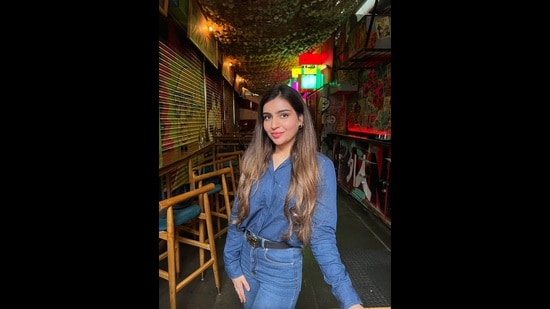
I have always been a compulsive hobbyist. As a child, I liked stitching clothes for dolls, painting, drawing, writing. I was perpetually in some creative work. I would write poetry, too. I was doing everything because I needed that creative outlet. I even journaled at the age of six. Any emotion I had, I had to pour it out in some sort of creative art. But it was my father, who said, “You will be a writer.” He didn’t say, “you can be”. He said, “you will be.” I must have been 15. I thought this is it! And after that it never changed. This is what I knew I had to do and would be doing. Horror was a genre I really wanted to do. I didn’t know how to make a horror film and where the market for it was. In fact, horror movies don’t do well even now. So, back then, you can imagine what it must be like. Then one thing led to the other. I went to study BMM at UPG. I am a Juhu girl, born and brought up in Bombay. So, when you’re not from a film background, you don’t know whom to approach. Then, I did a diploma in digital communication and VFX. There, I played with 2D animation. Once, I told someone at the institute that I wanted to be a writer. They said, “You can be a writer but not a director.” I didn’t understand why they were putting these ceilings on me. So, I went ahead and made short films while studying. MAMI was very new back then and they had a segment called Mumbai Dimensions. My short film got selected there.
Then, I thought, how do I make a career out of this? So, I joined a production house called RAW Films that did ads and music videos. It wasn’t exactly what I wanted to do, but it was still writing. I wanted to continue making my short films. I made a horror short film that was shown in Russia and at other festivals. That was my first short film which actually made money. They streamed it on a platform. It was called Shorts TV India, and Tata Sky paid some amount for the rights to show the film.
Then, I got a chance to work on a web series. I didn’t get made but at that time, Zoya Akhtar was looking for someone for Ghost Stories. This was around 2017-18. Her DA (Director’s Assistant) Arjun Varain Singh put me in touch with Zoya. It was like a dream come true. I met her, and she was asking me a lot of questions. I spoke a lot about horror, and she called me a “horror geek”. She liked some of my ideas, and we met again. There, I shared a couple of more ideas – one of them was the nurse one, which we eventually saw on Ghost Stories.
{{/usCountry}}Then, I got a chance to work on a web series. I didn’t get made but at that time, Zoya Akhtar was looking for someone for Ghost Stories. This was around 2017-18. Her DA (Director’s Assistant) Arjun Varain Singh put me in touch with Zoya. It was like a dream come true. I met her, and she was asking me a lot of questions. I spoke a lot about horror, and she called me a “horror geek”. She liked some of my ideas, and we met again. There, I shared a couple of more ideas – one of them was the nurse one, which we eventually saw on Ghost Stories.
{{/usCountry}}What was it like working with Zoya Akhtar?
Oh, I have to be eternally grateful for the person that she is. I was very shy and awkward, but she was very encouraging and motivating. It is one of the highlights of my life. Once the film came out, she didn’t have to talk about me or promote me in the media, but she did all of that. Only someone very secure would do that. Her mentorship helped me a lot, and I admire her.
Tell me about being a writer on Delhi Crime Seasons 2 and 3.
Delhi Crime 2; they had already started working on it. I had no connect at Netflix back then. But one of the production houses, Bombay Fables, who had come across my writing work, contacted me and said that the show had already started but they needed some writing help. They were already shooting at the time. So, I added things to the project, but the story was already in place. I was writing some of the screenplay and episodes. Also, the pandemic had hit back then. So, there was a lot of chaos.
Delhi Crime 3, however, was a different story. On that one, I was a Screenplay Writer and a Co-Writer. The screenplay was written by me and Sanyukta (Chawla Shaikh). There were other writers, too, who were handling some other part of the show, like Mayank (Tewari). Working on Season 3 was a fulfilling experience.
You insist on horror being your favourite genre. Given a choice, would you only work on horror?
I’m glad you asked me. I’m working across genres. In a sense, I have outgrown horror. Currently, I am doing a supernatural comedy, a romcom, a bit of sci-fi, and there is a film that’s commissioned, which is in the action genre. So, everything across the board is being worked on except horror at the moment. I’m more interested now in the oddities of human nature in the comedy space or in a dysfunctional family space. I want levity in my work now instead of just scares, and it’s a conscious choice that I’ve made to do this kind of work.
Are there any themes that you want to explore?
I love neuroscience. I am more of a reader than a watcher. So, I read a lot, and I read a lot about the human psyche. I think, every character and their complexity is very enjoyable. I want to explore human consciousness. I want to explore the meaning of life even in day-to-day situations. The question ‘Why are we here?’ interests me a lot. So, if there were a project I was doing by myself, I’d explore that – existential dread.
Is it a gender-equal world for younger women screenwriters such as yourself?
In my experience, it has been equal. I started with Zoya. She is one of the best screenwriters we have, and she is a woman, so working with her, gender never came in the way. I also think that some women screenwriters are reduced to writing about women’s issues only, and I don’t feel like working that way. I look at the world in a very gender-neutral way. I want to write about things that interest me. I had this funny conversation with someone recently when I told him: “Now, I am this token female screenwriter in this Writers’ Room to give you a ‘female’ perspective!” I mean, I don’t understand what a female perspective is. I don’t have a female perspective; I have my perspective as Ensia.
The only place where I have an issue -- I don’t know if it is because I am a woman or just who I am – is with how vulgarity is sometimes portrayed on screen. I think, in India, we have some responsibility, especially while talking to a younger audience.
Do you think it’s cinema’s responsibility to educate society or to morally better it?
I wouldn’t say educate or morally better, but I think we need to understand that what we are writing and creating is reaching different kinds of people and is going to influence them. It’s good to be conscious of what we are doing. I am conscious of the lens I choose with which to look at a subject. For instance, am I justifying crime, or am I offering a deeper view into crime as it happens? There’s a nuance there. I know that films are used to shock people, but there’s a fine line we are treading there, and we should be aware of it.
There’s more censorship on films and shows now than ever before. How do you deal with that?
I haven’t experienced it personally. With Delhi Crime, we were very aware of this issue and found a way to navigate that. We were also aware of the kind of profanity that we were using in the show, and we had to tone it down.
Which films and filmmakers have influenced you?
Artificial Intelligence is my favourite film. I think no matter how many times I watch it, I learn something new. It’s ahead of its time.
I really like Christopher Nolan; I like how he builds a philosophical lens to everything. I like Aaron Sorkin’s dialogue and how he just makes everything float! I like Steven Spielberg; Tim Burton and his take on Alice in Wonderland. I also enjoy Karan Johar movies. I’ve grown up on them. I love Kal Ho Na Ho. And, of course, I love Dil Chahta Hai too. I won’t say I’m a very serious watcher. I think there’s enough seriousness happening in life anyway.
Mihir Chitre is the author of Screen Writers Inc. - 33 Masters on the Art and Craft of Screen Writing, and of two books of poetry, ‘School of Age’ and ‘Hyphenated’. He is the brain behind the advertising campaigns ‘#LaughAtDeath’ and ‘#HarBhashaEqual’ and has made the short film ‘Hello Brick Road’.