
 E-Paper



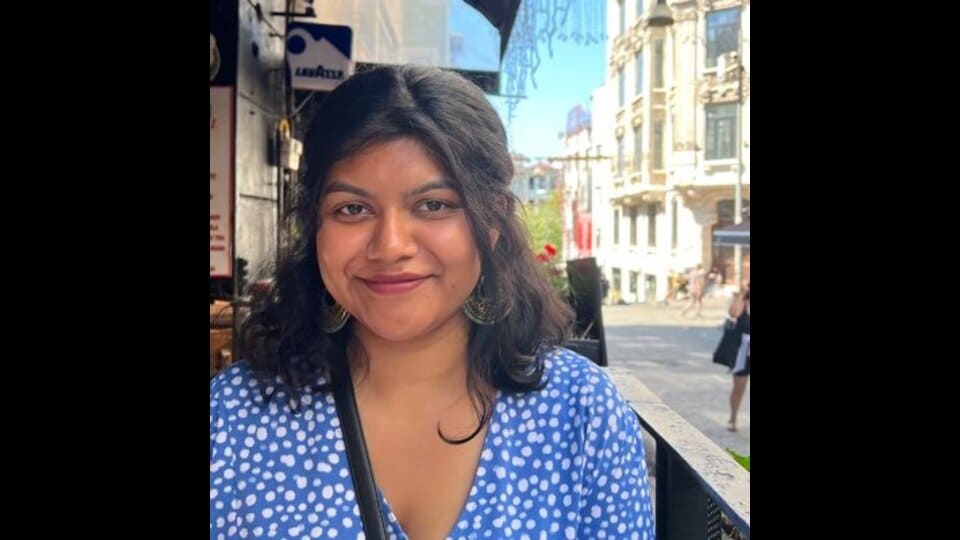
Faria Basher: “I realised the only way to become a writer was to start writing”
The Asia regional winner of the 2025 Commonwealth Short Story Prize on the pressure to marry

 Prefer HTon Google


Your story, An Eye and a Leg, draws its readers in — grabbing their eyeballs — with its opening line, “When my eye fell out of its socket, I called for my mother.” This surreal story is actually a pretty accurate depiction of a South Asian woman in her mid-thirties and the marriage market. Your narrator is, as her family doctor diagnoses her, “an expiring woman.” The only cure is marriage which, has to be arranged through the marriage market, an actual place at a convention centre where women and their families gather for single men to come and pick wives. How and when did you start thinking about the story and this surreal realist form it takes, and when did you start writing it?
My entire life, really, I’ve seen marriage pressures, especially in the South Asian community. Growing up, you witness just the dehumanization, the commodification, of women. I think, seeing my immediate family, seeing women back in Bangladesh as well, laid the groundwork. When I hit 24, the questions started coming... subliminally messaged remarks, gentle nudges here and there. I was finishing up my master’s degree and instead of questions about my future, my professional aspirations or my dreams, it was, ‘When are you getting married?’ And I think it led to a train of thought where I felt like society was telling me I was going to expire.
I wanted to take a lot of what was implied and paint it very literal... When I paint it in a way where my protagonist’s eyeball is falling out and her legs falling off, I wanted to point out how ridiculous it is.
The marriage market is more on the nose. But that’s how it always felt to me. I remember going to cattle markets with my father when I was a kid and it almost felt like that. Even though it wasn’t in a physical premise premises, I think it’s still very much felt to me like selling a woman.
About a year into your narrator’s marriage thing start changing. “My husband was kind, and then he was not. With men, it is always the same story,” she says. What was going on with him?
It’s just something that I’ve seen in my personal life. A lot of men in my life do start off quite nice, quite civil. I think in chasing further complexity with men often or asking for more involvement or more grace or kindness is then maybe when certain conflict arises. That honeymoon period where things are good or maybe women are often allured by initial superficial kindnesses, I really wanted to highlight that, and then the eventual disintegration.
But then after being married, her eye and leg grow back...
I really wanted to highlight how internally empty she was. In losing her sense of self, her physical self came back. And I think that sort of reflects how society will view a married woman. So even if she’s internally unhappy, frustrated, stuck in a dynamic that doesn’t serve her... in the eyes of the people that she was surrounded by, following the logic of the story, she did become whole again.
This story is the first piece of writing you’ve published. When did you start working on it and decide to submit it for the award? Tell me more about your writing life.
I, admittedly, am not a writer by trade.
When I was in New York — I was doing my Master’s in human resources over at NYU — so mid-2023, I wanted to take more concrete steps towards writing. And being in a city like New York, there’s just always something going on there. I would go and sit at the Poets House sometimes, some places in Brooklyn as well, the poetry society has their physical location there. I started going to free poetry readings in the city, reading books on how to write better and watching YouTube videos on how to write a good short story or novel.
I’ve always been drawn to weird books. I love books where women are a little unconventional or a little wonky or do strange things, like Han Kang’s The Vegetarian, Sayaka Murata’s Earthlings, and Nawal El Saadawi’s Woman at Point Zero.
And I realised the only way to become a writer was to start writing.
Wait, was this the first story you had ever written?
This is the first story that I wrote to completion. I have a million ideas a day. I write two paragraphs for each one and they never see the light of day again. I’m a frazzled, frazzled writer. But this one I saw through to the end. I really believed in it. I really felt like I had something to say here... But yes, very much a new writer, and I hope to keep that momentum going. I submitted this story for myself, but... I’m so grateful for the attention.
As you might know, I’m the first regional winner for Asia from my country. So that feels significant, I think, in drawing attention to literary talent from the country as well as its diaspora.
You’re very much a third culture kid. You’re in Manila now, but you’ve moved around quite a bit. How long did you live in Bangladesh?
I was born in Bangladesh and then when I was one-and-a-half years old I moved to the States. When I was eight, I moved to back to Dhaka. Then, when I was 16, I moved to the Philippines. And then at 18, I went to the UK for my undergrad in international business. Yeah, very, very boring. I have a lot of love for my alma mater, the University of Edinburgh, but it was not the most interesting degree in the world. And then when I was 23, I moved to New York. and that rounds it off to 25 at the moment.
But yeah, first regional winner from Bangladesh. The adviser on cultural affairs to the interim government [filmmaker Mostofa Sarwar Farooki] wrote a status [on Facebook] about me, which was pretty crazy. I had no idea. I mean, who would have thought?
Saudamini Jain is an independent journalist. She lives in New Delhi.


