Portrait of an unlikely leader
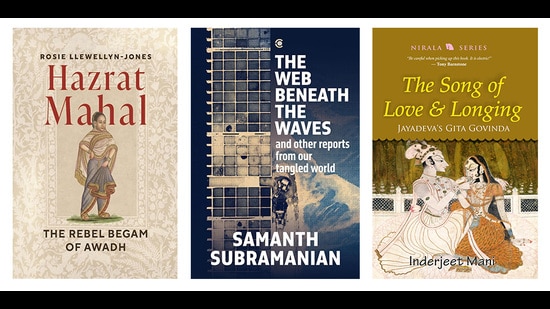
Begam Hazrat Mahal (1820–1879) is an elusive figure in Indian history – her origins and destiny have remained shrouded in ambiguity. The daughter of a slave – likely of African ancestry – and a domestic servant, her birth name is unknown. What is known is that she entered Prince Wajid Ali Shah’s Pari Khana as a courtesan and was renamed thrice before emerging as Hazrat Mahal, one of his many wives. She gave birth to the prince’s son Birjis Qadr in 1844 and, after Wajid Ali inherited the throne, briefly enjoyed the position of a favourite. By the end of the decade, however, the two were divorced.
In 1856, the East India Company annexed Awadh and deposed Wajid Ali Shah. The takeover was sudden and brutal, igniting fear and dissatisfaction among the people. At the same time, the events now known as the First War of Independence were stirring across India. With Wajid Ali exiled and eventually imprisoned in Calcutta, thirteen-year-old Birjis Qadr became the royal figurehead of Awadh’s rebel opposition and his mother, the begam, its de facto leader. Hazrat Mahal appeared immune to prejudice in her attempts to unite the fragmented rebels: powerful landowners, nawabi elite, religious leaders, enraged soldiers and citizenry. Despite her lack of education and experience, she devised military strategy, dealing with two, sometimes three, groups of soldiers with conflicting ideas, and negotiated with an unimaginably powerful enemy, the East India Company itself. And at the centre of her brief rule is one of the most dramatic episodes in the history of British India: the siege of the Lucknow Residency.
Drawing from decades of meticulous research and previously undiscovered archival material – Indian and British – acclaimed historian Rosie Llewellyn-Jones rescues this ruler from obscurity and renders the complexities of nineteenth-century Awadh through the story of its fiercest, most unlikely leader.*
{{/usCountry}}Drawing from decades of meticulous research and previously undiscovered archival material – Indian and British – acclaimed historian Rosie Llewellyn-Jones rescues this ruler from obscurity and renders the complexities of nineteenth-century Awadh through the story of its fiercest, most unlikely leader.*
{{/usCountry}}Love as human ache and divine force
A modern reimagining of Jayadeva’s Gita Govinda, The Song of Love & Longing preserves the sensual intensity and spiritual depth of one of Sanskrit literature’s most enduring love poems. In this contemporary translation, Inderjeet Mani brings the eternal lovers Krishna and Radha vividly to life. Their story moves through separation and reunion, desire and fulfilment, revealing love as both human ache and divine force. Sanskrit prosody is transformed into supple English lyrics, shaped by dramatic structure, gentle rhyme, and crosscultural poetic techniques that restore the work’s original vitality as song and performance. At once erotic and devotional, playful and profound, this rendition grants Radha equal presence and agency, presenting the Gita Govind as a living drama rather than a distant classic. The Song of Love and Longing invites readers into a timeless realm where love – tender, consuming and sacred – binds the cosmos itself.*
The cables that stitch continents together
We think of the Internet as wireless, weightless, ever-present — but its true foundation lies in the ocean’s depths, where nearly 900,000 miles of fibre-optic cables quietly pulse with all the world’s information.
In The Web Beneath the Waves, the acclaimed journalist Samanth Subramanian travels from remote Pacific islands to secretive cable-laying operations to reveal the astonishing world of undersea infrastructure. He reveals the fate of Tonga after a volcanic eruption severs its only undersea link to the Internet, meets the men and women engaged in the fiendishly complex work of laying submarine cables, and scrutinizes the acts of “grey zone warfare,” in which ghost ships cut the cables of other countries.
Subramanian charts the deep geopolitical tensions, corporate power grabs, environmental risks, and quiet heroics involved in maintaining the Internet’s unseen circulatory system. With clarity and curiosity, he brings to life the cables that stitch continents together — and exposes just how vulnerable our connected lives really are. This is narrative non-fiction at its most urgent and eye-opening: a book that asks what happens when the world goes offline, and who controls the switch.*
*All copy from book flap.