
 E-Paper



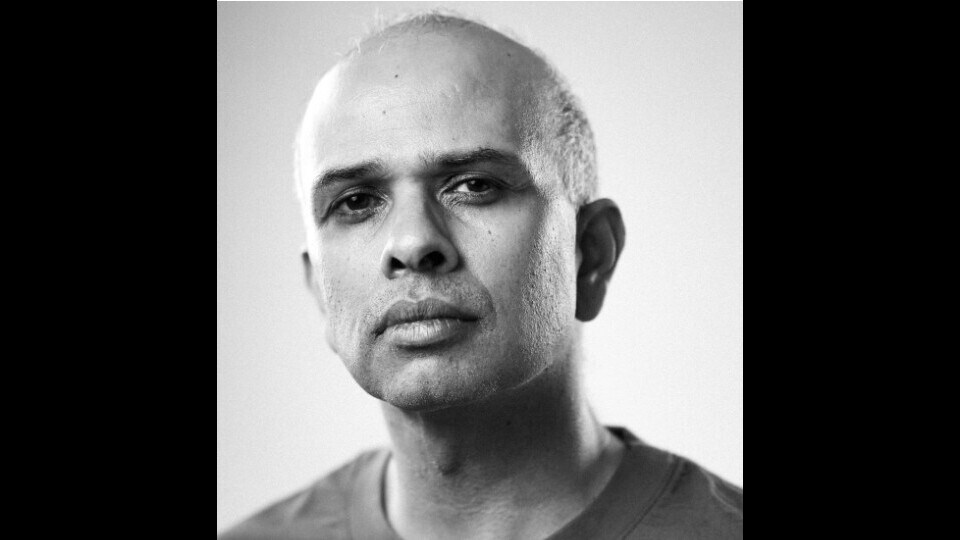
Mahesh Rao: “It was really important to me that the book end on a note of hope”
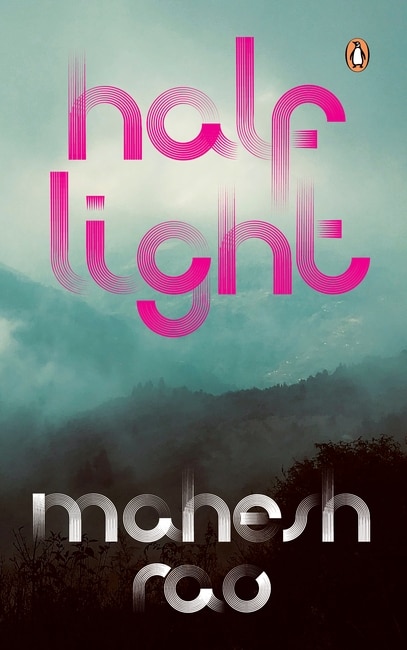
Mahesh Rao's novel "Half Light" explores desire, class, and the impact of India's changing laws on a complex romance between Pavan and Neville.

 Prefer HTon Google


I read your new novel, Half Light, as a portrait of desire. It starts with this young, very physical, romance, which eventually becomes demanding and vicious. Pavan and Neville come from very different backgrounds — and the novel is bookended by two pivotal moments. They meet in 2014 at a middling hotel in Darjeeling where Pavan works and Neville is a guest. This is the year after the Supreme Court reinstated Section 377 making gay sex in India illegal again. The second half of the novel plays out in 2018, the year when the court reversed its earlier order and decriminalized gay sex. Could you tell me a little bit about mapping this novel?
I knew that the second part of the novel had to happen in 2018 because I knew that in terms of the framework of it, I did want the final 377 decision to unfold in the characters’ lives. But I didn’t want to foreground it in a way that made this a book about the judgment. It was more about, What does it mean to an ordinary person’s life?
And so, I then just had to work backwards in terms of plotting how old would they be if they met a few years before? Because I needed to give them time and space from each other too. So, after the incident that happens at the end of part one, they needed time to grow into their newer selves.
And also, there were curious things like I wanted to make sure that Neville was 18 in the first part and not 17 because if not that would have made Pavan guilty of statutory rape. And in fact, in part of my first draft, he was actually 17. And then I remembered that the age of consent changed in India a little while ago, so I didn’t want that to be a distraction because this book isn’t about the age of consent. It’s about other things.
Section 377 really is very much in the distant background. When the Supreme Court overturns its decision, Pavan learns of it when he chances upon celebrations on the street and Neville, who knew of it, had forgotten about it on the day.
I don’t know if you remember that afternoon when the judgment was handed down… It was September 2018, and I was alone at home, well, working and, I think we were all just following it on social media. We knew it was coming that day and we had no idea how it would go. It had already been recriminalized, gone to this wider bench, and the Indian Supreme Court is very unpredictable in terms of where its favour lies, so I think it was a wonderful surprise when it happened. And I’m sure you remember too, there was this sort of explosion of euphoria. People were going mad. There was hugging if you were with people. Or if you weren’t, you were phoning them. And you were watching it all unfold on social media.
And then by about five o’clock, certainly for me because I was by myself, it just felt very quiet. And I remember thinking then, Okay, so what now?... The overturning of this is a huge thing, but what impact is it really going to have on our lives? And I remember thinking this would be such an interesting thing to explore in a novel. I had absolutely no idea. I promise you, that novel would become mine because I was working on something really different.
Your novel plays out very gently. The real lurking dangers remain in the peripheries. The violence and tragedies are quieter somehow than what, at least, I was anticipating. Were you tempted to make really bad, terrible things happen?
I think a bad thing certainly happens in the latter half. I mean, what Neville does is a really bad thing. But people’s view on that can vary enormously. Some people are extremely unforgiving, some would understand that he was young and he was angry and that he will spend a lot of the upcoming years in regret. It was designed to have that ambiguity. I get the impression that from your reading you’re more likely to perhaps forgive him as time goes on.
Yes, because one knows that the ending of any relationship can make people very spiteful.
Absolutely. And we live in a world where technology enables your anger to be acted upon within seconds. If he had stayed one more night thinking about that, I feel like maybe he wouldn’t have done it. But we live in a world where you can do such a thing in that moment when your blood is boiling. It felt more realistic to me because whether we’re talking about hookup culture or app culture or whatever it is, there is the messiness of it all. But I did also want to end on a note of hope that we learn from the messiness and then move on.
It was really important to me that the book end on a note of hope, because this was an incredible thing that happened in India. It is truly something to be celebrated at a time when there’s very little other cause for celebration here. 377 or its descendant law still exists in many other countries, so what happened to us feels almost miraculous. Someone said this to me, and I thought it was quite apt. It’s a romance in the first half, but in the second half, it’s an anti-romance.
Half Light is a very personal novel. Tell me about tapping into vulnerable parts of yourself to write it.
It did feel quite exposing. It felt, for the first time, really, that I was in some way closer to my characters than I’ve ever been before. The advantage of that is that you don’t have to go out and do tons of research. You feel like you know a lot of things instinctively.
Having said that, I was writing about much younger people. And I think you’ve got to be really careful that you’re not someone who is embodying that meme — “How do you do, fellow kids” — as you write. So, I was quite careful in that because we’ve all been young, but to be young in the 2010s would have been quite different from when I was that age. Certainly, there have been all these technological changes, but also in terms of mindset, particularly with Neville. He’s just very, very confused. A lot of people won’t have sympathy for him, but I do have a lot of sympathy for him because, yes, he’s relatively privileged, but he’s not that privileged, in the sense that he’s got his nose pressed against the glass. And I think many of us have often felt that we have our faces pressed against the glass. There are worlds that we want to break into, there are things that we want to do, and there are ways in which we want to create, but we just don’t know how. And I think that he is very young, and I wanted to tap into that kind of confusion and ambivalence. His fault is that he’s also very lazy, which doesn’t help.
He does get worse in the second part. But this is as much a novel about desire and sexuality as it is about class. A lot of what happens in the second half of the novel is basically him asserting his class and caste privileges. And I think for me, that was really important, those frictions, when these things come up against each other, where these kinds of behaviours collide.
There’s also that Pawan is gaining social mobility in the second half, which complicates their dynamic.
I was interested in how power can change in relationship. Power in a relationship comes from all sorts of places. So yes, in, in their instance, it comes from their different backgrounds.
But also, Pavan is about six years older, which is fairly significant at that age. And so generally you assume an older person to be a bit more knowledgeable, a bit more manipulative, perhaps. But in this particular relationship it’s quite the opposite because Pavan is so inexperienced and so naive in spite of being the older one. But then, that again, shifts in the second half, as you say, with his social mobility and his growing confidence. He’s reclaiming a lot of the power again and I think that’s what creates so much of the friction because Neville can see someone is on the up, whose life is progressing while his own is not. Neville is stuck in the doldrums, he’s, again, he’s got his nose pressed against the glass, seeing high society in Bombay. Pavan isn’t like that. He’s more distant, his aspirations are different, his trajectory is slower, but actually he’s doing very well.
And so, I think the class factor — when he witnesses that Pavan doesn’t need him anymore, he’s made his own way in life — that sort of triggers this need to be, to be wanted.
That’s the beginning of the kind of unraveling of this whole thing.
You’re one of the few Indian writers who posts frequently about books. You had also worked at a bookshop in the UK for a couple of years. Tell me a bit about your very engaging literary life?
I would still say even today that I’m much more of a reader than a writer.
I ended up in a bookshop accidentally. I was sort of between jobs and I needed a job, but it was one of the best jobs I’ve ever had. Not to sugarcoat it too much because I will say it’s also incredibly hard work. A lot of it is just drudgery. But what was wonderful about it was being able to talk to people about books. If you’ve been a reader and used to books, it’s second nature to you. But these kinds of spaces are actually quite intimidating and frightening for some people. A bookshop space, when you have time to engage with someone, it unlocks all sorts of vulnerabilities and confidences. There’s a kind of intimacy about it. And that’s what I loved. [As for posting,] it’s what breaks up the day.
Saudamini Jain is an independent journalist. She lives in New Delhi.


