...
...
Next Story

Manoj Tapadia: “No director can make a good film out of a bad screenplay”

The screenwriter of such films as Cheeni Kum and Manorama Six Feet Under and director of Bharat Bhagya Vidhata on his creative process

Updated on: Oct 26, 2026, 18:53:17 IST
Advertisement

Why did you decide to become a writer and then a screenwriter?
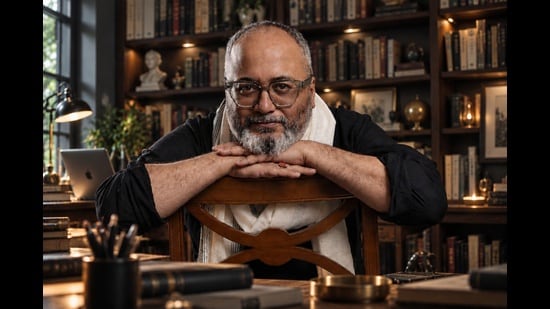
PREMIUMDirector and screenwriter Manoj Tapadia (Courtesy the subject)
Director and screenwriter Manoj Tapadia (Courtesy the subject)

My childhood wasn’t easy, but it also shaped me and built my character. I lost my father when I was 11. That also meant a change of place and estrangement from my sisters and mother, as we all lived with various uncles in various cities. Yet, it was a very significant turning point in my life. The day my father died, I became aware of my being and

A scene from Cheeni Kum (2007) (Film still)

Screenwriting happened both gradually and by accident. I joined advertising and was writing ads. Ads are like 30-second screenplays with stories and dialogues, especially the narrative ones. Advertising sharpened my skills in being intriguing and funny. In 2005, I was pulled in by Balki to help with the dialogues and songs of Cheeni Kum. That’s where I read the first screenplay of my life. I learnt a lot from that experience and from Balki. Later, my friend Shujaat Saudagar gave me two screenplays of some Hollywood classics to read. After that, I read other books to understand the craft.

Do you see writing films, ads and poetry as separate vocations, and do you approach them differently?

All are the same, yet very different. All begin with an idea or a thought, or maybe even an expression that leads to a thought. The best are the ones based on genuine human insights; people instantly connect with those. The craft may be different, but the approach is always the same. Everything starts with a “What if?” Writers of any kind first create problems, get entangled in them, and then find a way to come out of them. Otherwise, there is no reason to write fiction of any kind.

Besides being a screenwriter, you’re a filmmaker. How does writing a film you’re directing differ from writing a film you’re not?

There are two aspects to it: ads and long format. When I have written an advertisement, I have clarity. The writer and director in me complement each other, but the director takes the final call. Directing ads written by someone else requires one to understand where they are coming from, what they want to convey, and what the expectation is from the execution, tonality, feel, and the works. Post that, I try to see it more as a director, which is mainly visualizing it, adding finer nuances, stuff that can elevate the storytelling by at least three notches from the script, and removing stuff that is unnecessary.

In long format, I have only directed stuff that I have written. But I’m sure [even if I haven’t written the script], I will get into the written words deeply enough to make them my own. I don’t know any other way to direct, actually. I need to feel everything.

Take me through the process of writing Cheeni Kum.

Oh! It was fun. It was Balki’s story, and he had structured the screenplay with indicative dialogues in English. We built it from there. It was simply two copywriters having fun. Characterisation, nuances, and punchlines all evolved from there. Some of the secondary characters got more life. Heavy logical discussions and debates. Crafting and recrafting, and then some more crafting. Fighting over each word. Economising. Even taking parts and acting them out. Balki was generous with a rookie like me. He indulged me, and I was allowed to call a spade a spade. We wrote it for two years, I think. I discovered myself as a writer with that film.

“Manorama helped me explore the desi side of me, as I had read a lot of pulp fiction written by the likes of Surendra Mohan Pathak.” (Film poster)

Manorama Six Feet Under is an underrated film. What was it like writing it and why do you think it did not do too well at the box office?

Absolutely underrated. I wrote only the dialogues and a song for it. The screenplay was by the director Navdeep Singh and Devika Bhagat. I was roped in while Cheeni Kum was still under production. While Cheeni Kum was very urban, Manorama helped me explore the desi side of me, as I had read a lot of pulp fiction written by the likes of Surendra Mohan Pathak. That came in quite handy. The film wasn’t marketed at all. Only cinephiles knew. But it became a cult in the DVD circuit. To my mind, that’s Nopi’s (Navdeep’s) best work till date.

You wrote and directed your latest, Bharat Bhagya Vidhata (2026). How did the idea come to you and what was the process of writing and then mounting the film?

From a newspaper article. We researched, and then I wrote. I took a lot of traits from real-life characters. Even the language nuances were picked up from there. Frankly, the writing evolved till the dubbing stage! I must have written some 100 drafts of it. I am a firm believer in craftsmanship as much as creativity. And there is no end to crafting.

Mounting it took seven years. That’s a story in itself. It took a lot of blood, sweat, and tears, but we did it. Maybe I will write a book or a screenplay on that someday.

What is your idea of success as a screenwriter?

Get the audience glued to the screen and make them think long after it has ended. Screenplay is all about how to tell the story in the most engaging and entertaining way. The aim is to make the audience have as much fun as you have writing it. No director or actor can make a good film out of a bad screenplay. Also, when the audience doesn’t even notice crater-sized execution flaws and is still engaged, it has to be a good screenplay.

What is your process of writing?

For me, it all begins with a thought and an idea based on some insight; a question — what if? Then, I start building the world around it. I ask myself many questions and then search for the answers. I actually work on the story a lot in my head before putting it on paper. Unless I can actually clearly see everything, I don’t write. Then, I write a detailed story with characters as I see them — their traits and quirks, how they react and interact. The story is usually linear. Sometimes a scene or an incident can spark a thought. Or maybe a line one has read somewhere. I first work on the story, as that is supremely important. Once I can no longer contain it and my fingers are dying to key in, I decide the structure. This usually takes the longest. Sometimes I simply start jotting down as I see it and then juggle. Make and break the mould, play around with it. Other times, I am pretty clear that broadly this is the structure, and I simply start writing the one-liners or the beats. Once that is done, I revisit. Then I start expanding it into screenplay and dialogues simultaneously. I keep writing and rewriting till I’m happy. Then I send it to people to read. I pick those who will critique it and find local flaws. Then I fix those later. Crafting takes time, but I enjoy it. Ideas can come from anywhere; it’s up to a writer how he catches them and remoulds them to suit his story.

“Mounting Bharat Bhhagya Viddhaata took seven years. That’s a story in itself. It took a lot of blood, sweat, and tears, but we did it. Maybe I will write a book or a screenplay on that someday.” (Film poster)

Does the physical place where you write play a role while you are working on a screenplay?

I have a corner in my room at home. Nothing in that corner has changed in the last 20 years. I haven’t tried going to some hill station and writing. I think I won’t be too productive there, as I would be busy enjoying rather than working. Also, I tend to dive deep into my thoughts rather than spread thin. So absolute concentration and focus work best. I have written scripts with other writers too. That is also fun, as fights have their own place in pushing the bar. For me, sitting alone and writing is actually quite therapeutic. I can’t enjoy two things at the same time, so no, I don’t listen to music while writing.

Which films and filmmakers have influenced you the most?

My favourite films are Do Bigha Zameen, Bicycle Thieves, Gol Maal, Chupke Chupke, Angoor, Masoom, Ek Doctor Ki Maut, Pyaasa, Seemabaddha, Mahanagar, Nayak, Shoplifters & all of Koreeda’s films, all of Asghar Farhadi’s and Kiarostami’s films. There Will Be Blood was simply mind-blowing.

Now, some of my favourite filmmakers would be Hrishikesh Mukherjee, Bimal Roy, Satyajit Ray, Vijay Anand, Gulzar, Akira Kurosawa, Asghar Farhadi, Abbas Kiarostami, Hirokazu Koreeda, Vittorio De Sica, Paul Thomas Anderson, Spielberg, Scorsese. Actually, there are too many. I also like the irreverence of Manmohan Desai’s films and spaghetti westerns.

What do you do when you face writer’s block?

I simply go to sleep, shower, or even walk. Just leave it. It comes back magically. I don’t know how.

Mihir Chitre is the author of Screen Writers Inc. - 33 Masters on the Art and Craft of Screen Writing.

Why did you decide to become a writer and then a screenwriter?

PREMIUMDirector and screenwriter Manoj Tapadia (Courtesy the subject)
Director and screenwriter Manoj Tapadia (Courtesy the subject)

My childhood wasn’t easy, but it also shaped me and built my character. I lost my father when I was 11. That also meant a change of place and estrangement from my sisters and mother, as we all lived with various uncles in various cities. Yet, it was a very significant turning point in my life. The day my father died, I became aware of my being and my responsibilities, and wisdom dawned all of a sudden. For the first 10 years of my life, I was totally unaware, carefree, and almost in a dream world. I was pampered by my mother, as I was the only son among five daughters. My sisters were my real mothers and first teachers. And to this date, they remain so.

I never dreamt of becoming a writer; I was more of a public speaker. Bored with the set ways of school, I started inventing newer ways to engage the audience from class 7. I needed something new, each time; maybe a sher, an anecdote, a quote, or a joke; something that would hook the audience immediately. That led me to books. Books opened the world for me, especially poetry. Reading led to writing for pleasure, but mostly poetry. I enjoyed reading and watching stories, but never thought of writing one, as I fancied myself more a poet than anything else. I had read a lot of stories and even nonfiction by the time I was in the 10th standard. I also read a lot of books written by Osho.

A scene from Cheeni Kum (2007) (Film still)

Screenwriting happened both gradually and by accident. I joined advertising and was writing ads. Ads are like 30-second screenplays with stories and dialogues, especially the narrative ones. Advertising sharpened my skills in being intriguing and funny. In 2005, I was pulled in by Balki to help with the dialogues and songs of Cheeni Kum. That’s where I read the first screenplay of my life. I learnt a lot from that experience and from Balki. Later, my friend Shujaat Saudagar gave me two screenplays of some Hollywood classics to read. After that, I read other books to understand the craft.

Do you see writing films, ads and poetry as separate vocations, and do you approach them differently?

All are the same, yet very different. All begin with an idea or a thought, or maybe even an expression that leads to a thought. The best are the ones based on genuine human insights; people instantly connect with those. The craft may be different, but the approach is always the same. Everything starts with a “What if?” Writers of any kind first create problems, get entangled in them, and then find a way to come out of them. Otherwise, there is no reason to write fiction of any kind.

Besides being a screenwriter, you’re a filmmaker. How does writing a film you’re directing differ from writing a film you’re not?

There are two aspects to it: ads and long format. When I have written an advertisement, I have clarity. The writer and director in me complement each other, but the director takes the final call. Directing ads written by someone else requires one to understand where they are coming from, what they want to convey, and what the expectation is from the execution, tonality, feel, and the works. Post that, I try to see it more as a director, which is mainly visualizing it, adding finer nuances, stuff that can elevate the storytelling by at least three notches from the script, and removing stuff that is unnecessary.

In long format, I have only directed stuff that I have written. But I’m sure [even if I haven’t written the script], I will get into the written words deeply enough to make them my own. I don’t know any other way to direct, actually. I need to feel everything.

Take me through the process of writing Cheeni Kum.

Oh! It was fun. It was Balki’s story, and he had structured the screenplay with indicative dialogues in English. We built it from there. It was simply two copywriters having fun. Characterisation, nuances, and punchlines all evolved from there. Some of the secondary characters got more life. Heavy logical discussions and debates. Crafting and recrafting, and then some more crafting. Fighting over each word. Economising. Even taking parts and acting them out. Balki was generous with a rookie like me. He indulged me, and I was allowed to call a spade a spade. We wrote it for two years, I think. I discovered myself as a writer with that film.

“Manorama helped me explore the desi side of me, as I had read a lot of pulp fiction written by the likes of Surendra Mohan Pathak.” (Film poster)

Manorama Six Feet Under is an underrated film. What was it like writing it and why do you think it did not do too well at the box office?

Absolutely underrated. I wrote only the dialogues and a song for it. The screenplay was by the director Navdeep Singh and Devika Bhagat. I was roped in while Cheeni Kum was still under production. While Cheeni Kum was very urban, Manorama helped me explore the desi side of me, as I had read a lot of pulp fiction written by the likes of Surendra Mohan Pathak. That came in quite handy. The film wasn’t marketed at all. Only cinephiles knew. But it became a cult in the DVD circuit. To my mind, that’s Nopi’s (Navdeep’s) best work till date.

You wrote and directed your latest, Bharat Bhagya Vidhata (2026). How did the idea come to you and what was the process of writing and then mounting the film?

From a newspaper article. We researched, and then I wrote. I took a lot of traits from real-life characters. Even the language nuances were picked up from there. Frankly, the writing evolved till the dubbing stage! I must have written some 100 drafts of it. I am a firm believer in craftsmanship as much as creativity. And there is no end to crafting.

Mounting it took seven years. That’s a story in itself. It took a lot of blood, sweat, and tears, but we did it. Maybe I will write a book or a screenplay on that someday.

What is your idea of success as a screenwriter?

Get the audience glued to the screen and make them think long after it has ended. Screenplay is all about how to tell the story in the most engaging and entertaining way. The aim is to make the audience have as much fun as you have writing it. No director or actor can make a good film out of a bad screenplay. Also, when the audience doesn’t even notice crater-sized execution flaws and is still engaged, it has to be a good screenplay.

What is your process of writing?

For me, it all begins with a thought and an idea based on some insight; a question — what if? Then, I start building the world around it. I ask myself many questions and then search for the answers. I actually work on the story a lot in my head before putting it on paper. Unless I can actually clearly see everything, I don’t write. Then, I write a detailed story with characters as I see them — their traits and quirks, how they react and interact. The story is usually linear. Sometimes a scene or an incident can spark a thought. Or maybe a line one has read somewhere. I first work on the story, as that is supremely important. Once I can no longer contain it and my fingers are dying to key in, I decide the structure. This usually takes the longest. Sometimes I simply start jotting down as I see it and then juggle. Make and break the mould, play around with it. Other times, I am pretty clear that broadly this is the structure, and I simply start writing the one-liners or the beats. Once that is done, I revisit. Then I start expanding it into screenplay and dialogues simultaneously. I keep writing and rewriting till I’m happy. Then I send it to people to read. I pick those who will critique it and find local flaws. Then I fix those later. Crafting takes time, but I enjoy it. Ideas can come from anywhere; it’s up to a writer how he catches them and remoulds them to suit his story.

“Mounting Bharat Bhhagya Viddhaata took seven years. That’s a story in itself. It took a lot of blood, sweat, and tears, but we did it. Maybe I will write a book or a screenplay on that someday.” (Film poster)

Does the physical place where you write play a role while you are working on a screenplay?

I have a corner in my room at home. Nothing in that corner has changed in the last 20 years. I haven’t tried going to some hill station and writing. I think I won’t be too productive there, as I would be busy enjoying rather than working. Also, I tend to dive deep into my thoughts rather than spread thin. So absolute concentration and focus work best. I have written scripts with other writers too. That is also fun, as fights have their own place in pushing the bar. For me, sitting alone and writing is actually quite therapeutic. I can’t enjoy two things at the same time, so no, I don’t listen to music while writing.

Which films and filmmakers have influenced you the most?

My favourite films are Do Bigha Zameen, Bicycle Thieves, Gol Maal, Chupke Chupke, Angoor, Masoom, Ek Doctor Ki Maut, Pyaasa, Seemabaddha, Mahanagar, Nayak, Shoplifters & all of Koreeda’s films, all of Asghar Farhadi’s and Kiarostami’s films. There Will Be Blood was simply mind-blowing.

Now, some of my favourite filmmakers would be Hrishikesh Mukherjee, Bimal Roy, Satyajit Ray, Vijay Anand, Gulzar, Akira Kurosawa, Asghar Farhadi, Abbas Kiarostami, Hirokazu Koreeda, Vittorio De Sica, Paul Thomas Anderson, Spielberg, Scorsese. Actually, there are too many. I also like the irreverence of Manmohan Desai’s films and spaghetti westerns.

What do you do when you face writer’s block?

I simply go to sleep, shower, or even walk. Just leave it. It comes back magically. I don’t know how.

Mihir Chitre is the author of Screen Writers Inc. - 33 Masters on the Art and Craft of Screen Writing.

All Access.
One Subscription.

Get 360° coverage—from daily headlines
to 100 year archives.

E-Paper
Full
Archives
Full Access to
HT App & Website
Games
 
Explore the latest Books News, author interviews, book reviews, literary events and new releases. Discover recommendations, reading lists and updates from the world of literature on Hindustan Times.
SHARE THIS ARTICLE ON
Notifications

Get breaking alerts directly from the newsroom

Notifications are on!You'll be notified when news breaks