
 E-Paper



Report: The Rainbow Literature Festival 2024
The event provided a safe and inclusive space for crucial conversations on queerness, identity, sexuality, gender, and rights

 Prefer HTon Google


Hosted by the Dwijen Dinanath Arts Foundation, a non-profit started by human rights activist and journalist Sharif D Rangnekar in memory of his father and brother, the Rainbow Literature Festival – with the tagline “Queer and Inclusive” – aims to bring together “different identities and sections of society to explore common ground… [with the hope that] ultimately we collectively stitch together more informed narratives about diversity.” First held in December 2019, the festival, which was briefly suspended due to the pandemic, returned in 2023. The 2024 edition, by festival director Rangnekar’s own admission, was the biggest one yet.
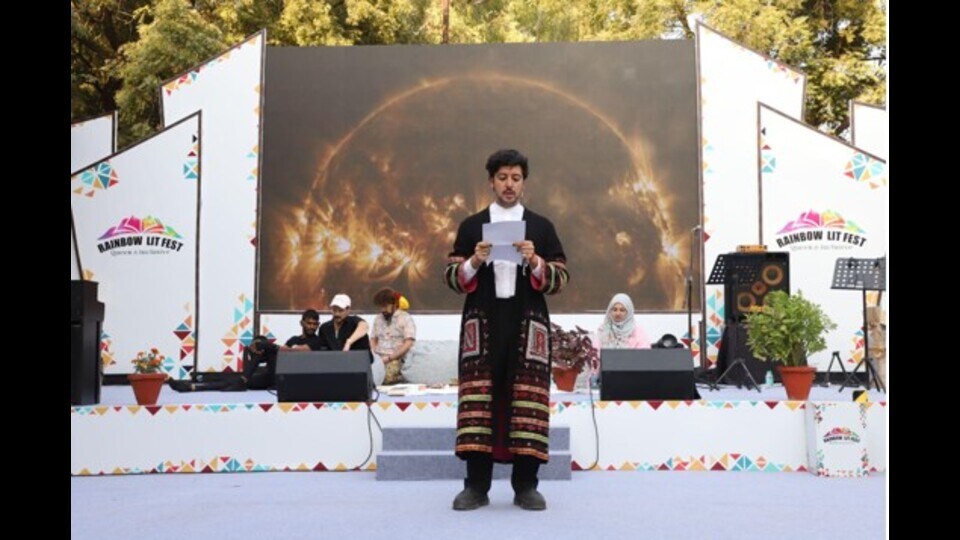
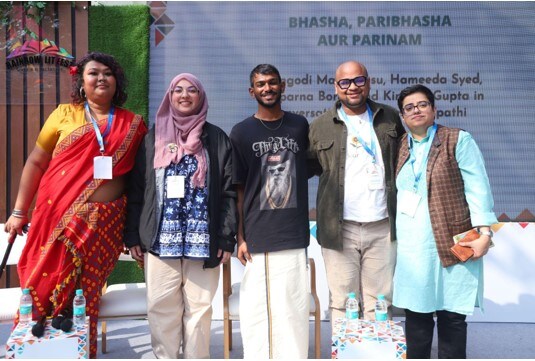
With 44 sessions and more than 80 speakers, the event held on 7 and 8 December, 2024, at the Gulmohar Club in New Delhi, was quite overwhelming. Still, the sessions were a good mix of talks, panel discussions and film screenings. From queerness in terms of identity and sexuality to queering as an act of overturning norms and binaries, the festival explored various facets of what it means to (be) queer across time and space. This meant reminiscing about queer pasts, examining queer presents, and imagining queer futures. The Spotlight on History talks were particularly fascinating. Subhashish Mandal, Sandip Roy, Minakshi Sanyal in conversation with Manak Matiyani walked the audience through the challenges of activism and mobilisation in the pre-Internet and pre-Social Media era and underlined how difficult it was to find queer-friendly spaces while Section 377 was still in place. Justice S Murlidhar and Anjali Gopalan in conversation with Eric Chopra spoke about the first fight against the same law in the Delhi High Court in 2009.
A number of panels focused on love, desire, romance, and pleasure along with how we can change our understanding of them. During her talk, Paromita Vohra, founder of Agents of Ishq, stressed on the problems of trying to bring respectability into queerness. She emphasised the need to preserve vulgarity in society and explained why we must keep our public and private selves separate.
Another engaging panel, Desire: The Feeling, the Demonstration and the Shame had panellists Urvashi Butalia, Saikat Majumdar and Jaya Sharma looking at the fluidity of our desires and at how it is okay to transgress what society deems acceptable.
Queer parents and queer parenting also got its fair share of attention. During a session entitled Queer Parents: Yes, They Exist moderated by Ankur Paliwal, Patruni Sastry, Sindhu Rajasekaran, David Ledain and Vikram Kolmanskog narrated their experiences with their kids and how their methods might diverge from those of cisheteronormative parents. In another session, two queer individuals and their mothers detailed what coming out was like for them and how their supportive, affirming relationships have resulted in happy, fruitful lives. RLF 2024 also had Mario da Penha, All India head of the LGBTQIA+ vertical of the All India Professionals Congress (a wing of the Indian National Congress), and Anish Gawande, the national spokesperson for the Nationalist Congress Party (SP), talking about being openly queer while being involved in politics.
Before the closing musical performance – a fusion of Bollywood songs with Jazz that had everyone on their feet, singing along – on the first day, the winners of the Rainbow Awards for Journalism and Literature were announced. They aim “to recognise work done by queer and cis-het writers who are creating and building narratives around LGBTQIA+ lives.” The Op-Ed and Feature awards were given to Shruti Sunderraman and Smitha Tumuluru for their pieces published in Queerbeat and PARI respectively. Yashraj Goswami’s Cockatoo was declared the Fiction Book of the Year while the Non-fiction award went to The Grammar of My Body by Abhishek Anicca. The Lifetime Achievement Award went to Minakshi Sanyal, co-founder, Sappho for Equality, a Kolkata-based non-profit that works on queer issues.
Perhaps the most electrifying session was Disparities, the law and the Constitution: Who Is Equal? with lawyers Saurabh Kirpal and Shreya Munoth, professor Dhiren Borisa and Aqsa Sheikh in conversation with Raghavi, who is also a lawyer. The responses were not rehearsed or superficial and while there were disagreements between panellists regarding how they envisioned political activism in the light of disparities of power and privilege within queer movements, the spirited discussion remained civil. The major takeaway was the need for LGBTQIA+ folk to practice solidarity with other marginalised communities.
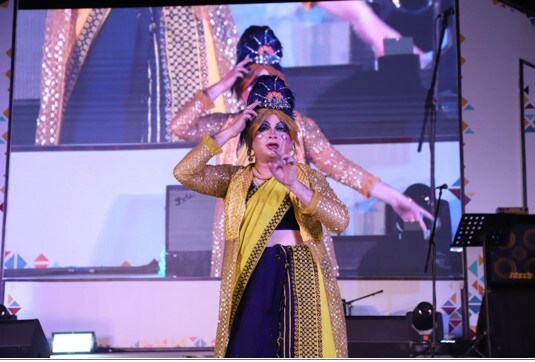
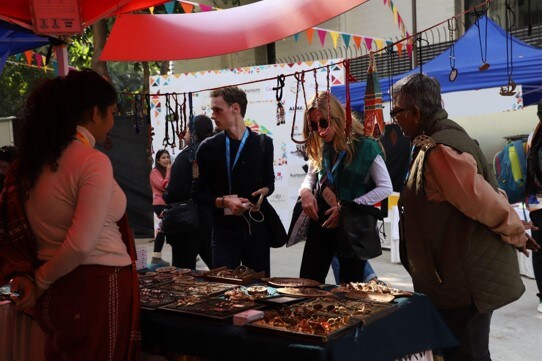
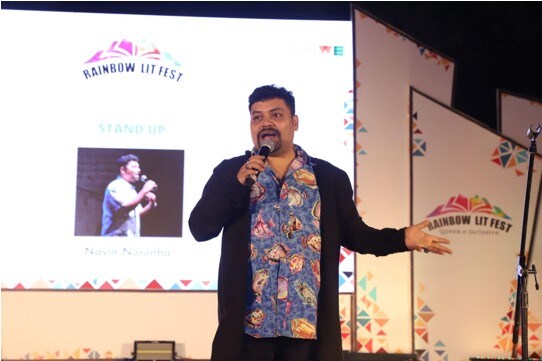
The stalls for arts and crafts, a small but eclectic bookstore by Kunzum Books and the screening of half a dozen short films centred on sexuality, queerness, and gender identity ensured that RLF 2024 had a lot to offer beyond talks, discussions, and panels. Some of the shorts that have previously been shown at prestigious film festivals both in India and abroad included Faraz Ansari’s Sheer Qorma, Mohan Singh Aulakh’s Samlingi, and Snigdha Kapoor’s Holy Curse. Drag performances by Patruni Sastry and Krystal Koko brilliantly straddled the line between entertainment and social messaging, bringing up lived realities of queer and trans folks as well as caste and religious minorities in India. Navin Noronha’s provocative stand-up set elicited enough laughs to warm the cool Delhi night.
The Rainbow Literature Festival provides a safe and inclusive space for crucial conversations on issues of queerness, identity, sexuality, gender, and rights. It gives both speakers and the audience a chance to introspect and to map the way forward. While the event can certainly improve in terms of accessibility and diversity of speakers and topics, the enduring hope is that it will avoid crystallising into a sanitised performative space with no edge or bite.
Areeb Ahmad is a Delhi-based freelance writer and literary critic. He is @Bankrupt_Bookworm on Instagram.


