
 E-Paper



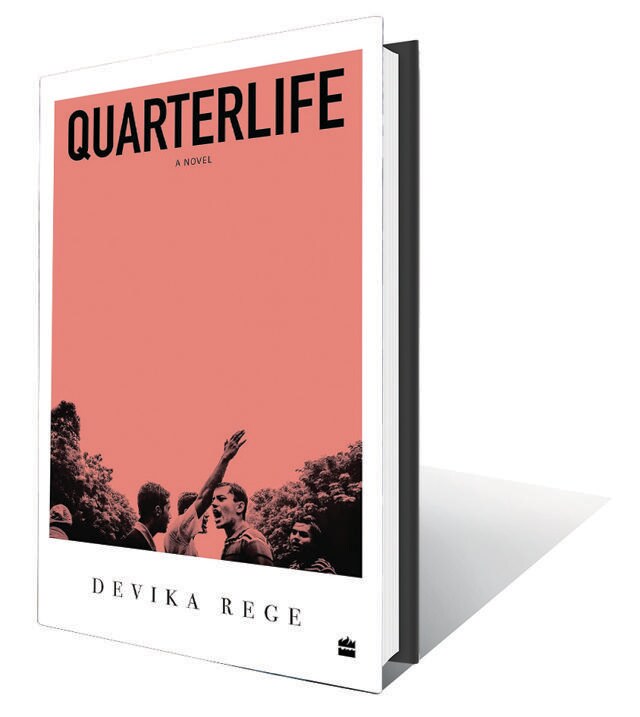
Review: Quarterlife by Devika Rege
Devika Rege’s debut novel is a collective portrait of 2014 that gives voice to a contrasting group of millennials

 Prefer HTon Google


In the beginning of Quarterlife, Devika Rege’s debut novel, Naren Agashe, a 31-year-old Indian financial consultant in America, walks over to a zoo to kill time before a meeting. He watches a jaguon, which is a cross breed offspring of a jaguar and a lioness, and imagines its thoughts if he were to climb over the fence. Would it attack him or show affection? And how would it feel afterwards, “its animal brain bewildered by a sudden cellular longing for a non-existent habitat.”
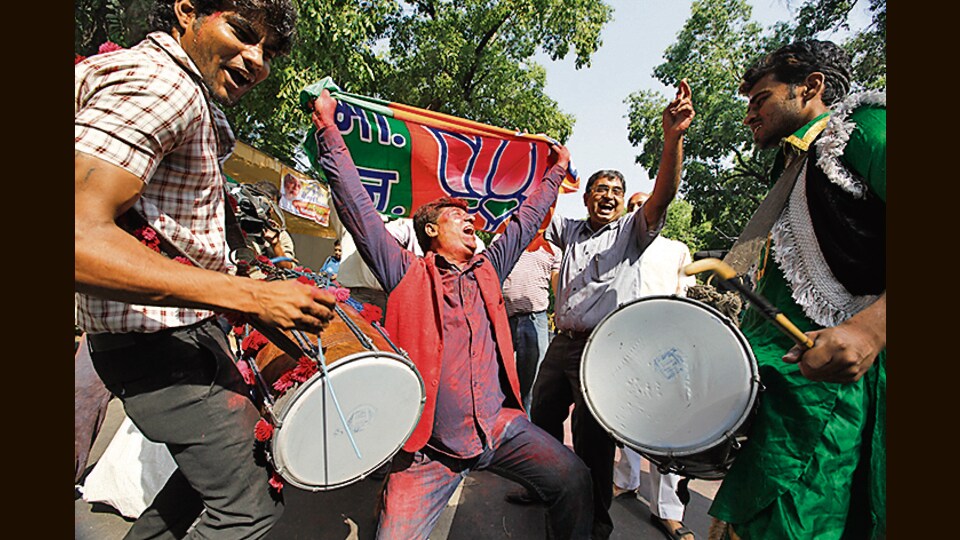
This longing is a projection of Naren’s own feelings as an immigrant. Other characters in this novel, across the political spectrum, each feel a similar hankering: for an imagined India that is on its way to development to surpass the West, or one returning to its fabled Hindu golden age, or for the recent secular past that was promised, or an even older cosmopolitanism of Bombay where the novel is set, or social justice, or something else entirely.
The novel opens just before the 2014 Indian general elections and is set in the months after the thinly veiled “Bharat Party’s” decisive victory — a time when even Naren’s “old engineering classmates, those apolitical market-guru acolytes, have turned devotional” believing that they are part of the country’s “golden generation that will ride its transformation into a modern state.” In this context of hope, coupled with the recession in the West, Naren returns home to Mumbai. He is accompanied by 27-year-old Amanda, an American acquaintance, who found herself yearning to “toughen something inside that is going soft” and decided to take a break from her idyllic life in New Hampshire to teach in a Muslim slum in the city. In Mumbai, Rohit, Naren’s brother younger by eight years, a filmmaker but mostly a networking creative-type who has spent his youth curating a large network of friends, graduates of top colleges, who all either “knew someone famous or seemed en route to fame themselves” after entering fields like film, TV or PR. “All were active online, retweeted, even trolled, which once gave Rohit the sense that they were the voice of a generation, but since their collective shock at the Bharat Party’s massive victory, his suspicion has been confirmed: what he once thought of as a generation is really a clique.” And so Rohit, vindicated by his political ambivalence, sets out to seek the truth.
Quarterlife is told through alternating narratives of Niren, Amanda and Rohit, as they enter political consciousness. But it is a collective portrait of 2014, giving voice — rather voices — to a wider contrasting group of millennials.
Kedar, Rohit and Naren’s small town cousin they never thought much of, is a fiery leftist investigative journalist. Later in the novel Rohit wonders, thinking of Kedar, how “all these kids with sing-song English whom he has always thought of as “vernies” — which wasn’t just short for vernacular, but a term for a herd with no personality — suddenly they’ve arrived, and here he is, Rohit Agashe, anxious that the great Indian coming-of-age is turning on some other speed.”
On a trip to visit Kedar’s parents — searching for his roots in order to get to the truth — Rohit meets Omkar, an amateur Hindu nationalist filmmaker struggling to make a film on the Ganeshotsav parade because “the environment has become so hostile to anything Hindu.” Rohit decides to collaborate with him seeing only “the world’s mad beauty” and the filmmaker’s talent.
And then there’s Rohit’s “clique” — Gyaan, Ifra, Cyrus and Manasi.
Identity politics are the bedrock of Indian democracy. And Rege’s characters are perfectly composite archetypes: The Agashes cousins are Chitpavan Brahmins, Amanda is white, Gyaan is an import from Delhi (a subculture in itself), Ifra is Muslim and SoBo rich, Cyrus is Parsi and gay, Manasi is from a humble background, and Omkar is from a backward caste.
This cast could easily have been a tropey disaster as is so often the case with political fiction. A little less dexterity, it would have become simply a case for the accuracy of stereotypes, because the politics of these characters fit quite perfectly with their social backgrounds. But Rege shows a deep and precise understanding of the fragile complexity of India and the country’s intricate web of identities. With Maharashtra as a microcosm of political instinct, and familiarity because Rege is from Pune, she lays it out in all its messiness and all its frailty, pitting one argument against another, propping up a belief only to have it punctured, revealing vulnerabilities, anxieties, contempt, and hypocrisies. It’s most evident in a party scene at the Agashes’ swanky new high-rise where they have all gathered for Ganpati aarti, the “perfect excuse” for Rohit to “unite his crew.” It’s an awkward night, they’re all rigidly, as people are, stubbornly holding on to their ideological positions. It’s an exemplary scene, eerie in its familiarity because who wasn’t baiting, fighting, insulting, justifying, and storming out in 2014?
Fiction is not a historical archive and yet many scholars refer to it as a source. Rege’s novel, set in living memory, quite faithfully, almost ethnographically, illustrates the circumstances of that year. It is evident that this novel is a result of long hard meticulous work. It took a decade to write, and was based on tremendous research — Rege followed some of the people who informed her characters for years. This is impressive, even evokes some kind of bittersweet nostalgia, but it is also the novel’s greatest flaw.
Aside from aliases given to political and corporate organizations — Bharat Party and its affiliate organizations that Omkar initiates Rohit into; the failures of the dynastic and corrupt Conclave Party that characters refer to — Rege weaves into the fold less remembered details such as when MF Husain’s famous painting Ganesha was removed from an art exhibition at the JW Marriott in Mumbai because it hurt Hindu sentiments.
But this proximity to what really happened makes the novel, emotionally, too cerebral. We know how these characters think — their politics, their ambitions, the way they want to be seen — but we don’t quite encounter real feelings. In moments of great intensity, even tragedy, Rege moves along to what happens next.
This may well have been the point. In a personal essay, a kind of after note, Rege asserts her intentionality. She had been working on the novel for many years, and over time, her sources in the “Bharat Brotherhood” had become “as they proudly said in English, more ‘radical’” she writes. These characters in Maharashtra had also been “forced to contend with the question of why Hindu nationalism was taking hold of this vast state so far away from the Hindi-speaking heartland.”

The essay is set in Varanasi, the Prime Minister’s constituency, where Rege too was thinking about “the relationship of the Marathi man to Varanasi.” By this time, she writes, “I grew aware of an increasingly complex and simmering milieu, as well as my potential (or was it duty?) to represent an ever-wider variety of irreconcilable yet interdependent perspectives.”
This is a brave, astute, book and anchored in reportage. And Rege well-deservedly received the Ramnath Goenka Sahithya Samman, a new literary prize named after the irrepressible newspaper publisher, for it. The writing, at the prose level, is beautiful. I was astonished by the detail, the veracity, and the enjoyability of it — it is, after all, a millennial novel — and the openness with which Rege tackles her irreconcilable subject matter.
How did she reconcile with it then? The answer lies in the personal essay, which is not just a declaration of this novel as a political act, but also its only place of feeling. A few months after her father’s death, Rege visited Varanasi. Grieving, she explored the city, breathed in human ashes as she walked through the burning ghats, and caught a fever. And here, she arrived at the scheme of the novel. “The subliminity of grief, after the initial shock, invites you to accept the world for what it is, and in a city where the cremation fires never go out, the feeling only amplifies,” she writes.
Saudamini Jain is an independent journalist. She lives in New Delhi.


