
The Best of Urdu Short Stories, edited by Mehr Afshan Farooqi, brings together a range of writers whose contributions shaped the development of Urdu fiction.
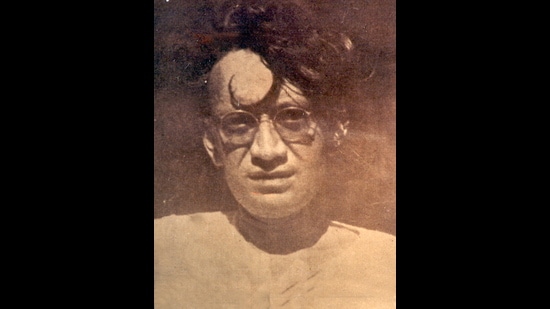
Here, Premchand appears with Eidgah and Sa‘dat Hasan Manto with Kali Shalwar, both canonical stories whose repeated inclusion in anthologies has rendered them almost inert for the informed reader. Alongside them appears Mohammad Hasan Askari, who is regarded as a critic in some circles. While the literary importance of these writers is beyond dispute, the rationale for preferring such frequently translated texts over less familiar works remains unclear. Readers are left wondering whether the anthology aims to provide a historical overview of Urdu short fiction, a collection of its finest achievements, or simply a gathering of its most widely recognised names.
4
The anthology assembles translations by several established scholars. In the absence of the source text, it is difficult to determine whether these pieces satisfy the demands of fidelity; this remains a far more complex and unresolved question within translation studies. There is a strong case for publishing the original Urdu text alongside the translation, whether in Urdu script, Nagri, or even Roman transcription. Such an approach would greatly assist readers, particularly in South Asia, who may not read Urdu fluently but remain attentive to its linguistic textures and cultural resonances.
The most one can reasonably assume is that the translations function in the target language and are read with a degree of fluency in English. The reader cannot tell if these are ‘free’ translations or attempts to preserve the integrity of the source text. The notion of preserving absolute fidelity in translation from Urdu into English is fraught, even unattainable, but translators remain obliged to declare their governing principles. Such declarations would assist not only readers but also editors and researchers working in translation studies. This reviewer spent a month reading the stories in the Urdu original alongside their translations in this anthology to arrive at the assessment offered here.
{{/usCountry}}The most one can reasonably assume is that the translations function in the target language and are read with a degree of fluency in English. The reader cannot tell if these are ‘free’ translations or attempts to preserve the integrity of the source text. The notion of preserving absolute fidelity in translation from Urdu into English is fraught, even unattainable, but translators remain obliged to declare their governing principles. Such declarations would assist not only readers but also editors and researchers working in translation studies. This reviewer spent a month reading the stories in the Urdu original alongside their translations in this anthology to arrive at the assessment offered here.
{{/usCountry}}Farooqi invokes a familiar theoretical dilemma: should the translator bring the text closer to the reader, or the reader closer to the text? However, the discussion remains suspended at the level of abstraction. Because the underlying principles of translation are never articulated, readers are left without any clear sense of the editorial position governing these translations. In the absence of such guidance, the stories are approached as autonomous compositions in English. In that sense, they read well.
It is relevant to note that the editor is the daughter of the eminent critic Shamsur Rahman Faruqi, whose opposition to the Progressive Writers’ Movement was conducted with considerable intellectual rigour. One may disagree with his conclusions, but he was rarely careless with facts. The same assurance cannot always be extended to the introduction of this volume, which contains some inaccuracies.
The intellectual contestations against Marxism, articulated by SR Faruqi in a more formal academic idiom in the Urdu monthly Shabkhoon (1966–2005), had already been rehearsed earlier in Tehreek (1953), which ceased publication sometime after 1980, although the precise date remains unclear. Its closure was related to the return of Indira Gandhi to power, after which the United States, the journal’s principal patron, lost its last hope of countering the USSR through Urdu literature in India. Under the editorship of Shamsur Rahman Faruqi, Shabkhoon advanced a conception of literature grounded in what he termed begharz lutf-andozi (‘disinterested enjoyment’), the proposition that literature derives its value from aesthetic autonomy rather than political utility.
While Tehreek never entirely escaped the pressures of Cold War politics, Shabkhoon attempted to place literature at the centre of the discussion without losing sight of its larger intellectual orientation. This distinction, however, was not consistently observed by contributors, many of whom moved with ease between the milieus of Tehreek and Shabkhoon despite their divergent intellectual foundations. Shamsur Rahman Faruqi, as a civil servant of the 1957 Postal Services cadre, maintained a degree of distance from overt alignments.
The editor’s position on the Progressive Writers’ Association appears to echo her father’s, though without comparable argumentation. She writes, ‘They did not seem aware of the greater human [Partition] tragedy of the cultural loss and destruction of ways of life that had taken centuries to evolve.’ She further asserts that ‘Manto died in 1955, creating a vacuum in Progressive fiction that couldn’t be filled.’ Literary traditions do not operate through such vacuums. Even at the most immediate level, Ismat Chughtai continued to produce substantial work after Manto’s death. Statements of this kind sit uneasily in an academic introduction.
This is true also of her remarks on historical matters. She notes that ‘The passing of the Government of India Act, 1935 aroused as well as disappointed Indian nationalists yearning for full freedom’, yet offers no explanation. The Act may be more fruitfully understood through Bipan Chandra’s Struggle–Truce–Struggle framework, in which constitutional concessions emerged not as imperial benevolence but as the cumulative outcome of sustained nationalist pressure. In this sense, the Act represented a logical, if limited, consequence of the national movement rather than something to be dismissed solely through the rhetoric of Purna Swaraj.
The anthology brings together many of the most significant names in Urdu fiction and introduces new readers to the tradition. One hopes a future edition will address shortcomings with the care that such an important collection deserves.
Sadaf Fatima read for her BA and MA at Lucknow University and defended her MPhil and doctoral dissertations at JNU. Her area of interest is the cultural history of Delhi in the 18th and 19th centuries.