
 E-Paper



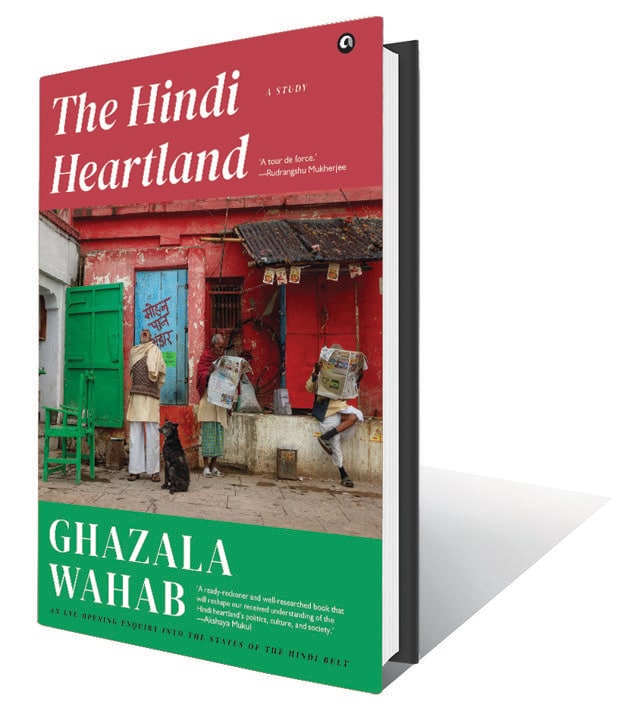
Review: The Hindi Heartland by Ghazala Wahab
Ghazala Wahab’s new book, which profiles a politically influential region comprising many states, builds on the work of historians and political commentators to contextualise recent debates

 Prefer HTon Google


In The Hindi Heartland, Ghazala Wahab expounds on an area that comprises various states of north India even as she questions the very idea of it: “[The] diversity of the Hindi heartland militates against the region being clubbed together as a single entity… What holds it together is an artificial political construct driven by opportunism, which has impacted not just our contemporary politics, but our concept of the nation itself.”
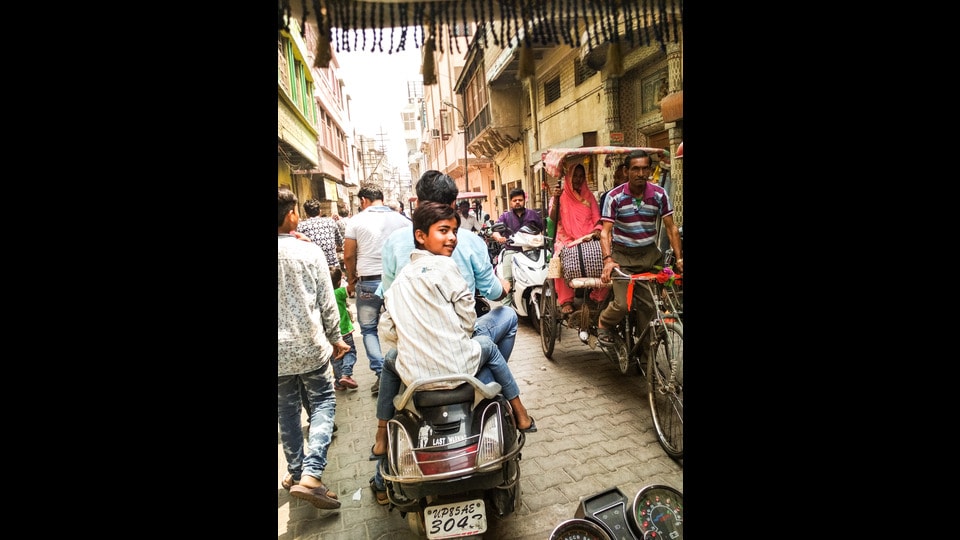
She adds that Hindi, the language that gives the region its name, is its least unifying factor. While many states across North India ostensibly speak the language, their mother tongues are diverse and might be incomprehensible for other ‘Hindi speakers’. For example, Garhwali would be as barely intelligible for most Mewari speakers as Punjabi would be for Maithili speakers. And yet, the former two are regarded as dialects of Hindi, while the latter two are considered separate languages.
Given the arbitrariness of these divisions, the Hindi heartland is a rather amorphous idea. Wahab, for instance, does not consider the states of Haryana and Himachal Pradesh as part of the region in her account — she adheres to a definition that marks the watershed between the Indus and Ganga rivers as its northwestern frontier. While such conceptions of the Hindi belt might not seem intuitive, given that many north Indian states have a shared history, geography, and economic conditions, viewing them collectively can be a useful lens to explore their politics, society, and culture.
However, Wahab’s account is not merely descriptive. She profiles the region because of “the role that the historical experiences of the Hindi belt played in the evolution of the idea of India — a multi-religious, multi-ethnic, multi-cultural, and multi-lingual nation, which defies all notions of a traditional nation-state.” Her goal for her book is lofty: “It’s a reminder of the fact that India was at its best when people lived and worked together for their collective well-being, irrespective of religion and ethnicity. It’s a spark of hope.”
That spark is much-needed as majoritarianism has become the triumphant political discourse, leaving the once-cherished ideals of diversity and coexistence in cinders. Many have argued that these were merely ideals rather than reflective of on-ground realities. Even if one were to accept this contention, the fact remains that they were once considered important enough to pay lip service to, but not anymore.
Wahab opens the book with an anecdote about the Kanwar pilgrimage, which illustrates this change. While Muslim artisans have long been making the kanwars (decorated water pots on bamboo sticks) that Hindu pilgrims carry, lately, there have been efforts to identify and boycott Muslim-owned businesses along the pilgrimage route.
She then touches on the Hindi heartland’s economy, society, languages, and cultures. This yields interesting insights on a range of topics: Why is southern Bihar more prosperous than the northern part of the state? Why have marginalised castes not been able to politically assert themselves in Madhya Pradesh as they have in Uttar Pradesh and Bihar? How have festivals in the region changed in recent years?
For the most part, the book dwells on history — understandable given that most arguments for majoritarianism in India hark back to historical grievances, imagined or otherwise. The second section explores how the rule of the Delhi Sultanate, Mughals, Marathas, and East India Company shaped the Hindi belt. The third highlights how British colonial policies drove religious divides and impoverished the region, a legacy that has left an enduring imprint.
The next section focuses on the Indian independence struggle and how it shaped the idea of India, while increasingly conflating it with religion. Wahab cites the example of how even avowedly secular Hindu politicians could freely resort to religious references in nation-building — as Gandhi did by seeking to establish ‘Ram Rajya’ — while Muslims doing so would have been anathema. This opened the path for Hindu fundamentalists to infiltrate the Indian polity in the decades after independence and eventually dominate it, she argues in the last section.
It is here that she recounts a statement by a political party volunteer in Varanasi: “Aurangzeb wouldn’t have destroyed as many temples as these people have…” The conversation unfolds against the backdrop of the Kashi Vishwanath Temple Corridor, built in 2021 by razing many ancient shrines. An oft-repeated claim regarding the temple is that the Mughal emperor Aurangzeb ordered its demolition in the 17th century. Few highlight that about 100 years earlier, Akbar, an emperor of the same dynasty, had supported its construction.
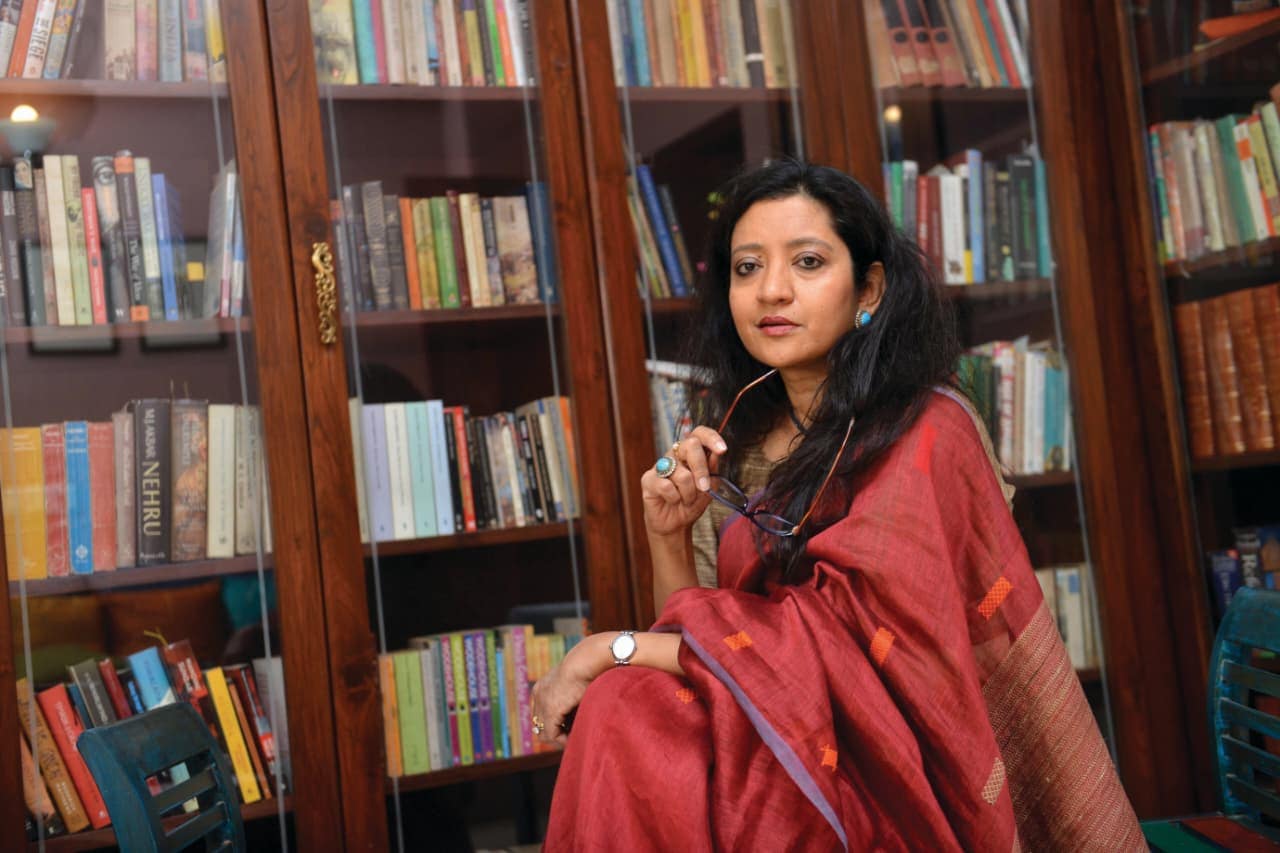
It is this reading of more than a thousand years of history — and the present — that Wahab breaks down in her book. While her endeavour is not completely novel, it meticulously builds upon the work of historians and political commentators to contextualise recent events and debates. This makes it a compelling read speaking to the current zeitgeist, in which untruths and wishful thinking are often placed on the same footing as evidence-based claims. In this playground of fabrications are writers who assume a scholarly air but often have no training in history. They have succeeded in capturing the public imagination because, unlike the work of actual historians, their heady narratives are unencumbered by facts and academic rigour.
Wahab, as well as historians such as Meera Visvanathan, have challenged these pop histories. However, Wahab does not don the historian’s mantle. Instead, she adopts a journalistic approach. The book draws as much from her travels, personal experiences, and interviews with people from different walks of life, including researchers, as it does from secondary sources. It extensively references the works of scholars such as Richard Eaton, Shahid Amin, and Christophe Jaffrelot. While one could perhaps question some of her characterisations or what she chooses to focus on, her account is wide-ranging and informative.
The book’s prognosis might be bleak. However, Wahab’s marshalling of facts and storytelling is still a heartening antidote to falsehoods and indoctrination.
Syed Saad Ahmed is a Boston Congress of Public Health Thought Leadership Fellow 2024. He speaks five languages and has taught English in France.


