The relationship between private experience and social position is the central concern of Moms by Shivani Sibal. Set within Delhi’s affluent circles, the novel follows Radhika Khanna, whose life is organised around marriage, motherhood, friendships and the demands of maintaining a particular social identity. Her world is materially comfortable. The novel’s interest lies partly in the contradiction between the life she appears to have and the life she experiences.
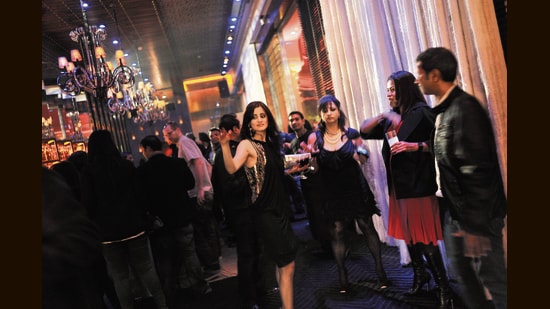
Radhika’s life is defined by a set of expectations that are particular to her class. Her relationships are shaped by the opinions of other women, the expectations of her family and the need to maintain a recognisable position within her circle. The title, Moms, is relevant in this context. Motherhood transforms into a social identity, one through which women are observed, often compared and judged.
In Distinction: A Social Critique of the Judgement of Taste (1979), Pierre Bourdieu gives a useful starting point for examining the relationship between class and individual experience. For him, class shapes the perception of what people consider important, how they judge themselves and others, and which aspects of their lives they take for granted. Social position influences an individual’s understanding of the world, even when that understanding appears entirely personal. Bourdieu’s idea of distinction becomes useful while reading Moms. The concerns of the novel’s characters acquire meaning within a group that shares particular standards of behaviour and success. Their anxieties are connected to the preservation of status and recognition. Their concerns are continually reinforced by the group. The freedom to concentrate on personal relationships, social obligations and individual dissatisfaction is a class privilege. The lives of the principal characters in the novel depend on arrangements that allow them to delegate much of the practical work of maintaining a household. Here, material comfort is an unexamined condition of the narrative rather than part of its subject. While the characters experience their problems as part of an ongoing struggle to manage relationships, family expectations and social responsibilities, the reader is unable to forget that these problems belong to a world of considerable material security.
{{/usCountry}}In Distinction: A Social Critique of the Judgement of Taste (1979), Pierre Bourdieu gives a useful starting point for examining the relationship between class and individual experience. For him, class shapes the perception of what people consider important, how they judge themselves and others, and which aspects of their lives they take for granted. Social position influences an individual’s understanding of the world, even when that understanding appears entirely personal. Bourdieu’s idea of distinction becomes useful while reading Moms. The concerns of the novel’s characters acquire meaning within a group that shares particular standards of behaviour and success. Their anxieties are connected to the preservation of status and recognition. Their concerns are continually reinforced by the group. The freedom to concentrate on personal relationships, social obligations and individual dissatisfaction is a class privilege. The lives of the principal characters in the novel depend on arrangements that allow them to delegate much of the practical work of maintaining a household. Here, material comfort is an unexamined condition of the narrative rather than part of its subject. While the characters experience their problems as part of an ongoing struggle to manage relationships, family expectations and social responsibilities, the reader is unable to forget that these problems belong to a world of considerable material security.
{{/usCountry}}The chapter, The World Is What It Is, whose title recalls Patrick French’s biography of VS Naipaul, suggests a relationship between personal perception and the acceptance of existing conditions. The phrase can be read against the novel’s enclosed social setting. Still, when characters attach considerable importance to concerns that remain confined to their circle, their behaviour can acquire an unintended comic quality. Whether this effect constitutes a deliberate critique is unclear.
The first part of the novel is organised around Radhika and the social world she inhabits. The second, explicitly titled After Radhika, shifts the focus to Manik and the consequences of Radhika’s death. This change in narrative attention moves the novel away from the immediate experience of its central female character and towards the people and relationships left behind. The two parts can be read as different perspectives on the same closed social system.
In After Radhika, the character is no longer present to organise the narrative through her own experience. Her life must now be understood through its effects on others, through recollection and memory. The opening gives Manik a distinct narrative presence as the reader learns of his routines, memories and his response to the changed circumstances of the household. Radhika’s significance is reconstructed and the domestic world that appeared as the setting for her anxieties must now be understood through its disruption and reorganisation.
Moms is, in fact, a story about unequal relationships. Radhika’s absence affects the family and the social relationships around it. The movement between the two parts makes it possible to see that no single character possesses the complete account of a family. At the same time, it raises a question about whether the novel’s wider social setting receives the same complexity as its principal characters.
The ability to leave a relationship, seek professional help, rely on family support or delegate domestic responsibilities changes the practical consequences of personal distress. A novel that concentrates on emotional experience while leaving these differences unexamined risks making a particular class experience stand in for a general human condition. This raises a larger question about the representation of elite suffering, of how a novel can make the unhappiness of privileged characters meaningful without losing sight of the advantages that shape their lives.
In their essay, ‘I am trying, you know’: Reading Power, Politics, and the Body in Sad Girl Literature (2025), Emily Fuller and Alyson Miller examine the tension between political awareness and the self-absorption of characters whose personal lives remain shaped by unequal social relations. They draw attention to the difference between a character’s awareness of a problem and the narrative’s ability to examine the structures producing it.
This is particularly relevant to Moms, where the reader is privy to the interiority of the characters but experiences some difficulty in sympathising with them.
Pranavi Sharma writes on books and culture. She lives in New Delhi.