
 E-Paper



Review: The Oracle of Hate by Hamza Jalil Albasit
Set in Karachi in 2013 when general elections are drawing near, this novel seamlessly blends political reality with magic realism

 Prefer HTon Google


Fouzia and Qazi-ud-din Ahmed started hating their son Waleed when he turned 13. His descent from being their precious firstborn, and a boy at that, to a fat, ugly school dropout was quick. The Ahmeds live in Korangi, a satellite town of Karachi, earmarked for the poor, and Qazi-ud-din believes he has done his worthless son Waleed a favour by getting him to work at his uncle’s grocery store in the neighbourhood.
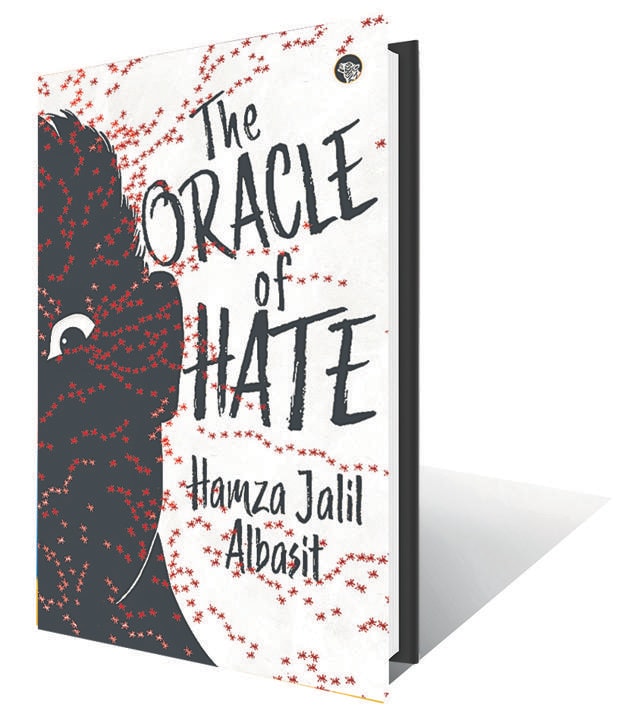
Paranormal experiences in the Ahmed household are routine after Fouzia, who, unable to birth another boy, visits a sorcerer, Baba Bangali, in an obscure part of the city. The sorcerer promises her a baby boy, whom she delivers after an unusually extended maternity period running into a couple of years. Thereon, for the Ahmeds, the apple of their eyes is Hameed.
Hameed is personally dropped off to school each morning by his father, even though his beautiful sister Sadia, whose faithful companion and confidante is her unborn sister Nadia, trots to school each morning, enchanting gully boys with her hazel eyes. The shapeshifting shadow of Hameed, who may have been fathered by a djinn, and his innate strength intrigues the boys at school.
Waleed, now 23, spends sleepless nights in his home warding off an army of fire ants that have “annexed his body”, as he hears his sister Sadia read out poetry to Nadia and discuss ways to get it published anonymously in a magazine. Hameed focuses on his shapeshifting shadow, which crushes him and keeps him up all night, compelling him to make up for lost sleep at school.
This is a family only on paper, the kind that the census officer records once in 10 years, and Fouzia sends up a loud thank you prayer to let the official know that all is well in the Ahmed household. Each member of the family is tired of their daily drudgery, unaware and uncaring of the demons eating up the other, and desperately trying to block out sounds from other rooms. Qazi-ud-din’s daily prayer for his dysfunctional and disconnected family is: “Dear Allah, have mercy, as it is, on a family of strangers, who endure living together like it’s a death sentence, as it is, and wordlessly so, like they’re mute, and bitterly so, like they’re enemies…”
Despite their mother offering special prayers to tide over her guilt of practising witchcraft and to ward off the djinns, she isn’t spared. It rains in Karachi “after thirteen years, eight months and twelve days” and there is a cloudburst right above her house. Outside the Ahmed household it just drizzles; yet inside, the house is flooded and Fouzia has to wade through knee-deep water to resurrect her valuables. As the media descends on their house to report the cloudburst, Fouzia notices the rainbow. It has eight colours. The eighth colour is black – “the usual seven (colours) for the whole city to appreciate, and one, as black as a death ray of unhappiness right below violet, to cast its shadow over Fouzia”.
Life hasn’t been kind to Waleed. He carries a burden of shame that his parents are unaware of, and even if they were in the know, they wouldn’t have cared. One night, as he is walking back from the store, he is mugged and his mobile phone is stolen. As the bikers zip past, the only clue Waleed picks up is that one of his mugger’s ears is sliced in half. He starts looking for his muggers, initially passively, checking out random people visiting his store, and then aggressively along with his buddy Omair Abid.
Armed with a plastic gun, both plunge themselves into a life of thuggery, working at their respective shops during the day, and moonlighting as mobile thieves at night. Their families are happy receiving the extra bucks, without bothering about the details, except for an occasional lame query: “As it is, what kind of job happens for, as it is, a few nights a week?” Qazi-ud-din’s habit of splattering “as it is” in all his sentences will leave readers chuckling.
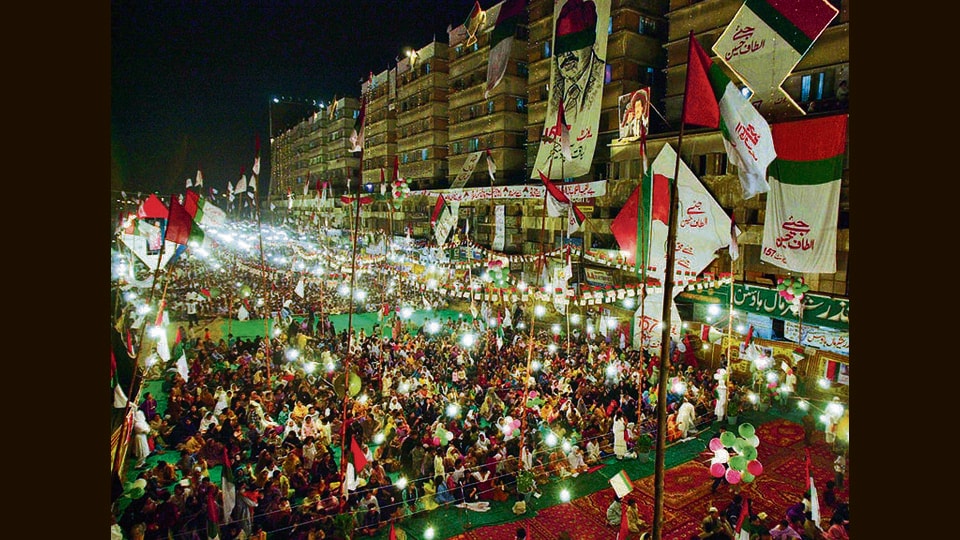
The novel is set in 2013 when general elections are drawing near. A tout who sees his potential recruits Waleed into the Muhajir Liberation Party (MLP), the official ruling party of Karachi. His profile is upgraded after a meeting with Muhammad Khateeb Najmi, a senior MLP leader. Najmi gifts Waleed his first real gun - “Lady Beretta”.
“We sons of Muhajireen do not play with toy guns… Our mothers sowed the seeds to this land. Our sisters flowered them. Together, we rear this Garden of Eden,” Najmi asserts, making it clear to Waleed that youth from his background can climb the social ladder only by indulging in unfair practices and resorting to violence.
Thereon, Waleed takes his role more seriously, saying “yes” to every single order of his bosses – including the merciless massacring of the inhabitants of Karachi. He convinces himself that having been born and bred in hate, he was indeed the oracle of hate.
The heated contest is between the ethnic Pushtuns, the Sindhis and the outsiders, the Muhajirs. Corruption is at its peak and votes are being forged. Waleed’s people have forged over two million ballots and Waleed has gleefully forged his father’s vote too. His father had grown disenchanted with the MLP and the manner in which they had let the once majestic city of Karachi become a picture of neglect, especially its poorer quarters, and wanted to vote for the Islamic Democratic Alliance. Waleed seeks his revenge and doesn’t let that happen.
Consumed by hate, Waleed’s rise in the underworld is meteoric. He loves giving in to the urgent promptings of “Lady Berreta” to annihilate everything that comes in his way. His life takes an ugly turn when his loyalty becomes suspect, and his flourishing criminal career is checkmated.
The novel, which seamlessly blends political reality with magic realism, is the story of Karachi’s death and destruction. The very people, who blew life into it, were hell bent on leading it down the path of ruin, dividing the city on linguistic and ethnic lines. The very people, who wanted to empower and bring all citizens at par, were recruiting poor and uneducated youth like Waleed to pursue their deadly agenda. The novel concludes on an optimistic note with Karachi’s citizens seeing light at the end of this very dark and long tunnel and promising to stitch up their city once again – this time with love and compassion.
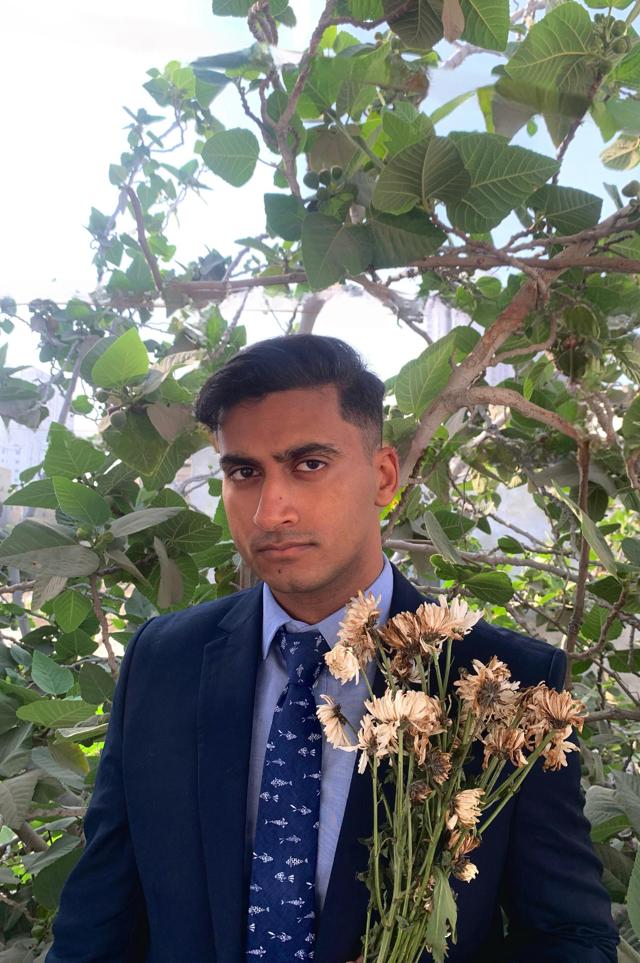
The Oracle of Hate is Hamza Jalil Albasit’s debut novel. His stark imagery and writing is brilliant. Here is his description of the sky when Waleed steps out for his night shift to mug people: “…The clouds had cleared to reveal a gimlet-eyed moon and a constellation of lusterless stars that wanted to call in sick for the nightshift.”
Albasit, who was born in Karachi, left Pakistan at 17 to study abroad. After his return, he seems to have joined ranks with his country’s finest writers.
Lamat R Hasan is an independent journalist. She lives in New Delhi.


