When The Punch Magazine invited submissions for its inaugural book of short stories, The Punch Magazine Anthology of New Writing, it was May 2019. Submissions poured in from all over the world. With the pandemic kicking in, the project went off-schedule, eventually seeing the light of day in 2021. What was originally meant to be a collection that included writing by all genders, eventually shaped up as The Punch Magazine Anthology of New Writing - Select Short Stories by Women Writers. In the book’s introduction, Shireen Quadri, founder and publisher of The Punch Magazine, and director of Punch Art & Cultural Foundation, makes a strong case for the power of stories “binding us together in a shared personal and intellectual chord”, especially in the times of forced physical isolation. Eerily enough, the first story in the collection, Ameta Bal’s Static AD thrums with a combination of the inertia and energy that was felt though some of the harder phases of the last two years. The solitary narrator is the voice of a person in stasis with a mind in constant motion, introspecting and deliberating, resting uneasily in a dystopian world.
The anthology is a potpourri, thematically and stylistically unconnected, offering as it does 18 stories from writers of varying backgrounds and calibres. Most of the narratives are steeped in their milieu, the writing ranging from the middling to the eloquent, with storylines that speak of the everyday, the sublime, the tragic and even the bizarre. Their cohesion comes from the fact that they are expressive of an entire gamut of human experiences.
Camilla Chester’s Terms and conditions has a touch of magic realism. When a single embittered woman stuck in a dead-end job sees wishes that she had made years ago being fulfilled on her 36th birthday, it is almost a modern day fairytale come alive, topped by a startling finish. Another heart-warming tale is Olya’s Kitchen by Helen Harris. Set in London, the narrator reminisces about the soul-gratifying goodness of a grandmother’s cooking and how it formed the fulcrum of a family’s existence as long as she was alive. “Occasionally though, we would eat at a friend’s place where traditional, lovingly prepared meals were still served, and we would experience a sharp pang of nostalgia for what we had lost.”
There is a deep sense of loss and an ensuing melancholia in the forever-shuttered facade of a cinema hall in Srinagar, in The Closed Cinema by Meena Menon. Firdaus was one of several real-life cinema halls in Srinagar that fell to the spectre of terrorism three decades ago. As a counterpoint to that motif, is the other story set in Kashmir, writer-journalist Humra Quraishi’s Kashmir Valley’s Soofiya Bano a pithy tale of the enigmatic identity of a woman in search of her son who was taken away by security forces. Kashmir features in a few other tales too.
{{/usCountry}}There is a deep sense of loss and an ensuing melancholia in the forever-shuttered facade of a cinema hall in Srinagar, in The Closed Cinema by Meena Menon. Firdaus was one of several real-life cinema halls in Srinagar that fell to the spectre of terrorism three decades ago. As a counterpoint to that motif, is the other story set in Kashmir, writer-journalist Humra Quraishi’s Kashmir Valley’s Soofiya Bano a pithy tale of the enigmatic identity of a woman in search of her son who was taken away by security forces. Kashmir features in a few other tales too.
{{/usCountry}}There are women in love, the love that is young and buoyant, like in Pandemonium by Anjali Doney. There is the despairing love of a Hindu girl for a Kashmiri Muslim in Sunday, Bloody Sunday by Vineetha Mokkil, and the one that dissipates with time or hits dissonant notes like in Anila SK’s A Tale of Disconnect. At times, love holds out. Marietta’s Song by Sarah Robertson is full of poignant moments and old-world sentimentality: the story of a woman with dementia relegated to an asylum, awaiting something special on her birthday. Sarah Robertson’s evocative prose is a confection of poetic lines. “It was Marietta’s song, and as she sang, it was clear she’d known it all along. Her lost chords weren’t in the past, her explosive dreams had hatched. No one in that stunned audience had known she could sing. Her voice was celestial, an operatic trill. The notes they hung together, sliding and yet still. The memory of a thousand pleasures suspended in that mill.”
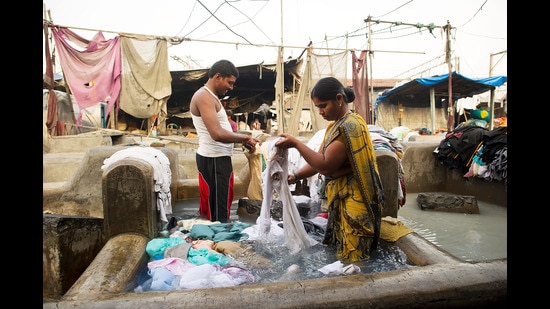
Adding a cathartic element are the tales of adversity in a harsh world. Rochelle Potkar’s Honour uses a fitting metaphor for the sorry tale of a washerwoman from the Dhobi Ghat of central Mumbai, battling the odds of life. As she scrubs and beats clothes to a sparkling clean on her daily grind, she hopes to cleanse her own life of its wretchedness and ignominy, and emerge blemishless. In a parallel universe, Shilpa Raina writes about an anxiety-ridden middle-aged homemaker in The Vacation, whose existence has been a continual circle of hard times, thrift, deprivation, futile attempts at betterment, rinse and repeat. “She was nothing but a burden on the family. Had she, too, been an earning member, they would have managed to oil the cogs of dwindling finances, she thought. The feeling of unworthiness made her wail.” It would likely resonate with many an Indian woman, The Crossing by Vrinda Baliga captures the horrors of illegal immigration where handlers carelessly toss and move human “parcels”, birth names lose relevance and faces once loved back home become hazy pain-suffused memories.
Rounding up the spectrum is Tammy Armstrong’s Artichoke in which the raconteuse takes the reader along with her to sun-toasted piazzas in Rome bubbling with tourists, to markets lush with local produce, as she people watches at trattorias serving warm wine, and where the 16th century artist Caravaggio’s chiaroscuro comes alive. It is one of the more delightful stories in the book.
Other writers and their stories in the anthology include: Geetha Nair G’s Falls, Jayshree Misra Tripathi’s Indigo Blue, which mixes contemporaneity with mythological horror, Latha Anantharaman’s The Very Narrow House set in South India, Meher Pestonji’s Ghost, the escapades of a 10-year-old Parsi boy armed with a pair of old dentures, and Rinita Banerjee’s impressionistic The Dance of the Happy Muse featuring Degas’ famous little dancer.
Several tales in the collection have a little twist, a surprise ending. Obviously, inclusion in the anthology does not imply a refined artistry. Most, barring a few, make the cut; some of them rise above. A couple of voices are still raw. However, as an ensemble there is sincerity and promise. In fact, it would be interesting to see a part deux, perhaps this time including the creations of other genders as well.
Sonali Mujumdar is an independent journalist. She lives in Mumbai.