You have reported from more than 100 countries over your six-decade long career. Why do you think India’s foreign-policy establishment, and the Indian media need to stop seeing the world through the Western media?
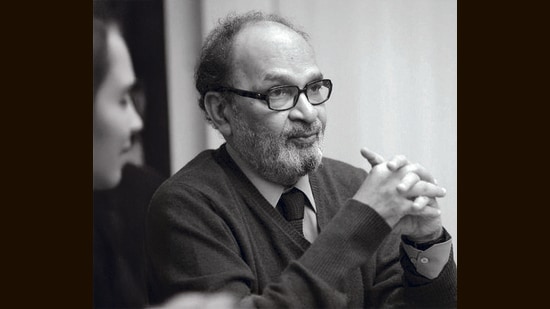
The difficulty with the cliché is that it embodies truths, which we set aside for fear of being repetitious. For instance, to say that it is a colonial hangover sounds like a cliché, but this is the absolute explanation of why we have not come out of the colonial strait-jacket in foreign coverage. The reason that our elites have been comfortable with The Times of London, Reuters, and The New York Times world view since our independence — which was as much a colonial gift as a result of our aspirations for independence — is that the departing imperial powers kept the strategic foreign policy aspects under their control, while we have been given the arena to analyse Lalu, Mulayam, Jayalalithaa, etc. They did not wish to part with absolute power, some of which, like India’s world view, they kept for themselves. If you look at things from their perspective, the policy begins to make sense: John Foster Dulles thought Non-alignment was evil; Nehru thought that was the only way to go for newly emerging countries. In brief, the fact that our elites look at the world from perspectives which are those of Washington, London, and other centres of metropolitan control makes sense for them, and they were all-powerful until the day before yesterday.
You have covered major global conflicts that Indian journalists have rarely attempted. What lessons do they hold for resolving India’s own internal conflicts?
{{/usCountry}}You have covered major global conflicts that Indian journalists have rarely attempted. What lessons do they hold for resolving India’s own internal conflicts?
{{/usCountry}}Talking of foreign wars and a country’s internal tensions are both divergent as well as contribute to each other. There was always a link between India’s foreign environment and its internal political dynamics. In 1957, EMS Namboodiripad came to power in Kerala. This event gave shivers to both the American ambassador, Ellsworth Bunker, and Indira Gandhi, the President of INC at the time. They collaborated to oust the communists from Kerala. The Western fear, again, from their perspective, was valid. Since the Bolshevik Revolution of 1917, communism was making waves. Next door in China, Mao’s Long March was about to succeed. It was followed by the Chinese completely outfoxing General Douglas MacArthur by crossing the Yalu River in Korea with stunning stealth. Western intelligence was, after all, not totally off the point in gauging the potential of communism in India. The naval mutiny of 1946, which resulted in hundreds of deaths and paralysed the world’s greatest naval power, was led by SA Dange, who later became the president of CPI. Nehru, like Prince Hamlet, was sympathetic to Aruna Asaf Ali’s call that the Congress should join this critical anti-British uprising. And the same Nehru was held back by Gandhiji and Sardar Patel from making common cause with communists. The British establishment was shaken; that is when the Cabinet Mission was sent to sort out India’s independence.
The British were not far wrong in appreciating the Left potential in India. After all, since independence, the big province of West Bengal was under communism for 36 years, as was Tripura. The communists are far from gone in Kerala.
You were among the first Indian journalists to report from the Middle East. How did reporting from Baghdad, Beirut, Amman, and Jerusalem deepen your understanding of Middle Eastern societies and politics. What should India learn from that region as it shapes its relations with West Asian countries?
The answer is obvious. These are the countries approximate to our nation where we have been respected in the past. The couplet on Nehru’s popularity in West Asia, written by a Pakistani poet, Raees Amrohvi, is evident:
Jap raha hai aaj mala ek Hindu ki ArabBarhaman-zade me shan-i-dilbari aisi to hoHikmat-i-Pandit Jawaharlal Nehru ki qasamMar mite Islam jis par kafiri aisi to ho
In the entire Arab world, which at that time included such tall leaders as Gamal Abdel Nasser, it was Nehru’s name which was inscribed on the beads they chanted. He was ahead of the others in the popularity stakes, irrespective of his Hindu faith. But an important section of our ruling class, including the media, has tended to concede that the Muslim world is more inclined towards Pakistan. Let me give you another example: when Nelson Mandela had nine ministers in his cabinet who were of Muslim origin, the reports from Pretoria to the South Block were alarming: Mandela’s cabinet would be amenable to manipulation by Pakistan. A revolutionary like Mandela did not even know the religion of members in his cabinet.
Instead of being curious and sympathetic to an area which has always held India in the highest esteem, somehow we and our journalists saw them as possibly more inclined towards the neighbouring country with which we had struck a hostile stance. The fact that the destruction of such extraordinary urban centres like Beirut, Damascus, Baghdad, even Cairo did not strike a chord or evoke sympathy. We had emotionally fallen in line with the Western, Zionist machinations in countries which respected us.
Over your long career, you have interviewed influential world leaders including Nelson Mandela, Fidel Castro, Mikhail Gorbachev, Yitzhak Rabin, and Muammar Gaddafi. Which of these interviews left the deepest impression on you? Is there anything any of these leaders told you off the record that you were unable to include in the published interviews?
The list given by you is not comprehensive. The most enjoyable conversation I ever had was with Gerry Adams, the Irish Republican hero and leader of Sinn Féin. He had gone through the colonial experience with the British, as we did in India. The result was that the vocabulary of Adams was most familiar. It was like talking to a progressive intellectual public figure in India. He must have been stunningly good in his communication because the British establishment had to introduce quaint law (the British broadcasting voice restrictions) to block his language, his vocabulary.
Off the record, Gaddafi thought that the partition of the subcontinent was a tragedy not only for the Muslims but for the entire developing world. On more than one occasion, he asked me to somehow create an atmosphere in the subcontinent that all its components get together again under some confederation. “Will you please carry this message to Prime Minister Vajpayee?”
You write about the bargains, risks, accidents, and role of luck in your career as a foreign correspondent reporting from war zones. Which conflict zone or war was your toughest assignment, and what did it teach you about foreign reporting that you carried into later assignments?
Difficult to cherry-pick. The Bosnian War was a much-misunderstood conflict, and its ramifications were never fully understood or appreciated in India. No one realizes that the dethronement of Mustafa Kemal Pasha Atatürk’s secularism in Turkey was largely because of the extent to which the televised brutality against Bosnian Muslims affected the Turks, who have long memories of the Balkans as their backyard. Sarajevo comes from the word Sarai.
We have seen Indian television journalists embedded with the Israeli military while reporting on the Israel-Palestine conflict from Israel and Lebanon. Has the attitude of the Indian state — and of Indian audiences — changed toward journalists who report independently of official positions from foreign countries?
Embedded journalists are a sad interlude in the history of the profession. But they sometimes flow from the national current which controls the minds of the elites. Therefore, an independent Indian journalist on a critical foreign assignment comes across as an affront. A peculiar experience of a submerged complex that foreign coverage in India was to this extent compromised.
Majid Maqbool is an independent journalist based in Kashmir.