Swift action by the petroleum ministry has resulted in filling India’s 5.33 million metric tonnes (MMTs), or 39 million barrels, of strategic oil reserves to the brim at an average price of $25 per barrel before international oil prices started heading north, saving about ₹5,000 crore of public money, two government officials said.
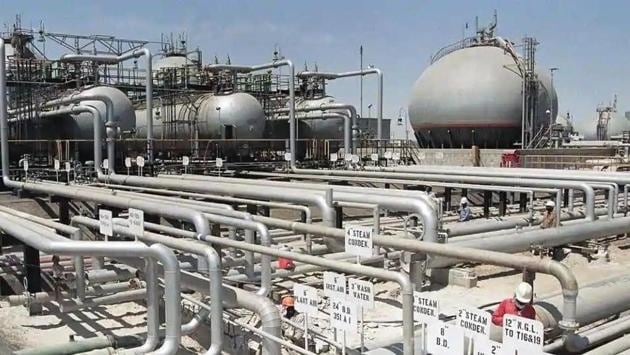
Even domestic refiners could stock 25 MMTs or about 183 million barrels of cheaper crude and petroleum products in their storage tanks at a similar price, the officials said, requesting anonymity.Petroleum and steel minister Dharmendra Pradhan confirmed the development. “We took advantage of global crude oil price crash since the beginning of March this year for filling the unfilled strategic petroleum reserves of 16 million barrels in all the three locations —Visakhapatnam, Mangalore and Padur,” he said.
“Beyond this strategic storage of crude oil, Indian oil marketing companies have procured at March/April prices of crude oil of about 8.5 million tons [62 million barrels], which is in the floating storage on vessels,” he added.
State-run oil marketing companies and private refineries cumulatively have about 25 MMT of crude oil as well as refined petroleum products, such as petrol, diesel, kerosene, bitumen, aviation turbine fuel in their regular storages, he said.
“These quantities have also been procured during the low crude price period. As a result, about 20% of India’s annual crude oil demand has been procured at cheaper crude prices,” the minister added.
{{/usCountry}}“These quantities have also been procured during the low crude price period. As a result, about 20% of India’s annual crude oil demand has been procured at cheaper crude prices,” the minister added.
{{/usCountry}}India, which is the world’s third largest energy consumer after the US and China, imports more than 80% of the crude oil it processes.According to the oil ministry’s data-keeper, Petroleum Planning and Analysis Cell (PPAC), India had imported 227 MMT crude oil in 2019-20 worth $101.4 billion.
“The deals were staggered; therefore, oil purchase rates of individual cargos also differ. But, on an average, we could get oil cheap at around $25 per barrel. The last cargo had arrived on May 17. Any further delay would have spiked our cost astronomically,” one of the officials said.
Meanwhile, Indian consumers have started feeling the pinch of the global crude oil spike since Sunday when petrol and diesel rates were increased after an 82-day retail price freeze. State-run fuel retailed raised petrol prices by ₹2.14 a litre in four straight days and diesel by ₹2.23 per litre.
The official said there had been a here a “small window” for purchase of crude oil as in bulk crude oil prices had started soaring after mid-May. Benchmark Brent crude was trading at $32.5 a barrel on May 15. Brent, which was trading at $51.9 a barrel on March 2, had plunged to $19.33 a barrel on April 21. Oil prices started moving north thereafter and on Wednesday Brent crude was hovering above $40 a barrel.
Officials said international oil prices started rising after the last deal was closed. They, however, declined to give specific details of the deals. “Our proactive approach enabled us to arrange 12 vessels by Indian oil companies to bring crude in a short span of 5 weeks,” the second official said.
Pradhan said India’s goodwill with oil exporters and its oil diplomacy played a major role in securing country’s energy requirement. “In my interactions on video-conferences with ministers of energy/oil of UAE and Saudi Arabia in March this year, I received support for them for making available specific grades of crude and also crude supplies within the month of April 2020 to a large extent,” he said.
“The UAE and Saudi Arabia have been traditional partners in India’s strategic petroleum reserves program, who stood with us in offering support even when we needed additional supplies of LPG [liquefied petroleum gas],” Pradhan said.
Experts said filling of strategic storages was one of the most outstanding decisions of the government. Nilaya Varma, co-founder and CEO of consulting firm Primus Partners, said, “These are challenging times financially for all governments. An extended period of low crude price has allowed India to take advantage, through public funding of programmes for fighting the pandemic as well for re-firing the economic engine, despite decline in fuel demand.”
According to the oil ministry’s data-keeper, Petroleum Planning and Analysis Cell (PPAC), India had imported 227 MMT crude oil in 2019-20 worth $101.4 billion. Anupam Manur, assistant professor at the Takshashila Institution said, “Filling up the existing storage capacity in our refineries and underground caverns was a low-hanging fruit and fortunately, the government promptly acted upon it. However, we missed the trick by not being ready with the Phase-II of our SPR plans, which could have added 12 days of storage capacity.”
“Even now, we could gain by looking at other opportunities for storage - building over ground tankers within India and leasing storage space in other countries such as Sri Lanka, Oman, or UAE. In any case, we should seriously consider building extra capacity to be ready when the next opportunity presents itself,” he added.