During his first year at Apple in 2001, John Patrick Ternus found himself at a supplier facility late one night, far from home, with a magnifying glass for company. He was counting grooves on the heads of the screws that were to be packaged with the Apple Cinema HD Display that would eventually launch in early 2022. There were 35 grooves chiseled. Apple’s specification called for 25. Ternus argued. Perhaps needless to point out, he won. The supplier changed the screw design to have exactly 25 concentric grooves.
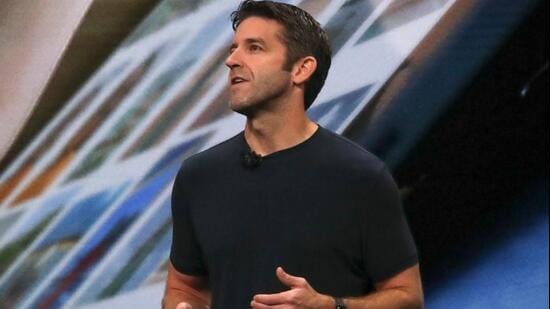
On September 1, John Ternus, 51, is no longer only a person who builds Apple’s products, but also becomes the person responsible for all of them. After 25 years inside the company, the last several spent running every hardware program from iPhone to the Vision Pro, the 51-year-old engineer will succeed the legendary Tim Cook as chief executive officer. That marks the end of Cook’s 15-year tenure, transitioning to executive chairman of Apple’s board of directors.
When the time comes to write an origin story for the Ternus era at Apple, it could well lead us to that night in 2001, with a magnifying glass for context. The parts nobody sees are exactly the ones worth getting right, has always been Apple’s way. That is also the John Ternus way.
Speaking at University of Pennsylvania 2024 engineering commencement, from where he graduated in 1997, Ternus recalled his first days at Apple as intimidating, surrounded by colleagues who seemed to know far more than he did. Ternus did say that staying willing to ask for help instead of pretending he already had the answers, was important. “I wasn’t sure I belonged there,” he told the graduating class. Winning that argument with the supplier over the screw grooves, was an early sign he certainly belonged.
{{/usCountry}}Speaking at University of Pennsylvania 2024 engineering commencement, from where he graduated in 1997, Ternus recalled his first days at Apple as intimidating, surrounded by colleagues who seemed to know far more than he did. Ternus did say that staying willing to ask for help instead of pretending he already had the answers, was important. “I wasn’t sure I belonged there,” he told the graduating class. Winning that argument with the supplier over the screw grooves, was an early sign he certainly belonged.
{{/usCountry}}It is often said that destiny has a way of putting you in places you are meant to be. Ternus, who grew up in California, has headed east to Penn. After graduating, Ternus began working as a mechanical engineer at Virtual Research Systems, a small firm building early virtual-reality headsets. In hindsight, that was important given his role many years later, in the development of Apple’s Vision Pro headset.
Ternus stayed and rose within Apple, becoming vice president in 2013 and senior vice president of hardware engineering in 2021. That was the top job in the division. Dan Riccio, his mentor, was stepping aside to work on another project.
In the years since, every single product that Apple has released, has had Ternus’ signature. Every iPhone, including the transition to their own in-house 5G modem, every Apple Watch, every iPad, the Vision Pro, every Mac, including the incredibly popular MacBook Neo. It wouldn’t be an understatement to say he has defined how millions of people interact with their devices.
Not bad for someone nicknamed “Crash” in his senior year at Penn, for nearly destroying a CNC machine. Ternus has never revealed more about the incident. But clearly, the otherwise very careful and measured executive wasn’t always that careful.
That said, the project itself was considerably more serious than the nickname suggests. Ternus and his batchmates were developing a device intended to help people with quadriplegia feed themselves, translating movements of the head and neck into the movement of a mechanical feeding arm. The group successfully designed and built a working, passive head-controlled feeding aid called HINT.
One of his bravest moves at Apple was the multi-year project to move Macs from Intel chips to Apple Silicon which commenced in 2020 and finished ahead of schedule three years later. That technical bet absolutely reshaped the economics for Apple’s computing device play, and set a benchmark the entire Windows and Android ecosystem is scrambling to match, years later.
Days earlier, Apple announced a new M6 chip in the Mac mini, alongside an extremely powerful M5 Ultra in the Mac Studio. That makes it more than 10 active Apple Silicon chips doing duties across the Mac and iPad line-ups currently. This taps right into the systematic engineering matching form and approach.
“John Ternus has the mind of an engineer, the soul of an innovator, and the heart to lead with integrity and with honour. He is a visionary whose contributions to Apple over 25 years are already too numerous to count, and he is without question the right person to lead Apple into the future. I could not be more confident in his abilities and his character, and I look forward to working closely with him on this transition and in my new role as executive chairman,” Tim Cook said of Ternus.
From engineering genius, to a leader
Ternus’ promotion is believed to have been unanimously approved by Apple’s board in April. The timing has been deliberate. In the months since, Ternus has been shadowing Cook through key daily operations. This was particularly noticeable at sessions around the WWDC keynote this summer.
Cook is handing over Apple to Ternus in perfect shape, financially as well as in terms of the product scope. Apple reported its strongest June quarter ever, with double-digit revenue growth across iPhone, Mac and Services, and in every geography. .
However, challenges posed by geopolitical uncertainty, supply chain inflexibility, and an inflated bill of materials cannot be ignored. It is an inevitability that iPhones will become more expensive. Could we see a $2000 foldable iPhone? Almost every other phone maker has already posted heftier price tags on phones already on sale.
For Ternus, with the Mac mini and Mac Studio refreshes done in August, the focus now shifts to getting the iPhone keynote just right. in Apple’s 50th year, adding another milestone for context. The world will be watching, and it has been timed perfectly to ensure Ternus unveils the first foldable iPhone. That itself will give an impetus to a foldable phone space that’s otherwise cruising on the experiential trajectory.
Beyond that, there are expectations of Apple playing on the front foot these next few months, with refreshes across product lines including iPads, Macs and even Home devices. Apple’s Services play, which itself is more than a $100 billion business, will need more levers to work with. A more diverse smart home and smart device play, of course underlined by the upcoming redone Apple Intelligence suite, will unlock some of those.
Apple has substance behind its AI ambitions, including a new generation of in-house Apple Foundation models designed for both on-device and cloud-based intelligence. But Ternus takes over at a moment when Apple is still perceived as having surrendered the AI narrative to the likes of Google, OpenAI and others.
Strong momentum was very much part of the succession plan.