E-Paper



Nothing, OnePlus and Samsung would do well to not ignore the Vivo V25 Pro
Vivo shouldn’t have any misconception about the magnitude of the task that lies ahead for its latest smartphone effort, the V25 Pro

 Prefer HTon Google


There is no other smartphone category more hotly contested at this time, than the flagship phone alternatives. The ones usually residing around the ₹30,000 price mark, give or take a few either side of it. The attention it gets has a lot to do with the value proposition these phones offer, with ever improving specifications (and therefore experience), without having to spend flagship phone money. Vivo shouldn’t have any misconception about the magnitude of the task that lies ahead for its latest smartphone effort, the V25 Pro.
The competition is intense. Nothing Phone (1), OnePlus 10R 5G, OnePlus Nord 2T 5G, Google Pixel 6a (if you’re okay with a compact screen size) and the Samsung Galaxy A53, just some of the incumbents. The V25 Pro’s prices start at ₹35,999. There is diversity in approach towards the same objective – performance and a flagship phone-esque experience.
Also Read: Beijing reacts to India’s move to ban Chinese smartphones below ₹12,000
Variety of processors (power and manufacturers), different screen size options and a plethora of ways to make for visual allure (the Nothing’s transparent back will remain unique for a while). Vivo’s approach with the V25 Pro takes the MediaTek path, specifically the Dimensity 1300 chip (also seen in the OnePlus Nord 2T. There are multiple reasons for why this was selected, including the company insisting this was a better fit for their complex camera algorithms including the low-light bokeh.
A look around points us to the Qualcomm Snapdragon 778G+ in the Nothing Phone (1), Google’s own Tensor chip powering the Pixel 6a and Samsung’s own Exynos 1280 as the beating heart of the Galaxy A53.
Our experience with the Dimensity 1300 pegs it a notch higher than the Snapdragon 778G+, but not by much. This is a very capable chip, for multi-tasking and even some amount of gaming. It is quite reassuring to note that there are no heating issues being exhibited. The Funtouch OS isn’t exactly attempting to replicate an uncluttered Android experience (much like Nothing and OnePlus phones), and that’ll partake in the resources too.
We come away impressed with the 8GB RAM spec-ed variant (there’s a 12GB option too), which exhibits enough headroom for resource intensive apps.
Speaking of the FunTouch OS, it is one of those extensive Android layers that are still comparatively easier to live with. However, it doesn’t hide the fact that preloaded app clutter is still a big problem. There are numerous preloaded apps, which you’ll likely never use – but at least most of them can be uninstalled. More than anything else, it is a fairly avoidable annoyance, though phone makers see this as a steady revenue stream.
Not the fastest charging, by any stretch of the imagination. It is the 66-watt charging speeds, which while faster than what Nothing and Samsung manage, is still much slower than the OnePlus efforts (80-watt and upwards). This is something a lot of buyers do consider, as they compare specs.
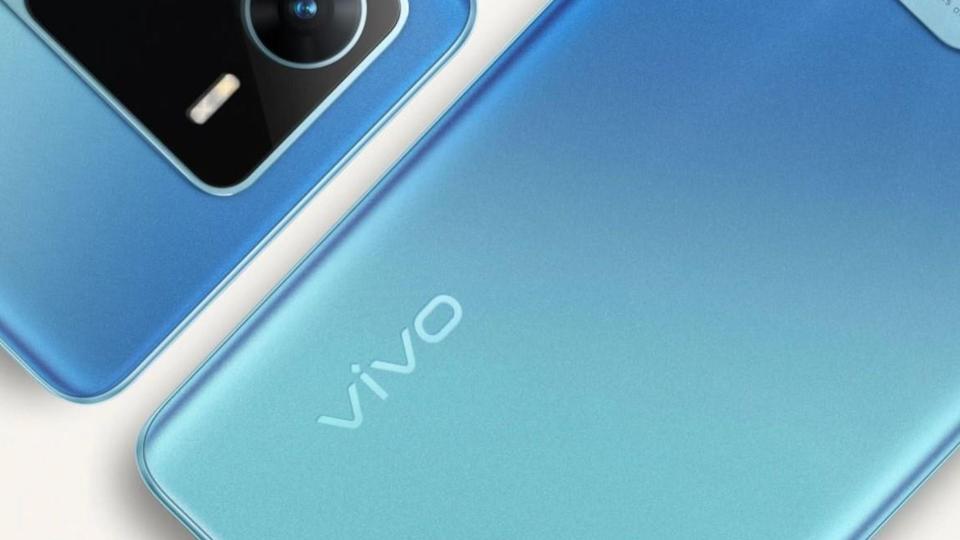
Though at first it is difficult to gauge this, the Vivo V25 Pro’s party trick is the colour changing back panel. It looks conventional at the outset, but if you buy the Surfing Blue colour option, the Fluorite AG glass at the back makes the shift in blue hues depending on light falling on it and the angle you are viewing it at. A nice touch, something that will probably regale your friends for a while.
That said, this is not a must-have on a smartphone, but neither will this colourful personality be a deal-breaker. If you like the Pure Black colour option, you’ll be foregoing this rather interesting feature, for the sake of convention.
It’s not just colour changing, but there are subtle elements to the Vivo V25 Pro design which enhance the experience of holding it, compared with some of its rivals. They, for instance, mostly sacrifice the curves on the left and right of the display, opting for flat slabs. This 6.56-inch AMOLED keeps those curves in place, which gives the V25 Pro the sort of touch experience akin to phones from a notch higher up on the price band.
There is just something satisfying about the finger gently sliding off the curved edges, as you navigate the interface and apps. This will go up to 120Hz refresh rate, which gives it an advantage over some rivals which top out at 90Hz.
It’s a bright display too, very usable even under bright sunlight. No complaints about the colours either, which pop out quite nicely without ever being overbearing (badly tuned displays tend to have unnaturally bright red colours, which spoil everything else).
A lot of thought has gone into the photography bit with this phone, and the features list is exhaustive, starting with the triple cameras that are led by a 64-megapixel sensor. How many of these you end up using regularly is subjective. There is a new image processing algorithm at work, which attempts to brighten up low light photos just that little bit, but now you have the controls over exposure and brightness.
You’ll get differing mileage in terms of results (a lot of that depends on your ability to tweak framing), but largely, it works well.
That’s particularly true for the low light, wherein the image processing is gently smoothing the photos (this is quite clear when you zoom in) but is attempting to not overdo it (there isn’t apparent loss of detail, which is a good sign). Night portrait is surprisingly well done, though you will notice that any facing lights do tend to get over-highlighted, and that the subject’s reproduction is leaning towards the smooth instead of crisp. You can expect improvements with software updates in the weeks and months ahead.
The Vivo V25 Pro joins in on the fun of the hotly contested smartphone category. It is a mix of what you’d expect as standard, alongside a few standout elements that could add value to the money you spend. The curved display, the efforts with the camera (though updates are required to optimize certain elements) and the colour changing back panel do infuse some freshness. Yet, the phone could have done with faster charging still. And the preloaded apps, which you can lovingly call bloatware, continue to be a problem.