Prime Minister Narendra Modi’s visit to China in May this year is expected to take Indo-Sino ties to new highs. China’s Ambassador to India, Le Yucheng, talks to HT on various bilateral issues including the status of the $20-billion (Rs. 1.2 lakh-crore) investments already committed during Chinese President Xi Jinping’s visit to India in September last year as well as expectations from Modi’s forthcoming visit to China. Excerpts:
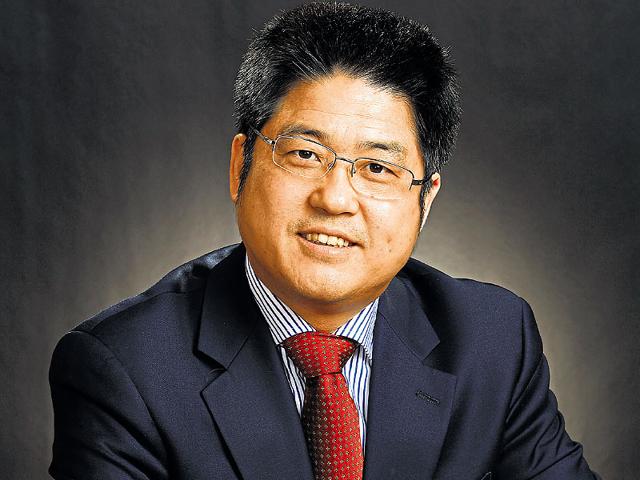
What is the status of $20 billion of Chinese investments committed to India during President Xi’s visit last September?
Chinese companies such as Huawei, Alibaba, Xiaomi are increasing their investments in India. To reach the figure of $20 billion, China needs to invest $4 billion annually on an average. It is not a hard task for China when seen in the light that China’s annual overseas investment is above $100 billion. During President Xi’s visit, China and India signed 12 agreements covering industrial parks, railway, credit and leasing, with cumulative amount of investments of $13 billion. China’s Beiqi Foton Motor Corp Ltd and Maharashtra Industrial Development Corp have signed an MoU for setting up of Chinese industrial park in Pune with $5-billion investment in three phases by 2030. It is estimated to create 100,000 jobs and an annual output of $20 billion. Also, China Development Bank signed an MoU with the industrial extension bureau of Gujarat to set up a Chinese industrial park in Vadodara, focusing on manufacturing electrical equipment. The total investment will reach $1.8 billion by 2025. It will create 10,000 jobs directly and 40,000 indirectly, with an annual output of $5.2 billion.
What are your expectations from Prime Minister’s Narendra Modi’s visit to China in May this year?Chinese President Xi Jinping’s visit to India last September was the second state visit by a Chinese President to India in the span of eight years, where the two sides charted out a blueprint for the development of bilateral relations in the next 5-10 years. Prime Minister Modi’s visit to China is important for China-India relations. I expect the same amount of MoUs to be signed during the visit. Expectations are that another $20 billion worth of investments will be committed during his visit. China is ready to work with India to strengthen policy coordination and take the China-India relation to an even higher level.
{{/usCountry}}What are your expectations from Prime Minister’s Narendra Modi’s visit to China in May this year?Chinese President Xi Jinping’s visit to India last September was the second state visit by a Chinese President to India in the span of eight years, where the two sides charted out a blueprint for the development of bilateral relations in the next 5-10 years. Prime Minister Modi’s visit to China is important for China-India relations. I expect the same amount of MoUs to be signed during the visit. Expectations are that another $20 billion worth of investments will be committed during his visit. China is ready to work with India to strengthen policy coordination and take the China-India relation to an even higher level.
{{/usCountry}}What are the impediments in increasing our economic ties?
First is the visa problem. As of now, most Chinese businessmen coming to India can only get single-entry visas for a duration of 90 days. The conditions for issuing work visas to skilled workers are also very strict. These not only bring inconvenience but also stall the expansion of Chinese enterprises’ investments in India. We really hope that the Indian government can relax its visa restrictions. Second is the security review. Chinese firms are willing to join the construction of large-scale infrastructure projects in India. We do have considerable advantages in the spheres of capital, technology, cost and construction experience, which are in line with actual demand in India.
But we often end up hitting the wall of security review. The Indian government should provide equal opportunities to Chinese companies to participate in a fair competition with the spirit of mutual benefit. Third is the improvement of the business environment, which include providing favorable policies towards foreign investment, improving transparency and efficiency of the administrative examination and approval, expanding the scope of the policy of one-stop approval, simplifying and improving the policies of land acquisition, labour and tax, and improving infrastructure support such as water, electricity and waste disposal.
How can we correct the trade imbalance between India and China?
China takes the Indian concern of trade imbalance very seriously. Solving the problem requires joint efforts. China hopes India would ease restrictions on exporting competitive products such as iron ore etc to China, cut tariffs, encourage Indian firms to improve the quality of their products and produce more goods that meet the demand of the Chinese market. Furthermore, I believe the ‘Make in India’ programme has brought new opportunities for balancing India-China trade relations. China has capital, technology, equipment and sophisticated manufacturing management experience. We hope India will create favourable conditions for Chinese enterprises to expand their investments in India.
What are your views on theterritorial disputes?
Through years of efforts, India and China have signed political parametres and guiding principles for the settlement of the boundary issue. Now, the two sides are working on the basic framework of its solution through friendly consultations. China is ready to work with the Indian side to seek a fair, reasonable and mutually acceptable solution. Pending the final settlement, the two sides should jointly safeguard peace and tranquility in border areas and prevent the boundary issue from holding up the overall development of bilateral relations.