The bulls are back in Indian equity markets, and they have powered the Sensex through its fastest-ever 10,000-point rally as of November 11. The tailwind comes from Foreign Institutional Investors (FIIs) bringing their money back into India after being net sellers in all but three months of 2026 –– February, July and August –– according to monthly net investment data from the Centre for Monitoring Indian Economy (CMIE).
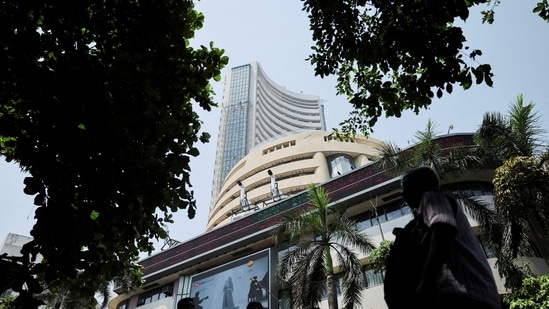
India’s benchmark equity index, the BSE Sensex, closed at 81,879.4 points on November 11, after reaching an intra-day high of 82,520.4. Wednesday’s close marked an increase of 10,286 points from the Sensex’s closing level on October 8. This means the index gained 10,000 points in just 23 trading sessions, spread over 34 calendar days. This is the fastest-ever 10,000-point rally in the Sensex’s history. The index first crossed the 10,000-point mark on February 7, 2006, after taking 5,945 trading sessions over 9,813 days from its starting point on April 3, 1979.
To be sure, the Sensex is a weighted average of stock prices in the index. Therefore, long-term comparisons, unlike the recent rally, are prone to inflation.
Most of the 10,000-point upswing since October 8 came during a continuous seven-session rally from October 29 to November 6. The index gained 7,782 points during this streak before falling 29 points on November 8 and gaining 880 points over the subsequent two sessions, ending November 11.
{{/usCountry}}Most of the 10,000-point upswing since October 8 came during a continuous seven-session rally from October 29 to November 6. The index gained 7,782 points during this streak before falling 29 points on November 8 and gaining 880 points over the subsequent two sessions, ending November 11.
{{/usCountry}}Also read: Sensex losses early gains, falls nearly 500 points from day’s high
Seven-day winning streak among the longest in Sensex history
The seven-session continuous rally ending November 6 was also a notable feat for the index, although a smaller one than the fastest-ever 10,000-point gain. Longer continuous rallies have occurred only 46 times since 1979, the earliest year for which data is available on the BSE website. Seven-session streaks have occurred on 33 occasions.
The latest rally in Indian stock markets brings much-needed relief to investors, as 2026 had been a rough year until the recent turnaround, particularly this month. On October 8, the Sensex was 14,243 points below its all-time high of 85,836.14 and 14,169 points below this year’s peak of 85,762.01, reached on January 2.
Also read: US October inflation remains stubbornly high as consumer prices rise 0.4%
West Asia conflict and global AI investments weigh on Indian markets
India’s equity market has faced multiple headwinds in recent months, including the war in West Asia and global investor interest shifting towards AI-related stocks in the US and Asian technology markets such as South Korea and Taiwan, which produce AI hardware. A drubbing for the Republican Party in the recently held US midterm elections — interpreted as a sign that President Donald Trump might not undertake a military escalation in the war — and growing uncertainty about the durability of the ongoing AI boom in global markets have weakened, if not completely eliminated, these headwinds to FII inflows into India.
NSDL data, accessed through CMIE, supports this theory. FIIs were net sellers in Indian markets in seven of the first 10 months of this year. Persistent buying by domestic institutional investors (DIIs) provided a much-needed floor to market sentiment. Following heavy net outflows in October, FIIs turned net buyers in November, purchasing ₹53,739 crore up to November 9, the latest date for which NSDL data is available. Data released on November 9 and provisional data for November 11 show that FIIs were net buyers in equity to the tune of ₹14,767.73 crore and ₹6,959.35 crore, respectively.