N Chandrasekaran on Wednesday said he is stepping down and will not seek reappointment at the end of his term in February next year. The development came ahead of the company’s annual general meeting on August 18.
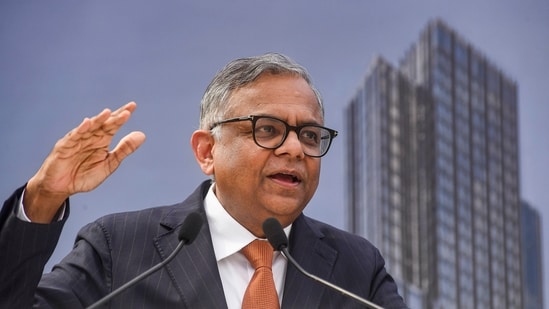
In a statement, Chandrasekaran said, “I have completed 40 years of professional life at the Tata Group. I am grateful for the immensely satisfying opportunity to contribute to this venerable institution.”
“Will not seek reappointment”
Chandrasekaran’s current term will end on February 20, 2027. He said he would not seek reappointment after his term ends.
“I have decided not to offer myself for reappointment when my term ends on February 20, 2027,” he said.
His decision comes amid tensions with shareholders and differences between Chandrasekaran and Tata Trusts chairman Noel Tata.
{{/usCountry}}His decision comes amid tensions with shareholders and differences between Chandrasekaran and Tata Trusts chairman Noel Tata.
{{/usCountry}}Reflecting on ending his term in February 2027, Chandrasekaran said," Sir Dorabji Tata Trust and Sir Ratan Tata Trust had unanimously resolved and recommended the extension of my next term for a period of five years."
He said the proposal was later placed before the Tata Sons board on February 24, 2026. However, it did not go through because one board member did not support it.
“Subsequently, the resolution was tabled in the Tata Sons Board on Feb 24, 2026. However, the proposal was not carried through because one of the Board members did not support it, and in the absence of unanimous support, I chose to defer the decision,” he said.
Also read | 4.5-acre mangrove forest to make way for Tata Power switching station
Chandrasekaran said six months had passed since that board meeting without a resolution being reached.
“It has been 6 months since that Board meeting, and no resolution has been reached to date,” he said.
Explaining why he had decided against seeking another term, Chandrasekaran pointed to the size of Tata Sons and the number of strategic projects currently at critical stages.
“Tata Sons is a very large institution and there are many strategic projects that are under critical stages of execution,” he said.
He said having a leader in place beyond February 2027 was necessary not only for taking the group forward but also for providing clarity to its employees, investors, partners and other stakeholders.
Also read | Tata Motors aims for over 20% PV market share by 2030, hints Chairman N Chandrasekaran
“It is not only necessary to have a leader in place to lead the Group beyond Feb 2027, but also clarity on leadership is important for employees, investors, partners and other stakeholders,” Chandrasekaran said.
Against this backdrop, he said he had decided not to offer himself for another term when his current tenure ends.
“Under these circumstances, earlier today, I have communicated to the Tata Sons Board, that I have decided not to offer myself for reappointment when my term ends on Feb 20, 2027,” he said.
Following the development, shares of key Tata Group companies, including Tata Consultancy Services (TCS), Tata Steel and Tata Power, declined. At 11:30 am, Tata Power was trading 1.26% lower, while TCS fell 3.9% and Tata Steel declined 1.83%.
Disagreements between Chandrasekaran and Tata Trusts
Tata Sons encompasses over 30 companies, including Tata Consultancy Services (TCS), Tata Motors and Air India, but is in turn 66% owned by Tata Trusts, the group's charitable arm.
Disagreements have been brewing between Chandrasekaran and Tata Trusts over the past few months, with the two sides clashing over board representation, strategy, losses at group company Air India and how to handle the planned exit of a minority shareholder, Reuters reported.
In February, Tata Sons postponed a decision on reappointing Chandrasekaran as chairman after Noel Tata, chairman of Tata Trusts, opposed the move.
Tata has also been entangled in several controversies over the past one year after the fatal Air India crash in Ahmedabad, pricing pressure at TCS and a cyberattack at Jaguar Land Rover that disrupted production and weighed on Britain's economic output.