Toyota Motor Corp. said Tuesday that it had manufactured 771,382 vehicles worldwide in October - down from a record high of 887,733 in September - but noted output was up 23 per cent YoY despite supply chains being affected due to Covid-19 . Global sales also surged by 23 per cent YoY to 832,373 vehicles in October. Including subsidiaries Daihatsu Motor Co. and Hino Motors Ltd., output and sales stood at 924,132 and 918,756 vehicles, Toyota said.
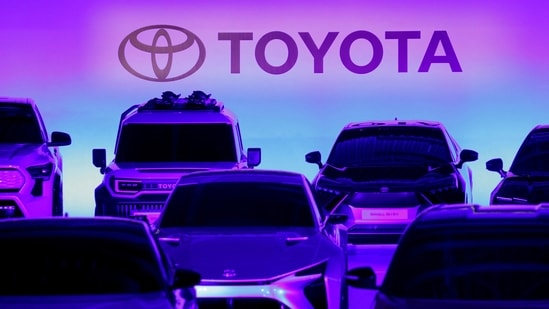
However, the Japanese giant warned of an uncertain outlook - because of both the pandemic and shortage of semiconductor chips. The world’s biggest automaker said Tuesday it is still recovering and is re-adjusting production in China, which is still gripped by Covid constraints.
The company this month cut global targets for the fiscal year through March and stayed with a conservative profit expectation.
Toyota shares dropped 1.1 per cent Tuesday in Tokyo and are down 4.5 per cent for 2022.
ALSO READ: Toyota unveils Innova HyCross in India. Check features and specifications
Covid issues in China
Protests across China - a sign of peoples' festering anger against extreme Covid lockdown measures - have made headlines over the past few days, underlining challenges faced by Toyota, other automotive giants and manufacturing firms.
Since Friday, protests have spread to more cities, including the financial hub Shanghai, and is testing manufacturers' ability to work amid the harsh restrictions of China's controversial 'zero Covid' policy. Toyota had earlier suspended operations at several factories.
{{/usCountry}}Since Friday, protests have spread to more cities, including the financial hub Shanghai, and is testing manufacturers' ability to work amid the harsh restrictions of China's controversial 'zero Covid' policy. Toyota had earlier suspended operations at several factories.
{{/usCountry}}In the smartphone market for example, Apple's major manufacturing hub in Zhengzhou has also been hit and a production loss of nearly 60 lakh iPhone Pro units is predicted for 2022.
Semiconductor shortage worries
Anti-Covid lockdown protests have also underlined automakers' dependence on electronic chips - a feature that has increased worldwide as vehicles incorporate more digital features.
The global scarcity - troubling manufacturers since 2021 - has also hampered production.
To battle the shortage, Toyota had earlier decided to provide buyers with only one of two electronic 'smart' keys for their new cars (in Japan) in addition to a mechanical one.
(Inputs from Bloomberg)