On February 13, the Comptroller and Auditor General of India answered the ~59,000 crore question —which Rafale deal is cheaper, the UPA’s or the NDA’s?
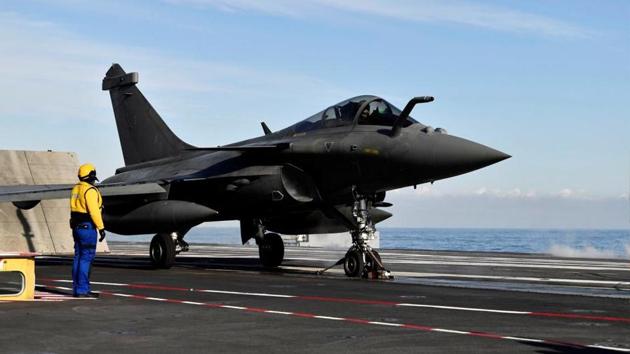
According to it, the NDA paid a lesser price for the jets.
Importantly, the price of basic aircraft was the same in both deals, according to the government auditor. The Ministry of Defence told CAG that under the 2015 negotiations the price of the basic aircraft was 9% cheaper. CAG, however, has rejected this argument. On the contrary, it has observed “there is no difference between the bid of 2007” and “the negotiated cost of the 2015 offer, for the same aircraft.”
The comparison is the first of its kind because the deals are diverse and contrasting. For instance, the UPA was negotiating a Transfer of Technology (ToT) and licensed production of 108 fighters in India. And that deal was never really signed. The Modi-led NDA government bought 36 fighters in a flyaway condition without either ToT or licensed production. And, on comparing the two deals, CAG said, “the contract signed in 2016 …was 2.86 % lower.”
To compare the two prices the CAG used the concept of a so-called aligned price.” This was used to make the bids of 2007 and 2015 comparable. ” Subsequently, price escalation was accounted for using the industrial indices of the French National Institute and Economic Studies. There was a difference between the aligned price worked out by CAG for the purpose of audit and the one arrived at by IAF, although this was marginal. IAF used the aligned price to negotiate the price of 36 fighters in 2016. Analyzing the deal in detail, the CAG said, “three items including the basic price of the aircraft were procured at the same price; four items were purchased at lower price” and the prices “of seven items were higher” when compared to the aligned price.
{{/usCountry}}To compare the two prices the CAG used the concept of a so-called aligned price.” This was used to make the bids of 2007 and 2015 comparable. ” Subsequently, price escalation was accounted for using the industrial indices of the French National Institute and Economic Studies. There was a difference between the aligned price worked out by CAG for the purpose of audit and the one arrived at by IAF, although this was marginal. IAF used the aligned price to negotiate the price of 36 fighters in 2016. Analyzing the deal in detail, the CAG said, “three items including the basic price of the aircraft were procured at the same price; four items were purchased at lower price” and the prices “of seven items were higher” when compared to the aligned price.
{{/usCountry}}The Indian Specific Enhancements (ISE) that include specific radar and sensor, and missile systems were cheaper by 17.08% when compared to the previous deal, CAG said. At the same time, CAG noted that four of the 13 Indian Specific Enhancements “were not needed.” And that “IAF made” attempts to “reduce these items”. However, the ministry did not agree to remove these items which account for “a significant amount,” CAG observed.
For the Engineering Support Package, which includes spare engines, the new deal will end up paying 6.54% more than the aligned price, although it is getting more engines. During the 2007 negotiations, IAF asked for 12 spare engines. Subsequently, however, the IAF contracted for 18 spare engines for a fleet of 36 fighters.
The price for Technical Publications, documentation critical to maintaining the fleet of fighters, and Technical Assistance worked out to a “savings of 4.77 percent,” CAG said. Similarly, the amount paid for “Tool Tester and Ground Equipment” was slightly more – 0.15 percent – than the aligned price.
For training pilots and technicians, IAF has agreed to pay nearly 3% more that the aligned cost. But part of the escalation is also because more pilots and technicians were trained under the 2015 deal as compared to the 2007 deal. For instance, initially, IAF wanted to train 26 pilots and 76 technicians. Later in the 2015 negotiations, 27 pilots and 146 technicians and two engineers were sent for training.
Importantly, the weapons package which includes beyond visual range missiles with a reach of 150 Km like Storm-Shadow and Meteor Missiles came cheaper, “saving 1.05%.”