With the coronavirus cases witnessing a sharp spike in Punjab in the recent weeks, the health department is grappling with shortage in supply of medical oxygen for patients in hospitals in several districts of the state.
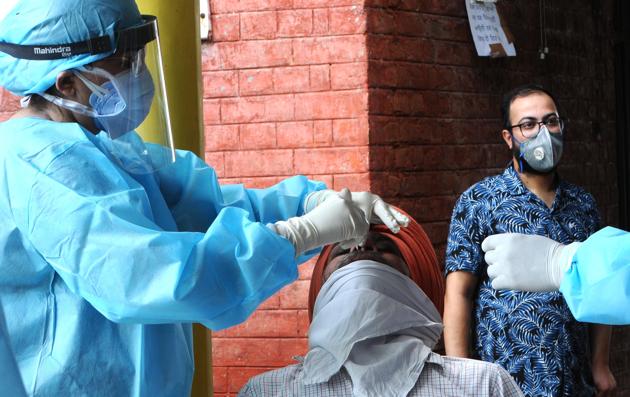
The 16 oxygen manufacturers and suppliers, mostly small, in Punjab are struggling to meet the increased demand from government and private hospitals. The medical-grade oxygen demand, which varied from 15 to 20 metric tonnes (MTs) a day on an average before the pandemic outbreak, has now shot up five-fold to around 100 MTs daily as per industry sources.
The future demand for oxygen is likely to increase further in the event of the pandemic situation aggravating in the coming days. As per the state health department, the projected requirement of oxygen for both government and private hospitals in the state will be around 165 MTs daily by September 30.
RS Sachdeva, managing director of Hitech Industries, the largest supplier in the state with its manufacturing plant and refilling unit in Mohali, said the supply of liquid oxygen was really tight.
“The major oxygen generation plants in neighbouring states have a huge demand from other northern states. Therefore, hospitals, particularly small hospitals are facing a huge problem. We have placed orders for a new manufacturing plant in Amritsar and expand the capacity in Mohali, but it will take time,” he said.
{{/usCountry}}“The major oxygen generation plants in neighbouring states have a huge demand from other northern states. Therefore, hospitals, particularly small hospitals are facing a huge problem. We have placed orders for a new manufacturing plant in Amritsar and expand the capacity in Mohali, but it will take time,” he said.
{{/usCountry}}The state’s Covid-19 case count of 37,824 on August 21 has now raced well past the 70,000-mark, going up by 91% in the past three weeks. The number of active cases stood at 18,088 on Thursday. Oxygen is critical for patients of Covid-19, a respiratory disease that reaches the respiratory tract, mainly the lungs, leading to breathing problems, from mild to critical, as well as reducing oxygen in blood to dangerously low levels.
Punjab Health Systems Corporation (PHSC) managing director Tanu Kashyap said the availability of medical oxygen was a bit of a challenge. “Due to an increase in oxygen demand from all the states in the wake of coronavirus cases, there is an issue with regular supply. We are reviewing the oxygen availability on priority on a daily basis and have been managing things so far,” she said.
The situation has set alarm bells ringing for the state government as Covid-19 cases are projected to race past the 1 lakh mark in the next few days.
Director (industries) Sibin C said the oxygen manufacturers and suppliers in the state had limited capacity and were sourcing liquid oxygen from three major oxygen manufacturing plants, one each in Haryana, Uttarakhand and Himachal Pradesh. “They are facing shortage in supply of liquid oxygen from these units. The scarcity is likely to increase in the coming days. We have taken up the issue with the governments of the three states,” he said.
Principal secretary (industries and commerce) Alok Shekhar has written to his counterparts in the three states requesting them to direct the manufacturing plants in their area to increase the supply of liquid oxygen to the hospitals as well as manufacturers and re-filling units in Punjab so as to reduce the shortage of oxygen in hospitals of the state.
Also, the department has asked the oxygen makers and suppliers, who were supplying 20% of their oxygen for medical use and the rest to the industry (steel units) earlier, to give priority to hospitals. The industries director has written to the deputy commissioners of Ludhiana, Fatehgarh Sahib, Bathinda, Amritsar and Jalandhar, asking them to call a meeting of oxygen manufacturers and refilling units in their areas to monitor their production. They should be asked to utilise the production capacity mainly for medical-grade oxygen, he wrote on September 3 after the health department flagged the issue.
The power department has also been told to ensure uninterrupted electricity supply to these units which complained of frequent power cuts leading to interruption in production and supply.