On October 9, the University of Delhi directed its colleges to conduct campus safety audits and submit their findings by October 12. The directive came weeks after 17-year-old girl was allegedly raped in a park in Kalkaji area, adjacent to Lady Sri Ram college on September 21. The incident, which led to agitation by students and other groups, raised a larger question: why does institutional action on women’s safety often gain momentum after incidents of sexual violence and student protests, rather than being part of routine campus life?
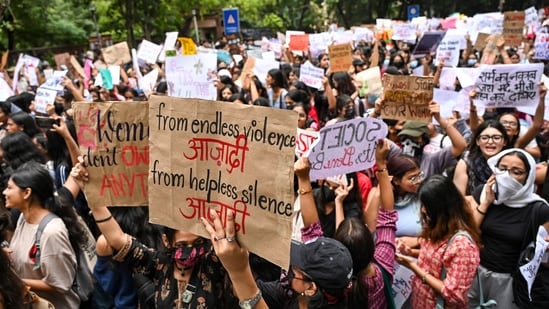
The DU directive called for identifying unsafe spots, repairing streetlights, installing CCTV cameras, pruning trees and conducting gender sensitisation workshops. However, student-led efforts to document harassment and unsafe spaces at DU go back more than a decade. Surveys conducted by Parivartan, Kirori Mal College’s gender forum, recorded concerns about campus safety in 2013, 2014 and 2015, raising questions about how much has changed since then.
Established in 1997-98 by teachers who wanted to address gender-related concerns among students, faculty and other staff, Parivartan functioned additionally as KMC’s Women’s Development Cell for around a decade while retaining its broader, more gender-inclusive identity.
At the time, the Supreme Court had recently laid down the Vishaka guidelines on workplace sexual harassment, but DU did not have its own sexual harassment policy. This is when Parivartan students participated in discussions about the redressal of sexual harassment on campuses and formed a forum to address the issue.
What numbers say
In the aftermath of the Delhi gang rape on December 16, 2012, Parivartan surveyed 163 women in and around North Campus for its first audit. The findings were submitted to the DU vice-chancellor on March 8, 2013, with a request for action.
{{/usCountry}}In the aftermath of the Delhi gang rape on December 16, 2012, Parivartan surveyed 163 women in and around North Campus for its first audit. The findings were submitted to the DU vice-chancellor on March 8, 2013, with a request for action.
{{/usCountry}}Also Read: After Kalkaji rape, women reclaim streets in midnight solidarity walk
The 2013 survey found that 56.4% of respondents experienced staring, lewd comments or other forms of sexual harassment very often, while 70% did not feel safe with the increased police presence in the area. In 2014, although experiences of harassment varied, more than half of the respondents identified staring as the starting point of harassment, and 73.91% said they avoided campus areas after 5pm.
The findings also pointed to gaps in institutional support, with 71.59% of those who faced harassment not filing a formal complaint and 88.28% unaware of Ordinance XV-D (the DU Ordinance against Sexual Harassment). The 2015 survey, which covered 212 students, found that 39% faced sexual harassment often or quite often, while 49% regularly avoided certain areas of North Campus. A majority also reported not staying on campus after 5pm, and 86% said they felt safer travelling in groups.
A common thread across all three surveys was that students’ sense of safety remained closely linked to their freedom to access and move around campus, with harassment, fear after dark and the avoidance of certain spaces emerging as recurring concerns. The findings also raised questions about whether measures such as curfews and police deployment adequately addressed the problem: in 2013, 64% considered time restrictions pointless and unfair, while in 2014, 47.97% felt curfews did not improve their sense of safety or change anything. The surveys also highlighted the need for more effective reporting mechanisms, greater awareness of university-level remedies and proactive institutional action.
Recommendations in 2013 included better street lighting, gender sensitisation for campus police, active gender sensitisation committees and accessible complaint mechanisms, with students stressing that safety measures needed to be implemented rather than remain on paper.
Plan of action
Dr Janhawi, assistant professor and convenor of Parivartan, said that the forum plans to restart its safety audit and broaden its scope this time.
“We plan to map the whole of Delhi and identify hotspots that are among the most unsafe places for women to visit,” she said. “We want to take this a step further by launching a programme or an internship to involve more people in conducting the audit. We also plan to release the data by next year,” she added. Previously, Parivartan had released its safety audit data on Women’s Day.
She also said that once the data is released, Parivartan plans to collaborate with public safety authorities, NGOs and other organisations to strengthen security around the identified hotspots.
Members of Parivartan also said the concerns highlighted in surveys conducted nearly a decade ago remain unresolved, with the same issues, including inadequate street lighting, being raised again after the Kalkaji rape case.
Watch: Security Tightened At Hansraj Sethi Park Following Kalkaji Gang-Rape Incident | HT India
Violence, meanwhile, has taken new forms. Faculty members engaged in working with gender issues in DU said online interactions and digital media expanded the scope for harm, with technology able to intrude into people’s lives and destabilise them.
More than a decade after the first audit, many of the concerns raised by Parivartan remain part of the conversation around women’s safety on campus. The latest directive gives DU another opportunity to act on them. But for students, the question is whether the changes will last beyond the immediate outrage that follows an incident. Why should it take a rape case or protests for campus safety to become an institutional priority, and what will it take for students to feel safe without having to keep asking for it?