
 E-Paper



Centre clarifies: ‘No coercive directions issued for rooftop solar installation in Chandigarh’
In a reply tabled in the Lok Sabha, the Union ministry of new and renewable energy (MNRE) stated that no instructions relating to amendments in building bylaws, cancellation of conveyance deeds, or restrictions on property registration were ever issued to enforce rooftop solar adoption.

 Prefer HTon Google


The Centre has clarified that it has not issued any coercive directions to the Chandigarh Administration mandating rooftop solar installation in private properties. In a reply tabled in the Lok Sabha, the Union ministry of new and renewable energy (MNRE) stated that no instructions relating to amendments in building bylaws, cancellation of conveyance deeds, or restrictions on property registration were ever issued to enforce rooftop solar adoption.
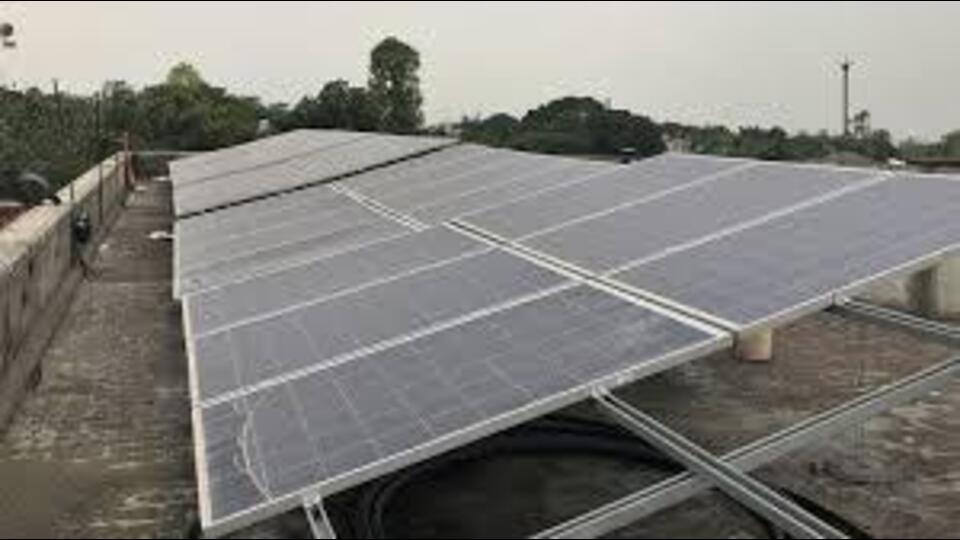
The clarification follows concerns raised by Chandigarh MP Manish Tewari, who questioned the legality of the UT administration’s earlier attempts to pressure homeowners into installing rooftop solar systems. Minister of state for new and renewable energy and power Shripad Yesso Naik confirmed that the MNRE had not directed any state or UT, including Chandigarh, to adopt punitive measures.
3,941 homeowners issued resumption notices in 2024
In September 2024, the UT Estate Office issued resumption notices to 3,941 homeowners, directing them to install solar systems by November 6. Only 820 homeowners applied by the deadline. The administration said failure to comply could lead to resumption of properties. The notices were issued to homeowners with 500 square yards or more, under the PM Surya Ghar Muft Bijli Yojana, which provides a 60% subsidy for up to 2 kW and 40% for 2–3 kW, capped at 3 kW.
However, in November 2024, Union minister for power and housing and urban affairs Manohar Lal Khattar reprimanded UT officers for attempting to resume properties over non-installation of solar systems.
During a review meeting, Khattar remarked: “It has come to my attention that notices have been issued to homeowners for the resumption of their properties over non-installation of solar rooftop plants.”
Following his intervention, the UT administration put the notices on hold.
6,606 govt buildings fitted with solar plants
Despite the absence of mandatory directions for private consumers, Chandigarh has made significant progress in solarising its government infrastructure. As of October 31, 2025, a total of 6,606 government buildings have been equipped with rooftop solar systems, adding up to 52.825 MW of installed capacity—one of the highest among UTs.
MP Manish Tewari, however, questioned the figures and the UT’s past actions.
He said it would be important to verify which “6,000-odd government buildings” had been solarised and expressed surprise at the claim that the UT administration even owned so many buildings.
He added: “Last year, the Chandigarh Administration was threatening residents that their land registrations would be cancelled. Now, the Government—specifically the MNRE—categorically states that no such instructions were ever issued. Who in the UT administration issued these illegal, arbitrary and capricious directions in a malicious exercise of power? This must be investigated, and the officers responsible should be held accountable by the UT administrator.”
MC to set up waste-derived biogas plant
On the waste management issue, the Centre said the Chandigarh MC continues to process wet and dry waste at the Dadumajra facility, where the output is being converted into refuse-derived fuel (RDF)—a recognised waste-to-energy (WTE) method.
Long-standing litigation had stalled plans to construct a full-scale WTE plant, restricting major upgrades. The MC took over the plant in 2020 and currently processes around 200 metric tonnes per day (MTD) of dry waste along with mixed waste.
In a move towards a sustainable waste-management solution, the MCC has signed a memorandum of understanding with Indian Oil Corporation Ltd to set up a segregated organic municipal solid waste–based compressed biogas plant at Dadumajra. The project aims to process approximately 230 MTD of organic waste and is expected to reduce the city’s long-standing waste mound.


