The Chandigarh Pollution Control Committee (CPCC) will monitor noise and air pollution levels in the city on Diwali night to assess the impact of firecracker bursting.
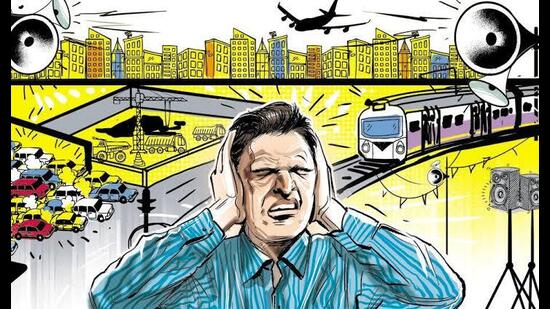
The UT police have been asked to monitor noise levels on Diwali night, i.e November 8, and compare them with readings recorded on a normal day, November 1. In a communication dated October 28, CPCC member secretary Saurabh Kumar requested the senior superintendent of police (SSP) to direct station house officers (SHOs) across all police stations to conduct the exercise in their respective jurisdictions.
The noise monitoring will be carried out for six hours, from 6 pm to midnight, with readings recorded every hour.
The committee will be monitoring the air quality through its three automatic and five manual stations. While automatic stations provide continuous readings, manual stations are used for periodic sampling and assessment.
Air-quality observations are collected over 24 hours to assess changes in pollutant concentrations. The exercise will also include monitoring heavy metals associated with firecrackers, which can release particulate matter and potentially harmful metallic compounds into the atmosphere.
Last year, CPCC data showed that the Air Quality Index (AQI) crossed 300 at three stations during peak Diwali celebrations. The noise levels were consistently higher than those recorded on a normal day last year, with Sector 22 having the highest noise level, exceeding 80 decibels between 9 pm and 10 pm.