Visakhapatnam: As the world celebrates International Coffee Day today, the Araku Valley in the Eastern Ghats of Andhra Pradesh is fast becoming a major destination for coffee enthusiasts—a surge further propelled by the recent recognition from Prime Minister Narendra Modi.
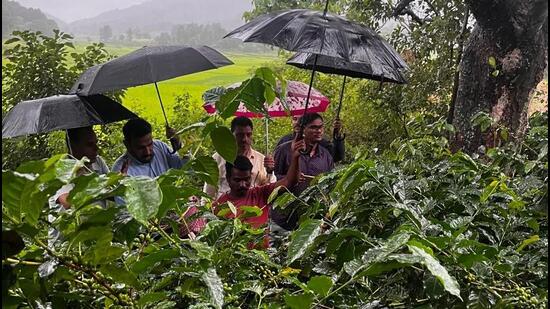
Once a region impacted by Naxalite insurgency, the valley has turned to coffee cultivation to empower local tribal communities, who have been growing the cash crop in the region since 1863. Today, coffee plantations span 1.07 lakh hectares across Andhra Pradesh, supporting roughly 2.45 lakh beneficiaries, predominantly from indigenous tribes.
During the 111th episode of Mann Ki Baat recently, PM Modi praised Araku Arabica coffee for its rich flavour and aroma, highlighting how cooperative institutions are increasing growers’ incomes and transforming livelihoods.
According to VVKM Laxmi, junior liaison officer at the Coffee Board of India in Araku Valley, the board has seen a noticeable rise in enquiries regarding cultivation and processing following the Prime Minister’s address. The valley has also seen an influx of tourists eager to experience the region firsthand.
“The defining characteristic of Araku Arabica is that it is 100% organic, cultivated entirely without synthetic fertilisers or pesticides,” Laxmi said. She noted that farmers receive logistical support—from planting and plucking to processing—while operating within an open market facilitated by cooperative societies and private buyers.
{{/usCountry}}“The defining characteristic of Araku Arabica is that it is 100% organic, cultivated entirely without synthetic fertilisers or pesticides,” Laxmi said. She noted that farmers receive logistical support—from planting and plucking to processing—while operating within an open market facilitated by cooperative societies and private buyers.
{{/usCountry}}Araku coffee earned a geographical indication (GI) tag from the government in 2019, securing its origin and brand identity much like France’s Appellation d’Origine Protégée (AOP) certification.
Beyond coffee, the integration of crops like ragi, sama, paddy, rajma, turmeric, and ginger is helping local communities transition away from traditional slash-and-burn (podu) agriculture. This shift promotes soil conservation, forest preservation, and long-term socio-economic stability.
For local farmers, the impact is personal. “Our family has been growing coffee for generations,” said Sita Ram, a farmer from Barmeli village who leads a group of nearly 2,000 growers. “It remains the backbone of our community’s livelihood.”
The HT staffer was part of a media tour organised by the Press Information Bureau (PIB), Jalandhar.