Dengue cases in Ludhiana district have risen from 55 last month to 58 this month, while malaria cases have increased from 71 to 82, according to health department data.
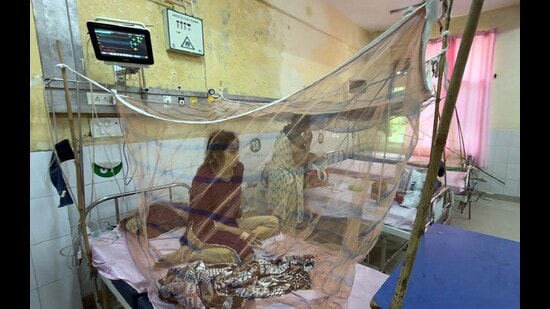
District epidemiologist Supreet Kaur said health department teams regularly inspect areas identified by the state health department to check for mosquito breeding and spread awareness among residents. Teams conduct dengue checks on Mondays and Fridays and malaria checks on Tuesdays, she said.
According to the epidemiologist, dengue is caused by a virus transmitted through the bite of an infected aedes aegypti mosquito, which commonly breeds in stagnant water collected in coolers, discarded tyres, flower pots and containers, whereas malaria is caused by plasmodium parasites and spreads through the bite of an infected female anopheles mosquito.
Kaur said two types of malaria parasites, plasmodium vivax (P. vivax) and plasmodium falciparum (P. falciparum), are found in Ludhiana. “P. vivax, which can cause recurring fever, is more common, while P. falciparum, which can cause severe, life-threatening malaria, has been found only among migrants from other states,” Kaur added. Two other malaria parasites that infect humans are P. malariae, which can cause long-lasting infection, and P. ovale, which can cause relapses.
Residents can reduce mosquito breeding by regularly cleaning water containers, preventing water accumulation around their homes, keeping water storage containers covered and changing cooler water regularly. Mosquito repellents, nets and full-sleeved clothing can also help prevent bites.
{{/usCountry}}Residents can reduce mosquito breeding by regularly cleaning water containers, preventing water accumulation around their homes, keeping water storage containers covered and changing cooler water regularly. Mosquito repellents, nets and full-sleeved clothing can also help prevent bites.
{{/usCountry}}