Ahead of the electric vehicle expo in Chandigarh, officials from the Punjab, Haryana and Chandigarh chapter of PHD Chamber of Commerce and Industry (PHDCCI) said state governments must promote the local manufacturing of electric vehicles (EVs), batteries and its spare parts to make them pocket-friendly.
Keeping in mind the ambitious journey of the Union government to improve the green mobility ecosystem and to decarbonise the transport sector, the PHDCCI is organising the electric vehicle expo in Chandigarh from February 3 to February 5 at Sector 34 Exhibition Ground. The PHDCCI aims at bringing all stakeholders on a common platform for development of future-ready and environmentally sustainable mobility products and technologies, besides giving a platform to the public to get more knowledge about the products and government policies.
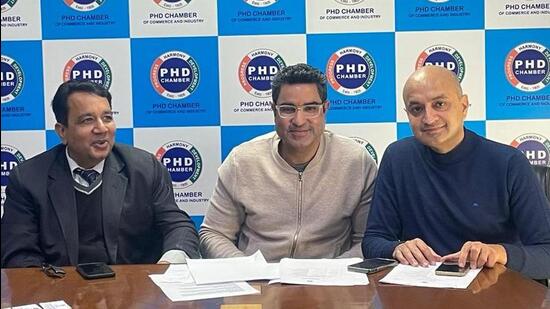
Pranav Gupta, chair, Haryana State Chapter of the PHDCCI, said, “Electric vehicles, including two-wheelers, four-wheelers, buses and cycles, are beneficial for our environment and economy. Though the Centre and state governments have already made various policies on the sale and purchase of electric vehicles, the public lacks awareness about the benefits due to lack of advertisements. For the benefit of consumers, the government should promote local manufacturing of electric batteries, which are presently imported from other countries, for cutting the vehicle cost whereas for manufactures, the government must keep its focus on providing production linked incentives (PLI)”.
Suvrat Khanna, co-chair, Chandigarh Chapter of the PHDCCI, said, “Though the state governments provide subsidies on purchase of electric vehicles, its prices are not pocket-friendly for the public. An electric two-wheeler costs over two times as compared to the petrol-run two-wheeler due to which the sale gets hampered and the benefits of using the electric vehicles do not reach out to the public. However, the overall cost of the vehicle can only be cut if the governments support local manufacturing of electric vehicles, its batteries and spare parts.”
{{/usCountry}}Suvrat Khanna, co-chair, Chandigarh Chapter of the PHDCCI, said, “Though the state governments provide subsidies on purchase of electric vehicles, its prices are not pocket-friendly for the public. An electric two-wheeler costs over two times as compared to the petrol-run two-wheeler due to which the sale gets hampered and the benefits of using the electric vehicles do not reach out to the public. However, the overall cost of the vehicle can only be cut if the governments support local manufacturing of electric vehicles, its batteries and spare parts.”
{{/usCountry}}“Besides, the state governments and the Chandigarh administration should focus on strengthening the infrastructure for the electric vehicles, including setting up of charging points, and should include electric vehicles in government’s transport-related projects,” Khanna said.
“The setting up of local industries will not only be a push for young entrepreneurs to set up industries but it will also create job opportunities for the locals. At present, even the big manufacturing firms are not showing interest in investing in electric vehicles due to less incentives to them and higher cost of manufacturing but cost cutting will help in promoting green mobility,” said Karan Gilhotra, co-chair, Punjab State Chapter of PHDCCI, adding that through the expo, public will get to know about the benefits of using the electric vehicles.
Gilhotra added that the manufacturing units are working in ensuring the safety norms of driving an electric vehicle and the public must learn about the government policies and the benefits being provided by the government in purchasing the electric vehicles.
Meanwhile, Pranav Gupta emphasised the government’s role of helping the micro, small and medium enterprises (MSMEs). “There is a need for the government to hand-hold MSMEs and provide them incentives and policies focusing on giving ease of doing businesses in the state. This will help MSMEs in contributing more to the production, ultimately helping in increasing the exports and maintaining the balance of trade,” Gupta said.