Air Pollution Contributors in Delhi-NCR
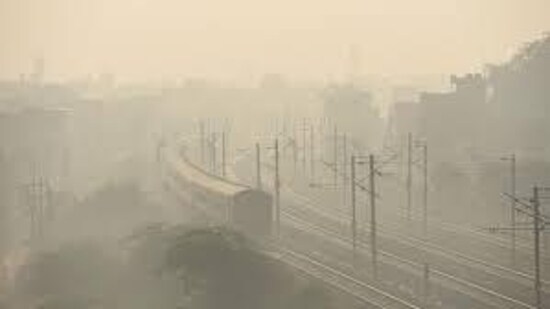
Contrary to the widespread perception that stubble burning in Punjab and Haryana is the principal cause of annual smog in the Delhi and National Capital Region (NCR), a scientific study reveals that crop residue burning is only one of several major contributors to air pollution in Delhi-NCR, with secondary particulate matter and transport emissions contributing an even larger share of winter pollution.
According to a reply tabled by the Union ministry of environment, forest and climate change in the Rajya Sabha on Thursday, the Commission for Air Quality Management’s (CAQM) Supreme Court-mandated study on the causes of worsening air quality in Delhi-NCR reveals that secondary particulate matter and pollutants formed in the atmosphere through chemical reactions involving emissions from vehicles, industries, and biomass burning were the major contributors to PM2.5 during winter, accounting for 24-28% of pollution. PM2.5 pollution is a specific, highly dangerous subset of general air pollution consisting of microscopic fine particles.
It is followed by transport emissions (19-24%), while biomass burning, which includes crop residue burning, municipal solid waste burning and residential biomass use, contributes 17-23%. Similarly, dust from roads, soil and construction activities accounts for 10-18%, while industrial sources, including thermal power plants, contribute 8-10%.
The findings indicate that while crop residue burning aggravates pollution episodes during the post-monsoon season, winter smog in Delhi-NCR is the result of multiple pollution sources acting simultaneously rather than any single factor.
{{/usCountry}}The findings indicate that while crop residue burning aggravates pollution episodes during the post-monsoon season, winter smog in Delhi-NCR is the result of multiple pollution sources acting simultaneously rather than any single factor.
{{/usCountry}}The report underlines that the biomass burning category is a major contributor than stubble burning alone, as it includes emissions from municipal solid waste burning and domestic biomass use, making it difficult to attribute the entire 17-23% contribution solely to crop residue burning, especially during the kharif harvesting season ahead of winters.
The study also mentioned that during summer, the pollution profile changes significantly as dust becomes the dominant contributor, accounting for 25-31% of PM2.5 concentrations, followed by transport (18-21%), secondary particulates (16-19%), biomass burning (11-14%) and industrial emissions (9-15%).
The findings also suggest that vehicular emissions, industrial activity, construction dust and atmospheric chemical reactions contribute to poor air quality throughout the year. However, the impact of crop residue burning is largely seasonal, especially during winters.
On the other hand, incidents of farm fires in both states declined significantly over the past couple of years. According to the Indian Agricultural Research Institute (IARI), which monitored farm fires during the 2025 kharif season, Punjab reported 5,114 incidents in 2025 compared to 10,909 in 2024, a decline of 53.1%.
Meanwhile, Haryana recorded 662 cases in 2025 compared to 1,406 a year earlier, a decline of 52.9%. During this year’s rabi season (April 1–May 31), Punjab reported 9,806 farm fires, a decrease of 3.9% from the 10,207 incidents recorded during the same period last year. In contrast, Haryana recorded 3,398 farm fires during this rabi season, marking an increase of 85.5% compared to the 1,832 cases reported last year.
The CAQM has issued a comprehensive framework centred on in-situ crop residue management, ex-situ utilisation of paddy straw, stricter enforcement and awareness campaigns, with Punjab, Haryana and Uttar Pradesh preparing state-specific action plans.
According to a report to promote alternatives to open-field burning, the CAQM has directed the development of a robust supply chain for the use of paddy straw as biomass fuel. It has mandated thermal power plants within a 300-km radius of Delhi to co-fire 5-10% biomass pellets with coal and instructed brick kilns in Punjab and Haryana to progressively increase the use of paddy straw-based pellets and briquettes, targeting 50% co-firing by November 2028.
The Central Pollution Control Board has also introduced financial support for pelletisation and torrefaction plants. These plants are industrial facilities that convert agricultural waste, such as paddy straw, into cleaner solid biofuels.
So far, 32 pelletisation plants—25 in Punjab and seven in Haryana—have been sanctioned at a cost of ₹34.72 crore. These facilities are expected to utilise 6.36 lakh tonnes of paddy straw annually to produce 4.93 lakh tonnes of biomass pellets, providing farmers with an alternative to burning crop residue.
The CAQM study suggests that while controlling stubble burning remains important, improvements in Delhi-NCR’s air quality will require simultaneous action on transport emissions, industrial pollution, road dust, construction activities and the formation of secondary particulates, all of which contribute substantially to the region’s recurring air pollution episodes.