The population of the revered and endangered black-necked crane, Ladakh’s state bird, has increased to 108 in 2026, up nearly 25% from the 87 birds recorded last year.
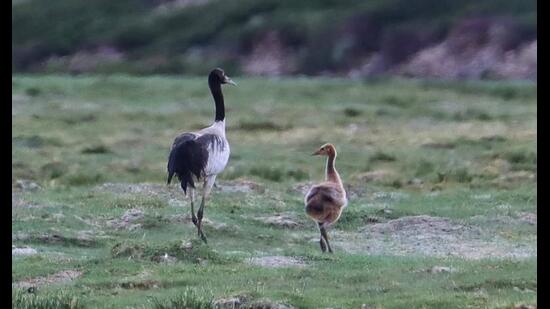
The 2026 breeding-season checklist recorded 86 adult black-necked cranes and 22 juveniles, compared to 70 adults and 17 juveniles in 2025.
Among the surveyed breeding sites, Chushul recorded the highest abundance with 16 birds, followed by Tsokar and Kargyam with 15 each, and Korzok with 14. Together, these four sites accounted for 60 birds, nearly 56% of the total count recorded across the Changthang Range, an official spokesperson said
This increase follows a steady rise in recorded adult numbers between 2021 and 2025, with an average annual growth rate of approximately 12.9% during the period.
The 2026 survey also recorded 22 juveniles, up from 17 juveniles in 2025, indicating continued breeding activity across the region. Notably, the number of hatchlings has risen significantly from nine in 2021 and seven in 2022.
Lieutenant governor VK Saxena appreciated the contribution of the Environment Protection Force (EPF), particularly the ex-servicemen inducted into the force, for their efforts to protect the nesting sites, eggs and hatchlings of the black-necked crane from the serious threat posed by free-ranging dogs.
Saxena also commended local communities, particularly the youth, for their active participation in conservation initiatives and for their role in protecting Ladakh’s ecological heritage. He also expressed confidence that the number of black-necked cranes would continue to grow further in the coming years.
{{/usCountry}}Saxena also commended local communities, particularly the youth, for their active participation in conservation initiatives and for their role in protecting Ladakh’s ecological heritage. He also expressed confidence that the number of black-necked cranes would continue to grow further in the coming years.
{{/usCountry}}“This is a monumental milestone for Ladakh and a matter of immense pride for all of us. The Black-necked Crane is not merely our state bird; it is a cherished symbol of Ladakh’s unique ecological heritage. The encouraging rise in its recorded numbers reinforces our resolve to protect this magnificent species and its natural habitat. The EPF particularly helped protect nests, eggs and hatchlings from the serious threat posed by free-ranging dogs. Protecting our wildlife and fragile ecosystems is a shared responsibility, and we must ensure that this natural heritage is preserved for generations to come,” he said.
Earlier this year, the UT administration organised the first-ever black-necked crane festival to raise awareness about conserving the state bird and protecting its natural habitat. The festival highlighted the ecological significance of Changthang’s high-altitude wetlands and encouraged greater participation of local communities, particularly young people, in wildlife conservation.