Over the past few decades, the number of motor vehicles—whether four-wheelers, three-wheelers, or two-wheelers—has been steadily increasing across all countries. While these vehicles have provided significant benefits, such as reducing travel time and improving convenience, they have also led to several problems. These include air pollution due to vehicle emissions, increased traffic congestion in narrow streets and markets, frequent traffic jams, road accidents resulting in injuries or fatalities, and a severe shortage of parking spaces.
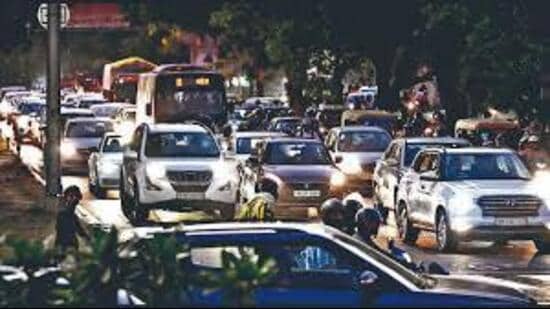
This article aims to highlight the problems caused by insufficient parking spaces and suggest possible solutions.
Parking disputes: A major cause of conflict
In almost every city parking related conflicts have become common. Households that once owned just a bicycle or a scooter now have two or three cars, but they lack adequate parking space. As a result, people park their vehicles on public roads or in narrow streets, leading to frequent disputes. News reports about such conflicts appear regularly.
For instance, on February 9, in Sonepat, a young national champion in powerlifting, Vansh, parked his motorcycle on the wrong side in front of his friend’s house. A car owner, Kuldeep, objected, leading to an argument and a violent altercation. Kuldeep shot Vansh, who died on the spot. A promising athlete lost his life over a parking dispute. On the same day, in Sector 77, Mohali, a government employee, Manjit Singh, had an argument with his neighbor, Rohit Khanna, over car parking. In a fit of rage, Manjit fired three shots into the air to intimidate Rohit. Fortunately, no one was injured, but the police registered a case against him.
A few days later, in Kharar, Punjab, the police registered a case against two individuals from Future Heights Housing Society for firing shots during a parking dispute. Such incidents are not isolated but are becoming increasingly common in urban neighbourhoods, housing societies, and even among neighbours. This growing trend of violence over parking is alarming and requires immediate government intervention.
{{/usCountry}}A few days later, in Kharar, Punjab, the police registered a case against two individuals from Future Heights Housing Society for firing shots during a parking dispute. Such incidents are not isolated but are becoming increasingly common in urban neighbourhoods, housing societies, and even among neighbours. This growing trend of violence over parking is alarming and requires immediate government intervention.
{{/usCountry}}Causes of the crisis
After the economic liberalisation and privatisation policies of 1991, many foreign automobile companies like Suzuki, Hyundai, Toyota, Fiat, Kia, and Honda were allowed to set up manufacturing units in India. Earlier, citizens had to wait for years to buy a scooter or a car, but now vehicles are readily available, leading to a massive increase in their numbers. Banks started offering vehicle loans on easy terms, making it possible for even middle-class families to afford cars and motorcycles. As a result, the number of vehicles per household has surged.
Earlier, homes had only one bicycle or scooter, but now they have multiple cars and two-wheelers. With limited parking space within residential premises, people have started parking their vehicles on public streets, causing conflicts.
With the rise in land prices, open plots are being converted into commercial spaces, leaving little room for parking. Builders and property owners prioritise maximising profits, leading to a lack of designated parking areas. Unauthorised constructions on streets and marketplaces have further reduced available parking spaces.
While the government allowed automobile companies to produce vehicles in large numbers, it failed to plan for parking infrastructure. Central, state, and local governments have not adequately addressed this issue, worsening the crisis.
Vacant plots, a possible solution
The government must take immediate steps to address the parking crisis. Without official intervention, this problem will only escalate. Local authorities should be instructed to identify vacant plots and convert them into parking spaces. Urban planning regulations must ensure that new markets, residential colonies, and multi-storey housing societies have designated parking areas.
In congested city centres and markets, the government should acquire old buildings at fair compensation and convert them into multi-level parking structures. Governments should impose strict regulations against parking vehicles on streets and public roads.
Authorities must also take strict action against unauthorised constructions that reduce parking space.
Shimla has implemented a rule that only those with designated parking spaces at home can register a four-wheeler. Other cities should adopt this policy to control vehicle density.
Municipal authorities should approve building plans only if they include sufficient parking spaces. For larger plots, parking provisions should be proportional to the plot size. Commercial and housing multi-storey buildings must include stilt (ground floor) or underground parking, and plans should not be approved without such provisions.
Citizens, especially the youth, should be educated on proper parking etiquette to optimize space usage in public areas.
Action is crucial
If the parking crisis is not addressed, and the number of vehicles continues to rise unchecked, social conflicts and disputes will escalate. Parking-related arguments will lead to violence, road congestion will worsen, and traffic accidents will increase. It is crucial for the government and urban planners to take proactive measures to resolve this issue before it spirals out of control.
vkmalhotra08@gmail.com
(The writer is a former college principal and author of several books)