
 E-Paper



Hailstorm in north Kashmir damages fruit orchards
The hailstorm that lashed parts of north Kashmir on Monday evening caused heavy damages to the fruit orchards

 Prefer HTon Google


The hailstorm that lashed parts of north Kashmir on Monday evening caused heavy damages to the fruit orchards.
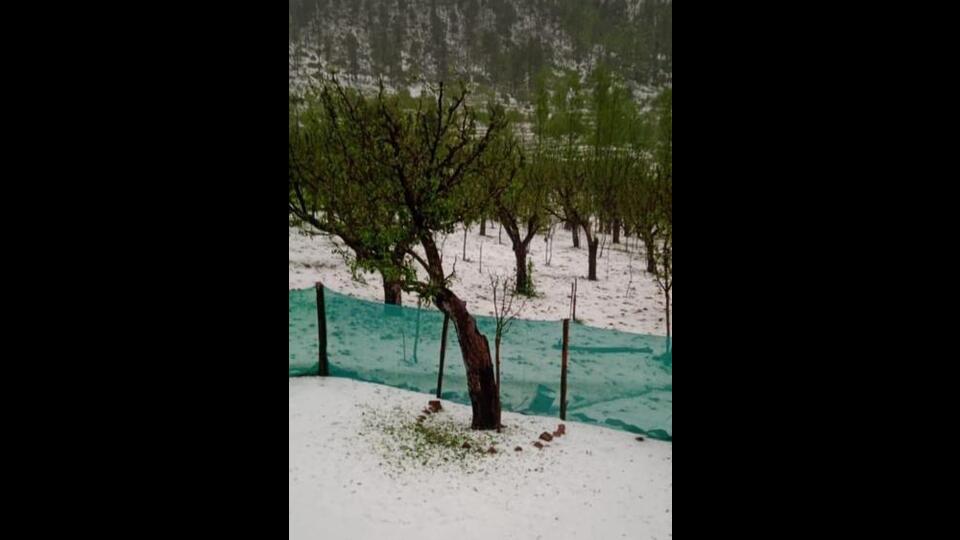
This is the second time in this month that hailstorm caused damages to fruit of various varieties which are in their early stages of the formation.
The massive hailstorm hit parts of Kupwara, Baramulla, Budgam and Ganderbal districts. Director general of horticulture Ajaz Ahmad Bhat, said, “As per initial data, the loss caused in orchards ranges from 5% to 30%. So far, we have data of 14 villages which got effected due to the hailstorm. ”
On social media, DG Horticulture also shared the pictures that showed how the hailstorm had caused damage to the fruit orchards at different places. While apple varieties are in its early stages of formation, the cherry, apricot, peach along with pear and other early varieties have started maturing, thus causing more damage to the fruit crop.
On April 14, rains and hailstorm had left apple orchards damaged in north Kashmir’s Pattan and Tangmarg areas. Due to that hailstorm, orchards in Sherpora, Mamoosa, Kanloo, Babagund, Sari, Nehalpora, Lalpora Kunzer, Lalpora Tangmarg, Dobiwan and Pinjoora suffered damages. The damage was about 20- 25% in these areas, as per official data.
The dry spell in March and first week of April had already left the Valley’s fruit growers worried and they feared it may affect this year’s fruit yield. March, which is usually considered the wettest month of the year, saw very few spells of rain this time. The summer capital of J&K, Srinagar, recorded its hottest March since 1891, when collection of weather data in Kashmir was started.
The lack of rainfall in March had an impact on the season’s first cash crops like cherry, peach, apricots and plums. However, the hailstorm has added woes of the growers who were eyeing on the harvest of cherry and other stone fruits from next month.
Cherry is the first cash crop which the growers in Kashmir reap in May and June.
Experts belive the current dry spell is a result of global warming. “The dry spell and then untimely heavy rains with thunderstorms and hailstorm is caused by global warming and our Kashmir has also its effect,” said Abdul Gaffar, an officer of Sher e Kashmir University of Agricultural sciences and Technology.


