Sukhna Lake is more than a waterbody; it is the ecological and emotional heart of Chandigarh. Yet the lake continues to face challenges from silt flowing down from the Shivalik hills, aquatic weeds and declining water-holding capacity.
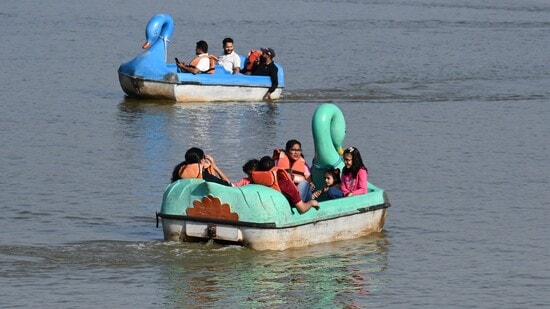
During my years in the Chandigarh administration, particularly as deputy commissioner, I witnessed an inspiring chapter in the city’s civic life—the rise of the Save Sukhna Lake Society. It was a living bridge between the administration and citizens.
Today, an important question arises: What happened to that spirit of collective responsibility?
When citizens led the movement
The Society was built around shramdan, or voluntary public participation. Senior bureaucrats, students, retired defence personnel and local residents worked together in the slush to remove silt and weeds from the lake’s catchment areas.
The Society enjoyed the active patronage of the Chandigarh administration. Ashok Pradhan, adviser to the administrator, served as its chairman. The impact went beyond desilting and public awareness. Sukhna Lake was subsequently recognised as a national wetland.
The lake later hosted the Third Asian Rowing Championship, for which a rowing channel of international standards was developed through the collective efforts of the Save Sukhna Lake Society, government agencies and public-sector organisations. It was a remarkable demonstration of what civic participation, administrative coordination and a shared sense of purpose could achieve.
{{/usCountry}}The lake later hosted the Third Asian Rowing Championship, for which a rowing channel of international standards was developed through the collective efforts of the Save Sukhna Lake Society, government agencies and public-sector organisations. It was a remarkable demonstration of what civic participation, administrative coordination and a shared sense of purpose could achieve.
{{/usCountry}}In my experience, the most successful public initiatives are those in which citizens feel genuine ownership. Through the Society, Sukhna became more than a public asset; it became a shared responsibility.
What changed?
Over time, public participation appears to have weakened. Lake management increasingly became a technical exercise involving engineering and forest departments. Their work remains essential, but institutional arrangements alone cannot create civic ownership.
I also remember a period when lights around the lake were deliberately limited so that birds were not disturbed. Where lighting was necessary, inverter-based lights were used with illumination directed downwards. Such decisions reflected an understanding that a lake is not merely a recreational venue, but a living ecosystem.
Today, large functions and attractions, including air shows and other public events, must be planned with greater ecological caution. Noise, crowds, lighting and waste can disturb birds and place pressure on a fragile wetland. Public enjoyment should not come at the cost of the lake’s natural character.
A warning from the dry bed
In the late 1980s, when siltation and weeds had reduced the lake’s water level, satirist Jaspal Bhatti and members of his Nonsense Club played cricket on the exposed bed to draw attention to its plight. The message was serious: If we do not clean and desilt the lake, one day there may be more dry ground than water.
A practical way forward
The Save Sukhna Lake Society could be revived as a consultative platform involving environmental experts, educational institutions, civil society groups and retired professionals.
A monthly “Sukhna Sunday” could bring citizens together for awareness programmes and voluntary conservation activities. A digital platform could share information on water levels, desilting progress and ecological indicators. Schools and colleges could undertake projects on the lake and its catchment.
The objective should not be to recreate the past mechanically, but to revive its spirit today.
Conclusion
Governance works best when institutions and citizens act as partners. Having witnessed those efforts closely, I believe the Save Sukhna Lake Society represented the civic spirit that gave meaning to the City Beautiful.
The lake belongs to the people, and its protection must remain a shared responsibility. Reviving the Society could strengthen conservation while restoring the collective pride and stewardship that Chandigarh once demonstrated so powerfully.
krishnamohan718@gmail.com
(The writer, a retired IAS officer, served as home secretary & deputy commissioner of UT)