The Punjab Roadways general manager (GM) office building located at ISBT , which oversees a crucial part of the state’s public transport network, presents a grim picture of administrative apathy, plagued by poorly maintained washrooms, peeling damp walls, exposed electrical wiring, and ageing infrastructure.
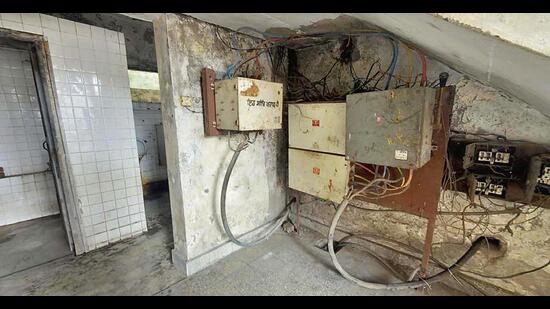
The dilapidated state of the office stands in sharp contrast to the department’s mandate of maintaining and operating efficient public transport facilities. Recently, a sewerage overflow within the office complex took four days to repair, and even after the blockage was cleared, the overall condition of the premises remained dismal.
The washrooms serve as an example of this neglect, featuring stained walls, worn-out plumbing fixtures, broken surfaces, and pervasive dampness. Across other sections of the building, dangling wires, deteriorating ceilings, and poorly kept rooms compound the hazardous environment.
Praveen Kumar, general secretary of the Contract Workers Union, highlighted the systemic issues. “The sewerage issue took four days to resolve, but the bigger problem is the condition of the office itself. The washrooms and other facilities need immediate attention,” he said.
Another worker added that the state of several rooms was far below the standards expected of any public institution, highlighting a lack of routine maintenance.
{{/usCountry}}Another worker added that the state of several rooms was far below the standards expected of any public institution, highlighting a lack of routine maintenance.
{{/usCountry}}Staff members noted that the official neglect mirrors the wider decline in public passenger amenities. Ranjeet Singh, a conductor, said, “When the department’s own office is in such a poor condition, it is difficult to expect better facilities at the bus stands. Perhaps the condition of the office itself explains why basic infrastructure and passenger amenities are also being neglected.”
Repeated calls and texts made to Punjab Roadways general manager Nawraj Batish went unanswered.