
 E-Paper



Ludhiana’s 220 KV power substation to start operations next month
The Punjab State Transmission Corporation Limited has said that the new substation at the Focal Point will boost power supply for over 10,000 industries in the city


After three years of construction, the much-anticipated 220 KV gas-insulated substation (GIS) at Focal Point is set to be commissioned by end of February, officials from Punjab State Transmission Corporation Limited (PSTCL) has said.
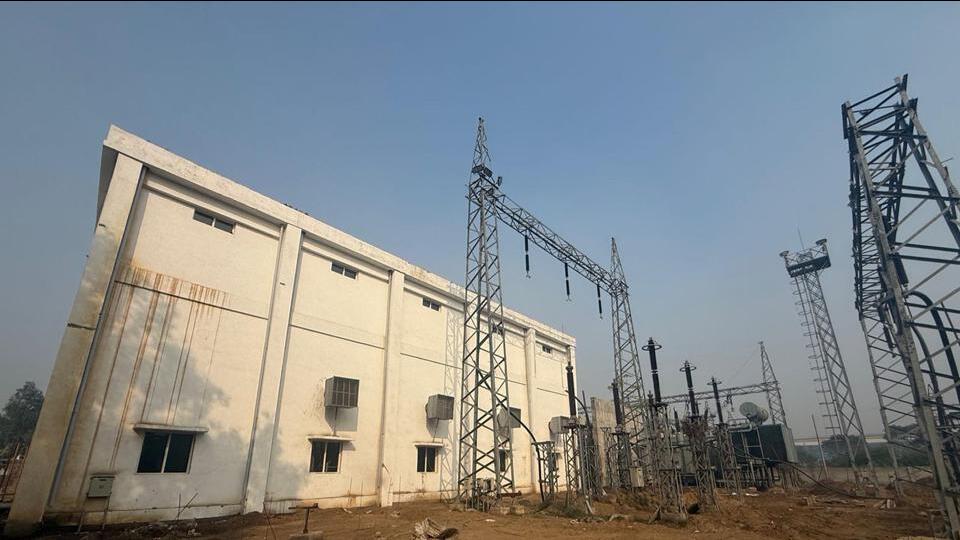
Built at a cost of over ₹60 crore, the state-of-the-art substation promises to significantly improve electricity supply to over 10,000 industrial units in the area, ensuring smooth and uninterrupted power to support local industries.
Sukhbir Walia, deputy chief engineer of PSTCL’s Ludhiana central zone, said that the substation, developed by Toshiba Private Limited, is equipped with two 160 MVA power transformers. This will enhance the power supply to critical industrial areas such as Focal Point, Dhandari, Giaspura, and Sherpur, which are home to a wide range of industries, including small, medium, and large enterprises.
In addition to the substation, electric lines from Giaspura to Kanganwal have already been constructed and will be operational by February.
PSTCL officials are also proposing additional lines to connect the Millerganj grid, which will further bolster the electricity supply across the region.
Walia said the 220 KV GIS substation, the first-of-its-kind in Ludhiana, is built to be compact and efficient, with equipment enclosed in gas-insulated metal containers. “This design saves space and protects equipment from external elements such as weather and dust. The substation’s advanced features make it more reliable, safer, and efficient than traditional open-air substations, as the gas insulation minimizes the risk of electrical faults,” Walia added.
Sukhminder Singh, chief engineer of PSTCL, Ludhiana, highlighted that the new GIS substation occupies just one acre of land, significantly smaller than the 5-6 acres typically needed for conventional substations. It also requires minimal maintenance, a smaller workforce, and has lower failure rates. While traditional substations require 15-16 operators, the GIS substation will be monitored by a small team around the clock.
Walia said that the GIS technology will also make it easier to upgrade existing substations in Ludhiana, ensuring that the city’s power infrastructure remains modern and future ready.


