In a move that could give rise to cramped, chaotic urban spaces, the Greater Mohali Area Development Authority (GMADA) has proposed to reduce the width of certain roads in Mohali’s upcoming projects and townships, by amending the Master Plan.
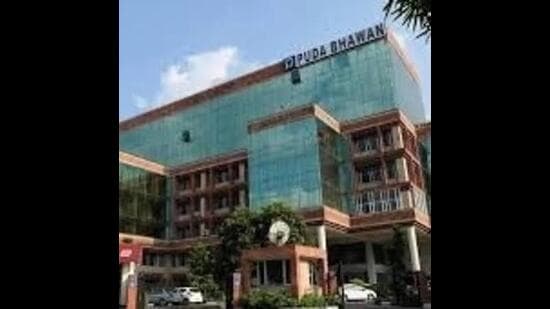
According to the proposed changes, in areas involving plots of up to 200 square yards, the road width would be reduced from the earlier planned at 40-ft to 30-ft, while sector-dividing roads originally envisaged at 200-ft would be narrowed to 120-ft. In some areas, there are plans to bring down the width of sector-dividing roads to 80-ft.
To put it simply, the plan, if approved, may impact how you walk or drive around in these localities, the green spaces available for residents and any other form of future planned development.
It’s all about the money
So why is GMADA doing it? Simple answer: Money.
GMADA chief administrator Sandeep Rishi said the decision was driven by the increased financial liability arising from Section 10(3) of the Right to Fair Compensation and Transparency in Land Acquisition, Rehabilitation and Resettlement Act, which governs compensation for land acquisition.
“Converting agricultural land for non-agricultural purposes, such as residential development, has increased GMADA’s liability. We are paying more than what we could earn and, to keep the losses in check, the decision to reduce road widths has been approved and will apply to the projects henceforth. We are still not sure whether we can break even with the costs involved,” he said. Among the ongoing projects that are likely to be affected are the Eco City 3 & 4 in New Chandigarh, and Aerteropolis Project, adjacent the airport, besides all other projects to be undertaken by the Authority in future.
{{/usCountry}}“Converting agricultural land for non-agricultural purposes, such as residential development, has increased GMADA’s liability. We are paying more than what we could earn and, to keep the losses in check, the decision to reduce road widths has been approved and will apply to the projects henceforth. We are still not sure whether we can break even with the costs involved,” he said. Among the ongoing projects that are likely to be affected are the Eco City 3 & 4 in New Chandigarh, and Aerteropolis Project, adjacent the airport, besides all other projects to be undertaken by the Authority in future.
{{/usCountry}}A GMADA town planning official, on the condition of anonymity, said that compromises could not be made in certain areas, such as Medicity, where road widths and green spaces were considered essential. The official maintained that statutory requirements for green spaces in residential and commercial areas would be ensured but residents and property buyers fear they may get a raw deal.
Staring at long-term problems
Former senior town planner, Punjab, and adviser, town planning, Punjab Urban Development Authority, Jit Kumar Gupta said roads are the lifelines of any city and reducing their width to increase saleable land would create long-term problems.
“The move is clearly aimed at increasing the saleable area and generating revenue. But more saleable area means more people and vehicles on the roads. Even in Chandigarh, sector-dividing roads are generally no less than 100-ft wide. Reducing them to 80-ft in some areas will aggravate traffic problems even before the population settles in,” he said.
According to experts, the whole idea of having sector-dividing roads was to distribute traffic between different sectors and prevent congestion from building up at key points. Longer roads also required adequate width to accommodate increasing traffic volumes.
“When Chandigarh was initially developed, roads extended over shorter distances (7kms) and carried fewer vehicles. Today, roads connect the city up to Landran on one end and other parts of the tricity, bringing more vehicles onto major routes and slowing movement. In Mohali’s Phase 1 and 2, 30-ft inner roads already cause problems. Narrowing major roads is not a futuristic approach; it is a step backwards,” he said.
He suggested that GMADA explore higher-density, vertical development instead of relying predominantly on plots, allowing more families to be accommodated on the same land while planning parking and circulation more efficiently.
‘Could affect utilities such as water, power supply’
According to Surya Kant, a senior architect in practice since 1977, the proposed reductions were still far off from formal notification and would have to go through the prescribed approval and public consultation process.
The agenda is to be approved in principle in the next meeting of the Punjab Regional and Town Planning and Development board. Invitation of public objections through press advertisement is mandatory. Final notification is feasible only after saturating public objections through the press providing opportunity of being heard. This is a lengthy and time consuming process. The current proposal may not see the light of day before mid-March 2027.
“Master plans cannot be amended beyond a point without compromising the basic principles of urban planning. Even in (the existing) affordable housing areas, where plot sizes are below 150 square yards, the roads are generally 35 to 40 ft wide to accommodate essential services,” said Kant.
He added, “According to the Master Plan, society roads should not be less than 40-ft wide as adequate space is required for water supply, electricity and other utilities. Reducing road widths could affect both infrastructure provision and the long-term functionality of these developments, especially in view of intensity of vehicular movement in the tricity and the enormous, indeed unprecedented, increase in the number of vehicles over the past decade.”
‘Could discourage prospective buyers’
Surinder Gulati, former president, Mohali property consultant association, said, “Traffic is already out of control on roads that are 100-ft wide. So I fail to understand how increasing the saleable area by narrowing roads will help in the long run. As a property consultant, I believe this could also affect property prices and discourage prospective buyers who had been considering investing in these projects and building their homes here.”
Residents’ body opposed to move
The Committee of Residents Welfare Associations and Societies (CORWAS), representing residents of private mega housing townships, has also opposed the proposed changes to the Eco City 3 master plan and Aerotropolis project. It has sought restoration of the originally approved road widths, warning that the reductions could affect connectivity, infrastructure and the interests of residents, allottees and investors who relied on the original plans.