Coming down heavily on the district administration, the National Green Tribunal (NGT) has summoned the Sangrur deputy commissioner to personally appear before it on November 18 amid escalating concerns over systemic waste-management failures, an unpaid ₹84-lakh environmental fine, and the illegal operation of a local dumpsite.
The principal bench, headed by NGT chairperson justice Prakash Shrivastava and expert member Afroz Ahmad, expressed displeasure over what it viewed as repeated regulatory and compliance failures. The proceedings stem from an application filed by Sangrur-based advocate Kamal Anand, who raised concerns over municipal solid-waste management and environmental degradation in the city.
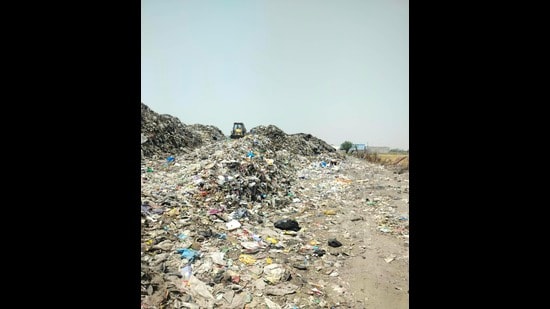
The application has highlighted several alleged violations at Sangrur’s waste-disposal site, including the presence of large quantities of untreated legacy waste, defunct compost pits and municipal solid waste littering streets. It has also alleged open burning of garbage, leading to smoke and foul emissions in residential areas, besides concerns over the unscientific disposal of biomedical waste at the landfill site.
NGT questions shifting deadline
The tribunal took particular exception to the municipal council’s shifting timelines for clearing the legacy waste.
In an affidavit filed on July 3, 2026, municipal council’s executive officer Ashwani Kumar had assured the NGT that all 15,961 tonnes of legacy waste at the site would be remediated by September 30. The council informed the tribunal that 6,575 tonnes had already been processed and refuse-derived fuel (RDF) generated during the process had reportedly been sent to Meerut and Muzaffarnagar, while bio-soil was proposed to be used for filling low-lying areas.
{{/usCountry}}In an affidavit filed on July 3, 2026, municipal council’s executive officer Ashwani Kumar had assured the NGT that all 15,961 tonnes of legacy waste at the site would be remediated by September 30. The council informed the tribunal that 6,575 tonnes had already been processed and refuse-derived fuel (RDF) generated during the process had reportedly been sent to Meerut and Muzaffarnagar, while bio-soil was proposed to be used for filling low-lying areas.
{{/usCountry}}However, in a subsequent affidavit filed on August 25, the council sought an extension of another five to six months, citing the monsoon as the reason for the delay.
The bench rejected the justification, observing that the monsoon is an annual and predictable phenomenon and should have been factored into the original remediation plan. The tribunal also observed that the executive officer had failed to act with the promptness and diligence expected in the discharge of his statutory responsibilities.
Dumpsite lacks mandatory permissions
The proceedings also brought to light a significant regulatory lapse concerning the operation of the dumpsite.
The Punjab Pollution Control Board (PPCB) informed the tribunal that the Sangrur dumpsite did not have valid consent to establish (CTE) or consent to operate (CTO), which are mandatory environmental permissions under the applicable regulatory framework. The PPCB stated that the council had not even applied for the required permissions.
The pollution control board further informed the NGT that it had imposed environmental compensation of ₹84 lakh on the council for violations committed between July 2020 and March 2024. The amount, according to the proceedings, had remained unpaid. The civic body had deposited nothing despite quarterly penalties continuing to accrue through 2025.
DC Poonamdeep Kaur did not immediately respond to calls and messages for her comment.
The tribunal noted that under the Solid Waste Management Rules, 2026, the statutory responsibility for ensuring compliance rests with the district administration. It also expressed displeasure over the absence of any representative for the DC despite notices having been duly served.